
Mercedes-Benz presents updated GLS as flagship SUV
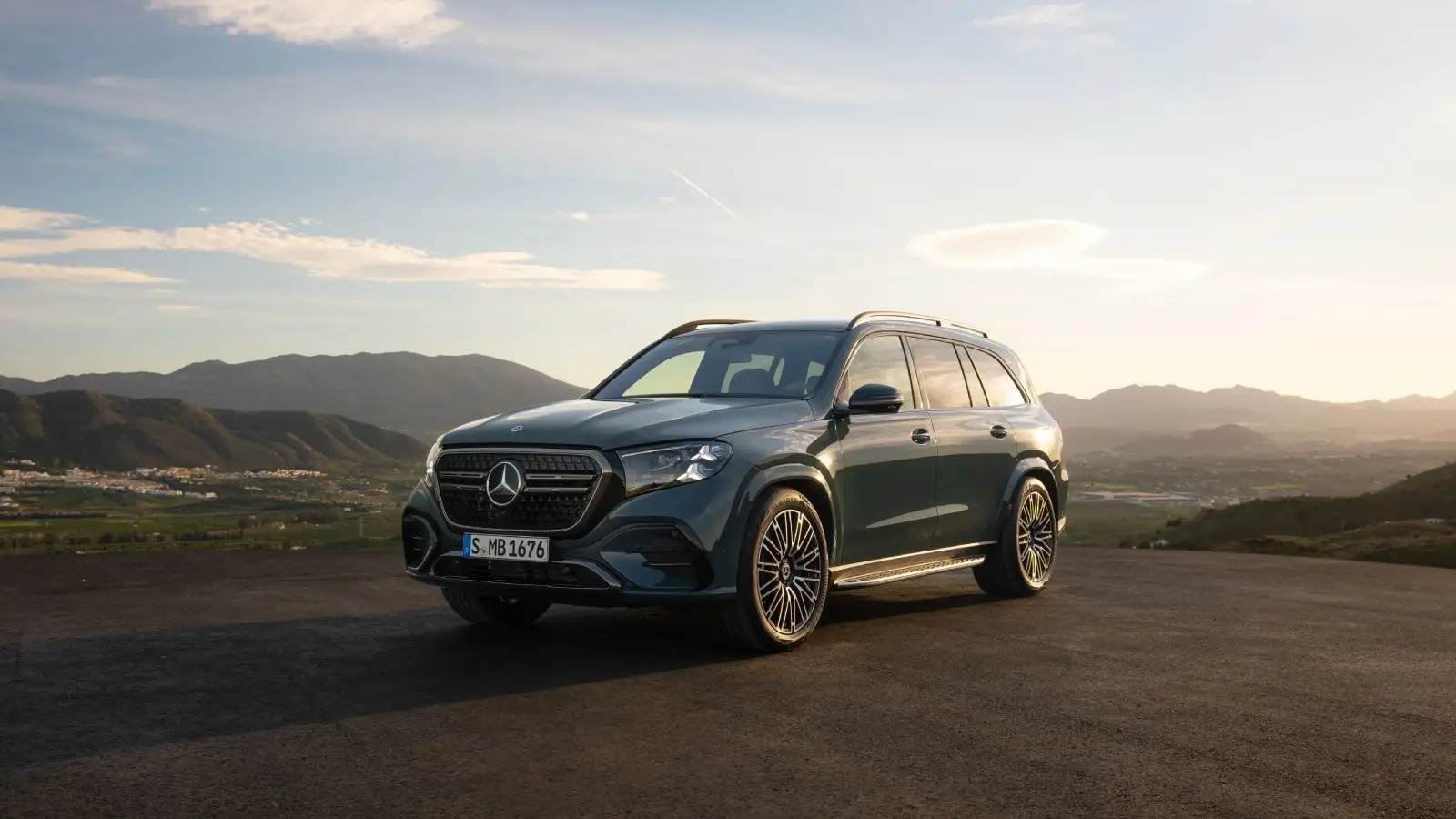
Mercedes-Benz presents the new GLS with updated engines, MB.OS, and enhanced comfort. Explore key changes, features, and what they mean for the SUV segment.
Mercedes-Benz has thoroughly reworked the GLS and focused not on a single headline feature, but on a broad reset of its flagship SUV: a new engine range, MB.OS with over-the-air updates, a standard MBUX Superscreen, revised driver assistance systems, new lighting technology, and an even stronger emphasis on second- and third-row comfort. For a model the brand itself describes as the S-Class among SUVs, that makes this update more than a routine facelift.
The core message is clear: the GLS is meant to feel more effortless, more refined, and more advanced without losing the sense of power expected from a full-size luxury SUV. Mercedes-Benz says the new powertrain lineup brings a lighter, more responsive driving character while maintaining the brand’s high standards for noise and vibration comfort. In the GLS 580 4MATIC, both output and torque have increased, while the company also highlights major technical changes to the V8, including a flat-plane crankshaft and revisions to the intake, turbocharging, and emissions hardware. The GLS 450 4MATIC gains torque as well, and the diesel versions add new exhaust-treatment technology aimed at cleaner operation.
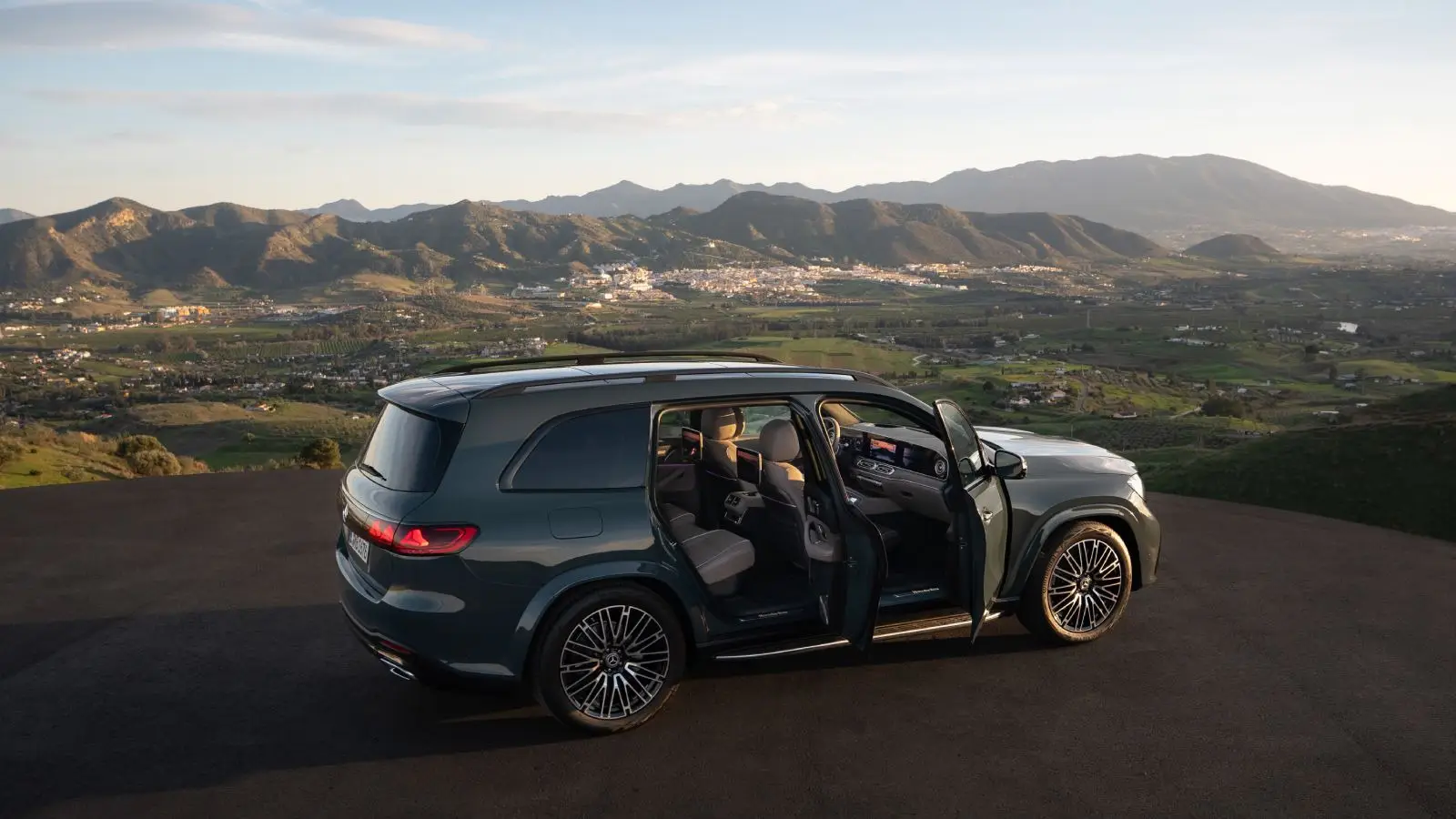
This matters beyond a single model launch. In the upper end of the luxury SUV market, buyers expect far more than size and badge value. They expect long-distance comfort, strong digital integration, a calm cabin, and rear-seat features that approach limousine territory. Mercedes is clearly reinforcing the areas that matter most in that contest, which makes the new GLS an important move in the competition at the top of the premium three-row SUV segment.
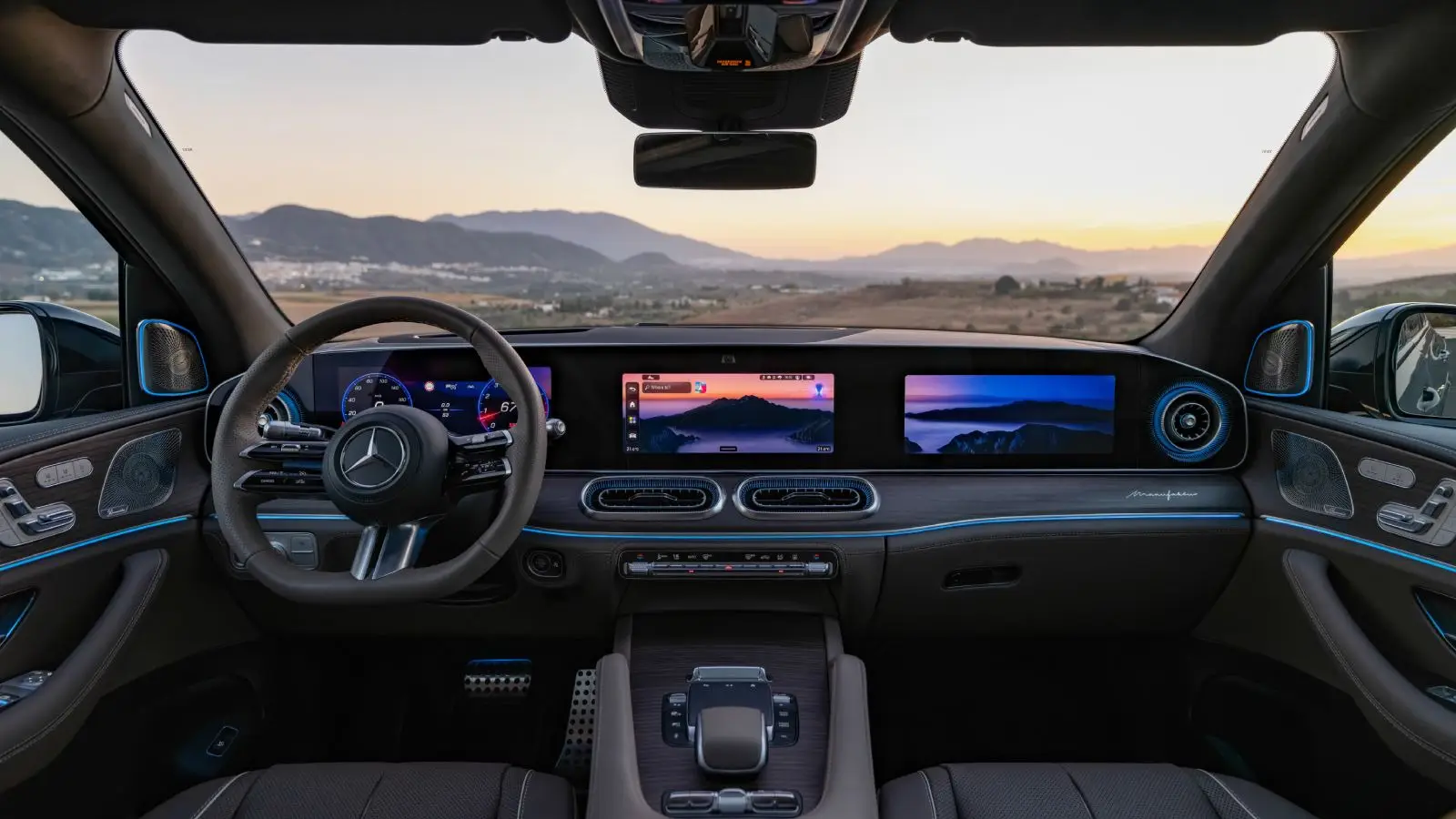
One of the biggest shifts sits in the vehicle’s software architecture. With MB.OS, Mercedes positions the GLS as a vehicle designed for a long software life cycle, with over-the-air updates and a tighter connection between infotainment, assistance systems, and digital services. Inside the cabin, that strategy becomes visible immediately. The MBUX Superscreen is now standard and places three 12.3-inch displays beneath one glass surface across the dashboard. Navigation combines Google Maps technology with the familiar Mercedes-Benz interface, while the latest MBUX Virtual Assistant is designed for more capable, more natural dialogue.
Mercedes has also doubled down on the idea of the GLS as a space for passengers, not just for the driver. Rear occupants can get two 11.6-inch Full HD displays, removable MBUX controllers, expanded comfort features, and a broader entertainment and productivity setup. Multi-contour seats, massage functions, climate features, and the Fondkomfort-Paket Plus push the second row further toward a first-class travel experience, which fits the car’s positioning as the most luxurious SUV in the core Mercedes-Benz lineup.
Ride comfort remains one of the model’s defining themes, and Mercedes has added another layer to that story. The company says the latest AIRMATIC setup can use cloud-based damping control to prepare for longer artificial road humps through Car-to-X data. In a vehicle whose reputation is built heavily on refinement, that is one of the most telling updates. E-ACTIVE BODY CONTROL also remains part of the picture, underlining Mercedes’ effort to preserve the GLS as one of the brand’s most comfort-focused and technically ambitious SUVs.
The exterior has been adjusted to make that status easier to read at a glance. The new GLS gets a larger grille with a more prominent chrome surround and contour lighting, while the upright Mercedes-Benz star on the hood becomes one of the defining visual statements of the update. That detail matters because it directly ties the GLS more closely to the imagery of the S-Class. Front and rear lighting signatures have also been revised, and the new generation of DIGITAL LIGHT uses micro-LED technology that Mercedes says expands the illuminated field by around 40 percent while cutting module energy consumption by up to 50 percent compared with the previous system.
There is a broader industrial backdrop as well. Mercedes-Benz chose its plant in Tuscaloosa, Alabama, for the world premiere of the new GLE and GLS, linking the reveal to the production of the site’s five-millionth SUV. That gives the launch added weight: this is not just a product refresh, but an update to one of the key pillars in the brand’s global SUV business.
Some of the announced features, however, will depend on the market or arrive later. Mercedes-Benz has already pointed to regional differences in the availability of certain functions and in the rollout timing of selected systems. The same applies to parts of the digital-services portfolio, some multimedia features, and some driver-assistance functions. Public pricing for the updated GLS had not been disclosed in the materials found here, and market launches were described in broader terms, including arrival later in 2026.
That leaves the new GLS looking less like a visual refresh and more like a coordinated effort to reinforce Mercedes-Benz in the full-size luxury SUV class. Power, quietness, digital capability, ride comfort, and visual presence have all been pushed further. That is why this debut stands out: it shows how Mercedes wants its flagship SUV to be understood in 2026.
Mark Havelin
2026, Apr 04 18:02