
Mercedes EQS Introduces Steer-by-Wire Technology in Series Production
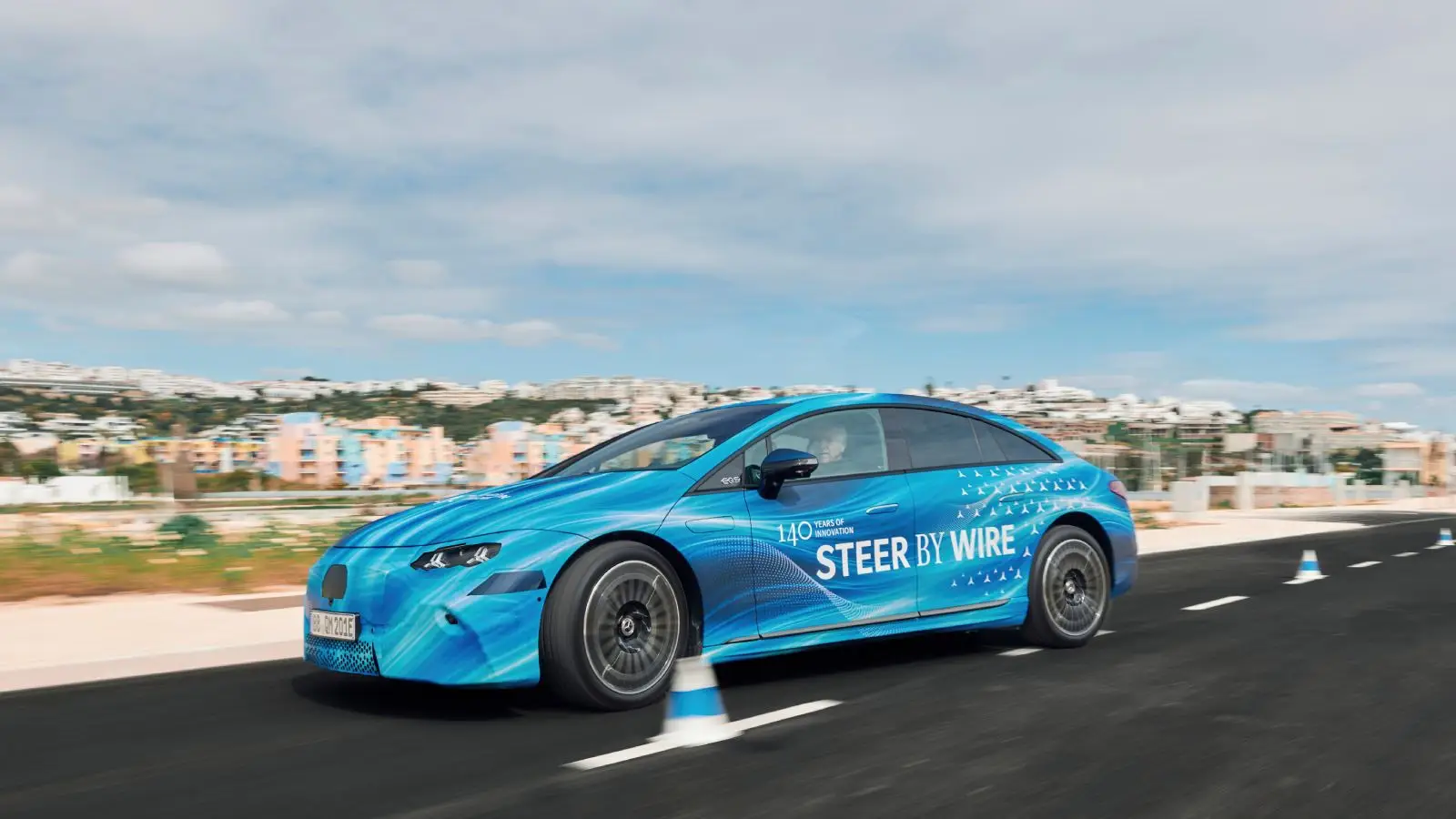
Mercedes-Benz presents steer-by-wire in the EQS, introducing electronic steering without mechanical link. Learn how the system works and why it matters.
Mercedes-Benz is bringing steer-by-wire into series production for the first time, removing the mechanical connection between the steering wheel and the front wheels in the new EQS. Steering inputs are transmitted electronically, while feedback is generated by software. For the German automotive industry, this marks a significant shift, as similar systems have previously appeared in models from Infiniti, Tesla, and Lexus, but not yet in a German production car.
The most immediate change is in the driving feel. The steering becomes lighter and more precise, eliminating the need for hand-over-hand movements during maneuvers. The system continuously adapts the steering ratio depending on speed and driving conditions, while unwanted road vibrations are filtered out. Instead, the vehicle calculates tire-road interaction and recreates feedback artificially, preserving a familiar yet more refined steering experience.
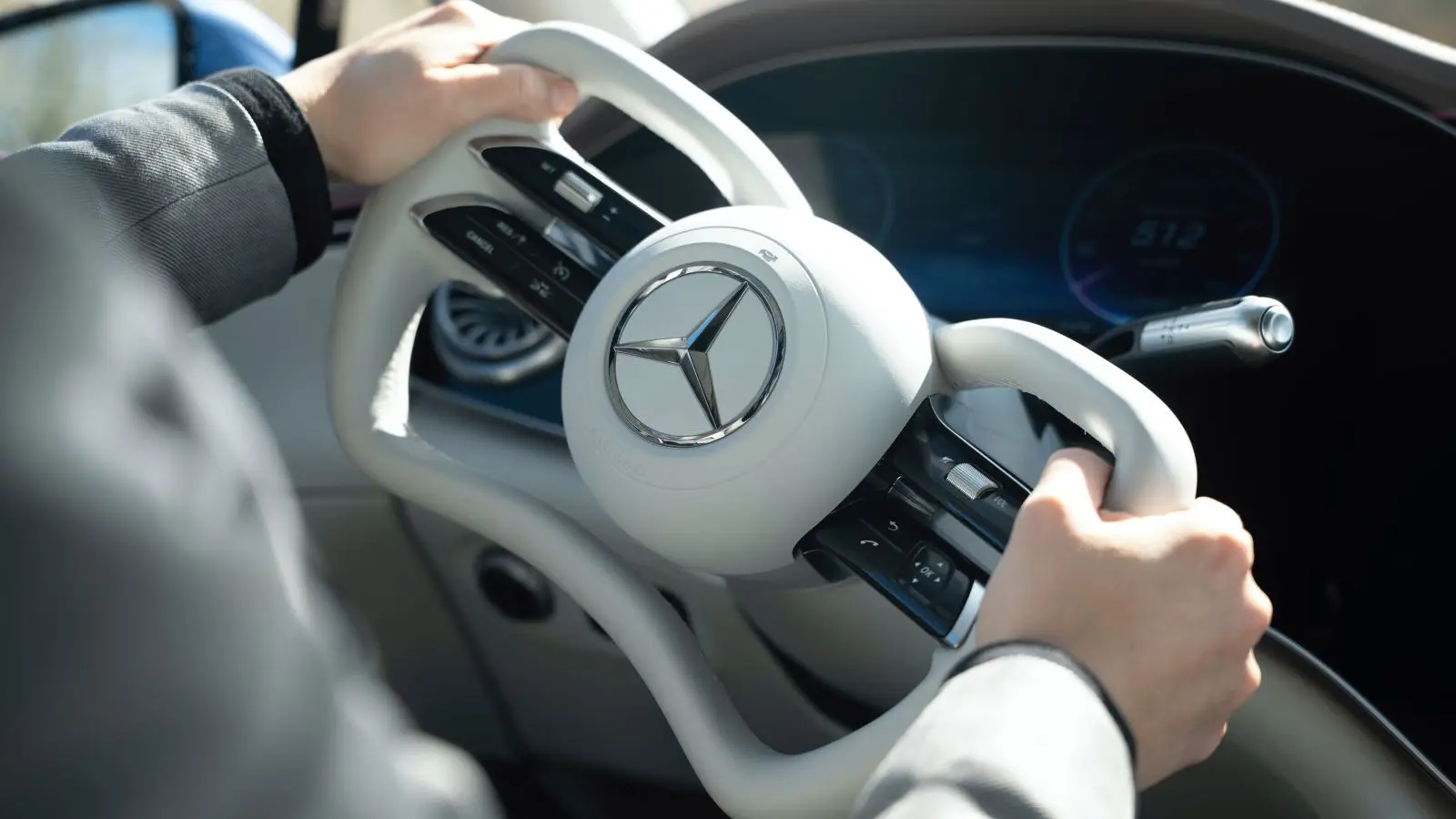
This technology also reshapes the vehicle’s interior architecture. Without a physical steering column, the EQS features a more compact, flatter steering wheel that improves visibility of the driver display and makes entry and exit easier. To match this new layout, Mercedes-Benz developed a redesigned airbag system, capable of deploying safely without relying on a traditional closed steering wheel rim.
The full potential of steer-by-wire becomes clear when combined with rear-axle steering. At low speeds, the rear wheels turn in the opposite direction to improve maneuverability and reduce turning radius. At higher speeds, they turn in the same direction as the front wheels to enhance stability. In the EQS, this system reaches up to 10 degrees, which is particularly beneficial for large electric vehicles with long wheelbases.
Safety remains central to the system’s design. Mercedes-Benz uses a redundant architecture with duplicated signal paths, power supply, and actuators. Even in the unlikely event of a failure, lateral control is maintained through rear-axle steering and targeted braking interventions via ESP. Before entering production, the system completed over one million kilometers of testing on benches, tracks, and public roads.
The introduction of steer-by-wire in a production EQS reflects a broader industry direction. Suppliers such as ZF and Bosch view such systems as a foundation for further automation, as electronically controlled steering integrates more easily with automated driving functions. Mercedes-Benz itself links the technology to the development of Level 3 systems, where the vehicle can take over certain driving tasks.
At the same time, conventional electromechanical steering remains available as an alternative. This indicates that steer-by-wire is still at an early stage of adoption. Yet its arrival in a production vehicle signals a clear transition: steering is gradually moving from a mechanical system to a digital one.
Mark Havelin
2026, Apr 04 22:04

