
How Proper Tyre Storage Affects Safety and Lifespan
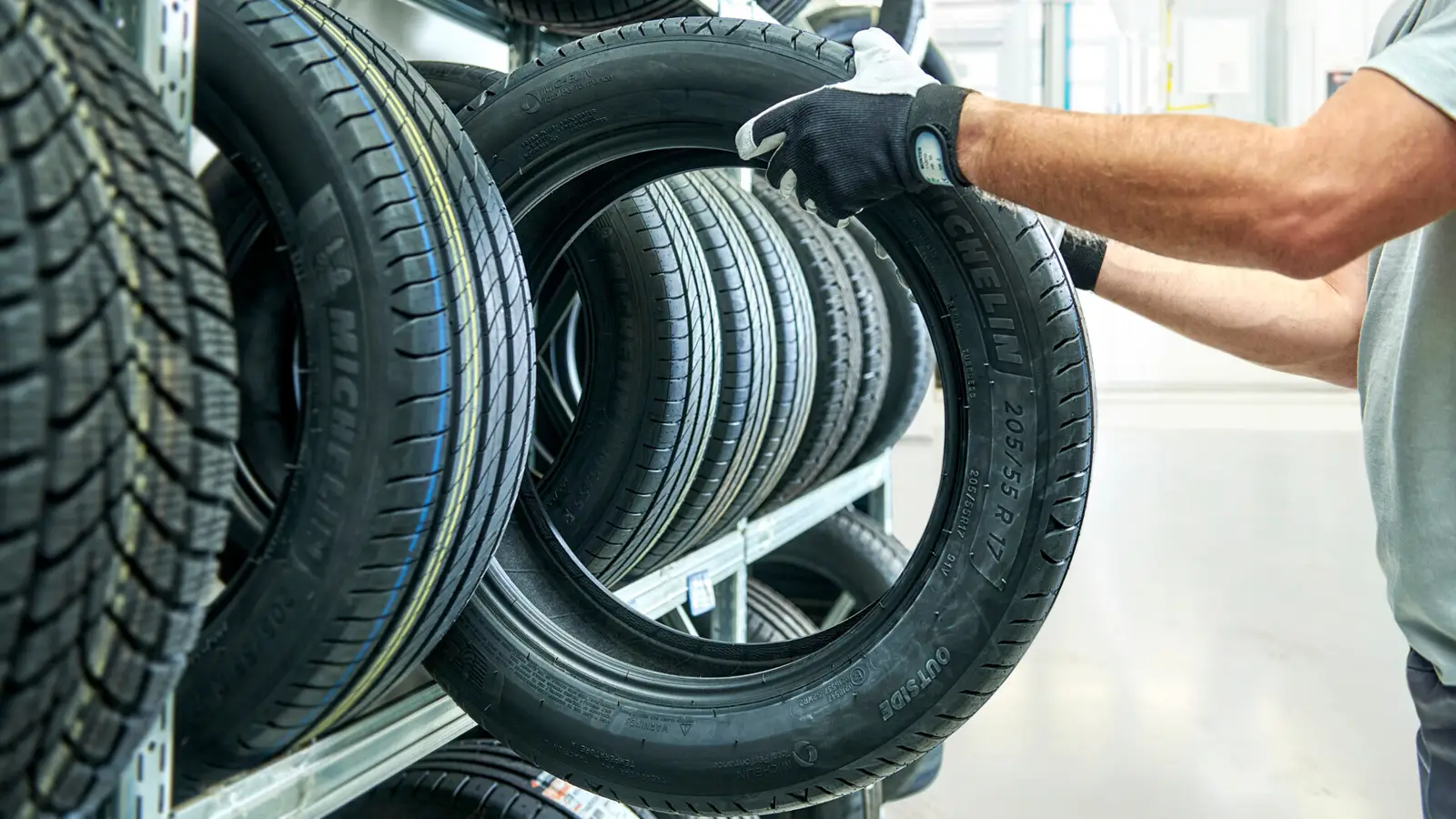
Škoda outlines how tyre storage conditions impact lifespan, safety and performance. Learn key rules, risks and expert advice to maintain tyres between seasons.
Tyres remain the only point of contact between a car and the road, yet attention to them is often limited to seasonal replacement. In reality, storage conditions play a direct role in determining their lifespan, safety, and performance.
Škoda highlights that tyre wear is influenced not only by mileage but also by pressure, driving style, and suspension condition. Even well-maintained tyres can lose their properties if stored incorrectly during off-season periods, particularly in regions where seasonal tyre changes are routine.
The storage process itself is straightforward but requires discipline. Before storing, tyres should be cleaned of dirt, stones, and debris, then thoroughly dried. Moisture, along with exposure to chemicals, is known to accelerate rubber degradation. Each tyre should also be inspected for damage and sufficient tread depth.
Storage conditions are critical. Tyres should be kept in a dry place, protected from direct sunlight, with stable, moderate temperatures and no significant fluctuations. Experts note that UV radiation, ozone, and humidity accelerate ageing, reducing elasticity and increasing the risk of cracking. For this reason, outdoor storage or unstable environments are considered unsuitable.
The method of storage also matters. Complete wheels with rims can be stacked or hung, while tyres without rims should be stored upright and periodically rotated to prevent deformation. This difference is related to how structural load is distributed within the tyre.
Seasonal changes provide an opportunity not only for inspection but also for extending tyre life. Rotating tyres between axles helps ensure more even wear, although this does not apply to vehicles with different tyre sizes on the front and rear. Directional tyres must also be installed correctly and cannot be swapped from side to side.
Damage remains a critical safety factor. Sidewall defects, including bulges, indicate internal structural failure and require immediate replacement. Similarly, serious punctures or damage in sensitive areas are not considered reliably repairable. Experts emphasize that tyres should be replaced in pairs on the same axle to maintain predictable vehicle behaviour.
Tyre age is another important factor. While recommendations vary, manufacturers and automotive organizations generally agree that tyres become less reliable after several years, with many advising replacement before reaching 8–10 years regardless of apparent condition.
Škoda also notes the introduction of a “+” marking on certain tyres, indicating models developed in cooperation with the car manufacturer for specific vehicles. Such tyres are designed to optimize performance, although drivers may choose any tyres that meet approved dimensions.
All-season tyres are presented as a practical solution for moderate climates and urban use, but they remain a compromise. Even modern designs cannot fully match the performance of dedicated winter or summer tyres in demanding conditions.
Ultimately, proper storage is not a secondary concern but an essential part of vehicle maintenance. It is during this period that the long-term performance and safety of tyres are largely determined.
Mark Havelin
2026, Apr 04 23:57