
Skoda introduces DuoBell to address ANC headphone risks
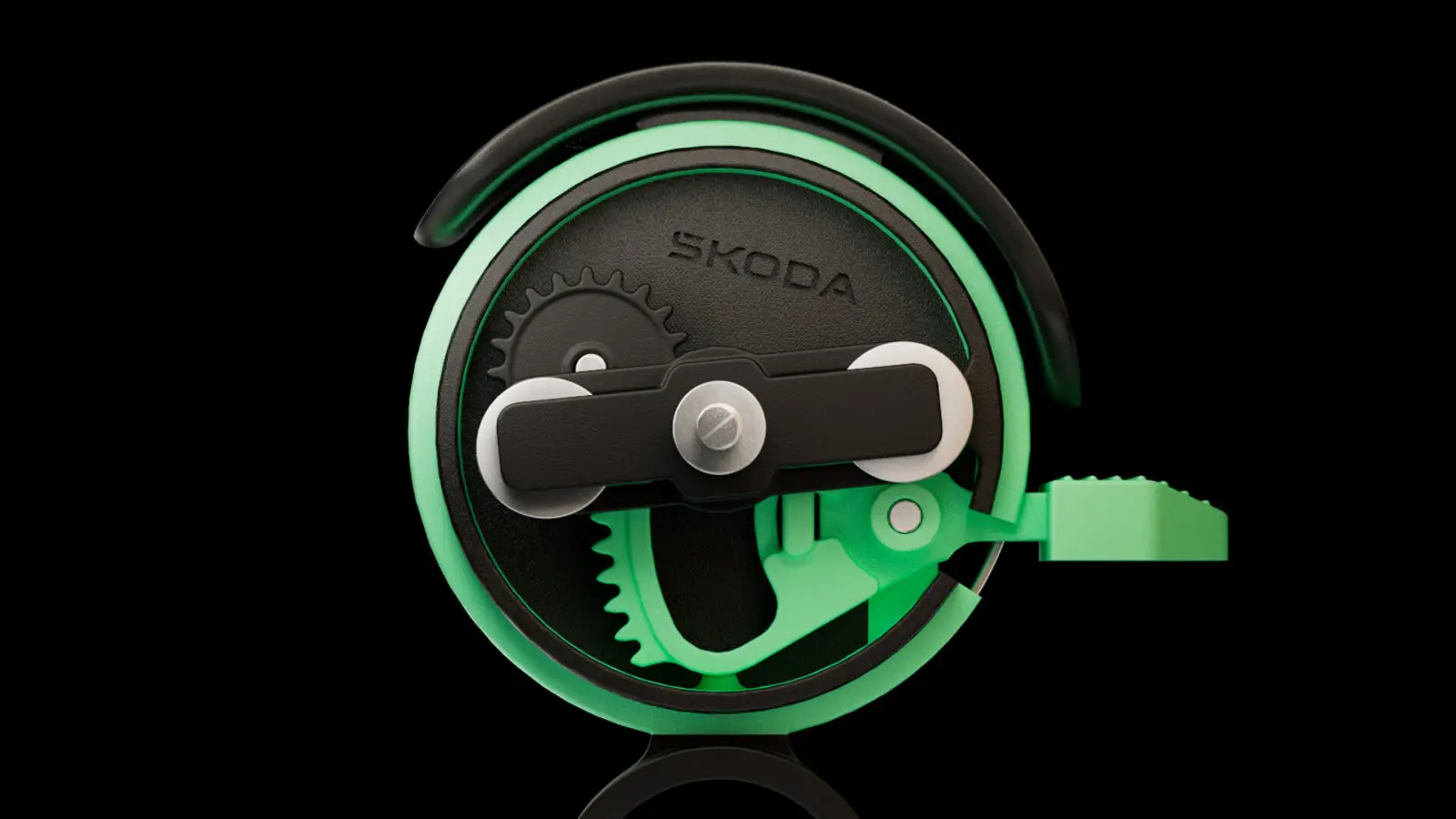
Skoda presents DuoBell, a bicycle bell designed to remain audible through noise-cancelling headphones, addressing rising cyclist and pedestrian collisions in cities.
A bicycle bell that can be heard through active noise cancellation — this is the solution Škoda Auto has introduced to address the growing issue of distracted pedestrians wearing headphones.
The DuoBell was developed in response to a clear urban trend: as the number of cyclists increases, so does the risk of collisions with pedestrians. In London alone, where around 1.5 million bike trips take place ежедневно, up to 54% of headphones sold feature active noise cancellation, while cyclist–pedestrian incidents rose by 24% in a single year.
The core of the problem lies in how ANC technology works. By generating an inverted sound wave, it cancels external noise, but not across all frequencies. This limitation became the starting point for the project.
Working with scientists from the University of Salford, the team tested hundreds of sound signals across several leading headphone models and identified a narrow frequency band around 750 Hz that ANC systems fail to suppress effectively. This range was defined as the “safety gap.”
The DuoBell is built around this discovery. Its design combines a primary tone at approximately 750 Hz with an additional frequency to reinforce audibility. Despite the advanced concept, the bell remains fully mechanical. Engineers adjusted material thickness and introduced precise structural modifications to achieve the required frequency without increasing the size of the device.
Testing showed measurable results. In simulations, pedestrians were able to detect an approaching cyclist up to 22 meters earlier, gaining around five extra seconds compared to a standard bell — a difference that can determine whether a collision is avoided.
Real-world trials on the streets of London, conducted with delivery couriers, confirmed the findings. Participants reported that the bell was clearly noticeable and more effective than conventional solutions in everyday traffic conditions.
The project also reflects Škoda’s long-standing connection to cycling. Having started as a bicycle manufacturer more than 130 years ago, the company continues to support major cycling events. DuoBell extends this legacy into a modern context shaped by new urban challenges.
Škoda plans to make its research publicly available and is exploring broader deployment of the solution. While London served as the testing ground, the concept is aimed at cities worldwide where rising cycling activity intersects with the widespread use of noise-cancelling headphones.
Mark Havelin
2026, Apr 07 21:25