
BMW iX5 Hydrogen Tank Technology Enables 750 km Range
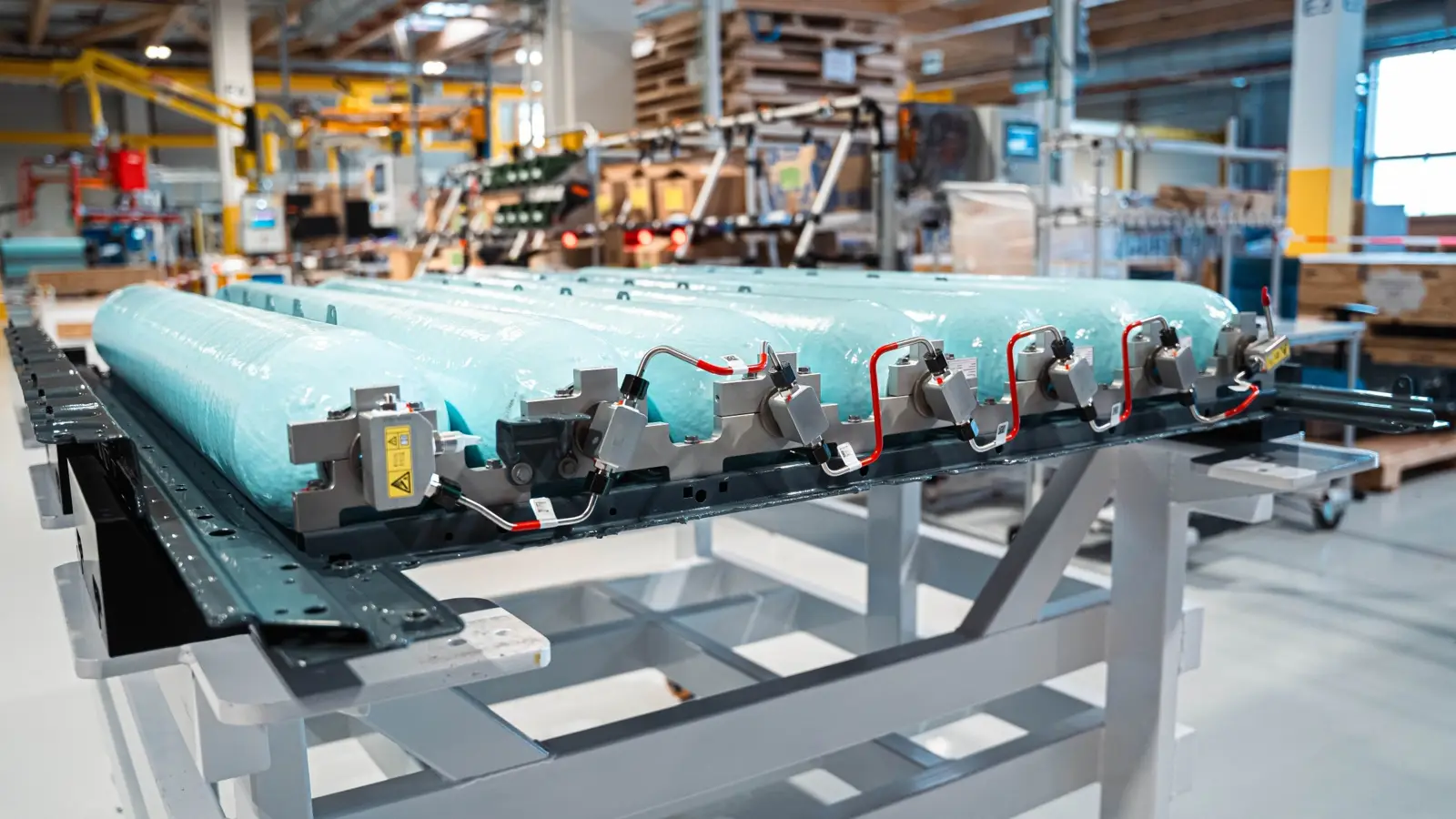
BMW presented a new hydrogen tank system for the iX5 Hydrogen, enabling up to 750 km range, fast refuelling and flexible production with multiple drivetrain options.
750 kilometers of range and refuelling in under five minutes — BMW has unveiled a new hydrogen storage system for the iX5 Hydrogen, reshaping vehicle packaging and moving the technology closer to series production.
The core change lies in the design itself. Instead of traditional cylindrical tanks, the system uses seven high-pressure vessels (700 bar) combined into a flat, integrated structure. Mounted within the vehicle body and protected by its frame, the setup stores at least 7 kilograms of hydrogen without compromising cabin space, while extending range up to 750 kilometers.
This redesign goes beyond engineering refinement. BMW demonstrates that a hydrogen drivetrain can be integrated into a production-ready architecture without sacrificing interior layout or structural efficiency. The new X5 platform supports five different powertrain variants — from conventional engines to battery-electric and hydrogen systems — all built on the same production line, reducing complexity and improving scalability.
The storage system is only one part of the drivetrain. It works alongside a third-generation fuel cell system and a Gen6 high-voltage battery. Inside the fuel cell, hydrogen is converted into electricity that powers the electric motor, with water as the only by-product. Refuelling takes just a few minutes, remaining one of the defining advantages over battery-electric vehicles.
BMW is not developing this technology alone. The fuel cell system is being created in cooperation with Toyota, a partnership that has been in place for more than a decade. The project is also supported by public funding, with Germany contributing €191 million and the state of Bavaria adding €82 million under the Hy2Move initiative.
The development timeline shows continuity rather than experimentation. BMW has been working on hydrogen mobility since the early 2000s, and in 2023 deployed a pilot fleet of iX5 Hydrogen vehicles for real-world testing. The company now points to 2028 as the target for broader market introduction.
At the same time, the market context remains challenging. Hydrogen vehicles offer electric driving with long range and rapid refuelling, but infrastructure is still limited. In Europe, despite regulatory plans to expand the network and requirements for stations every 200 kilometers along key corridors, availability remains uneven.
Against this backdrop, BMW’s approach reflects a broader strategy. By keeping multiple drivetrain options on a single platform, the company positions itself for different future scenarios. If hydrogen infrastructure expands, the iX5 Hydrogen is designed to scale within an existing production system.
Mark Havelin
2026, Apr 11 10:03