
Nissan presents AI-driven mobility vision for future cars
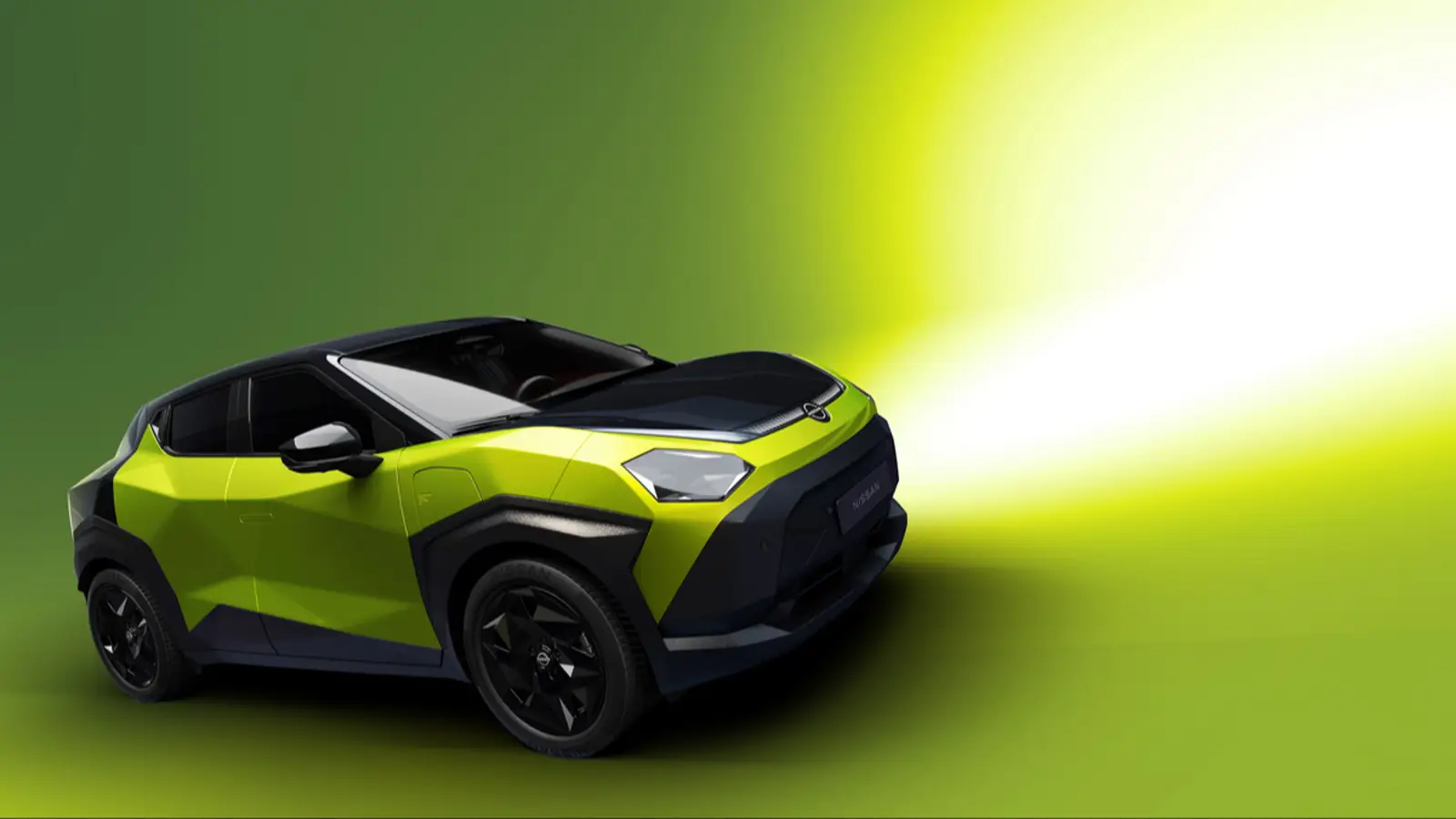
Nissan outlines its AI mobility strategy, targeting AI Drive in 90% of models, expanding electrification and autonomy. Explore what this means for future vehicles.
Nissan plans to bring artificial intelligence to nearly its entire lineup, targeting AI Drive technology in up to 90% of future models, a move that shifts the role of the car far beyond traditional driving.
The company unveiled its long-term strategy, Mobility Intelligence for Everyday Life, built around the idea that vehicles should not just transport people, but integrate seamlessly into daily routines. The goal is to create cars that understand context, adapt in real time, and support users without demanding constant attention.
At the center of this vision is the AI-Defined Vehicle, combining two key systems. AI Drive focuses on driving and autonomy, while AI Partner transforms the car into a digital assistant, connecting with smartphones and the cloud, responding to driver conditions, and helping manage tasks on the move. Nissan describes a shift from rule-based systems to models that learn from real-world scenarios and make decisions in complex environments.
This approach builds directly on the evolution of ProPILOT technologies. Nissan has already introduced hands-off highway driving with ProPILOT 2.0, and the next-generation system, expected around 2027, is designed to extend into urban environments. However, confirmed data shows that these systems still require driver supervision, even as they incorporate more advanced AI models and sensor setups, including lidar.
The strategy matters in the context of a rapidly evolving industry. Mercedes-Benz has already certified Level 3 automation, Tesla continues to expand its neural network-based driving systems, and Chinese manufacturers are accelerating AI deployment. Nissan’s approach differs in its emphasis on scaling these technologies across the mass market rather than limiting them to flagship vehicles.
Electrification plays a supporting role in this shift. Nissan continues to expand its e-POWER system, where the electric motor always drives the wheels while the combustion engine acts as a generator. This delivers an EV-like driving experience without the need for external charging. At the same time, the company is advancing fully electric vehicles and confirms plans to introduce solid-state battery EVs around 2028.
Beyond propulsion, Nissan is integrating vehicles into broader energy systems. Through V2X technologies, cars can supply power to homes and support energy grids. In Europe, the company plans to introduce more accessible bidirectional charging starting in 2026, moving toward practical large-scale deployment.
Partnerships are another pillar of the strategy. Nissan is working with UK-based Wayve on AI driving technology and with Uber on autonomous mobility services. A pilot robotaxi program using Nissan LEAF vehicles is planned for Tokyo by the end of 2026, marking an early step toward real-world deployment.
The technology shift is accompanied by a restructuring of the product lineup. Nissan will reduce its global range from 56 to 45 models, focusing on clearer roles and higher efficiency. New vehicles such as the X-Trail and Rogue with e-POWER, the fully electric Juke, the returning Xterra, and a reimagined Skyline are positioned as early examples of this direction, although detailed specifications have not yet been disclosed.
At the same time, Nissan is changing how cars are developed. Its Product Family strategy introduces shared platforms and components, already cutting development time by around 40% and aiming to reduce complexity while increasing production volume per model.
Geographically, the company is focusing on three lead markets: Japan, the United States, and China. Japan serves as a testing ground for new technologies, including autonomous services, the U.S. remains ключевым рынком для масштабных продаж, and China acts as a hub for development, cost efficiency, and exports.
Overall, Nissan is positioning its future vehicles as part of a broader ecosystem that connects mobility, digital services, and energy infrastructure. The real test of this strategy will come as new ProPILOT systems, electrified models, and autonomous services begin to move from concept to массовое производство in the coming years.
Mark Havelin
2026, Apr 14 21:57