
MAN eTruck completes Paris to Berlin electric logistics test
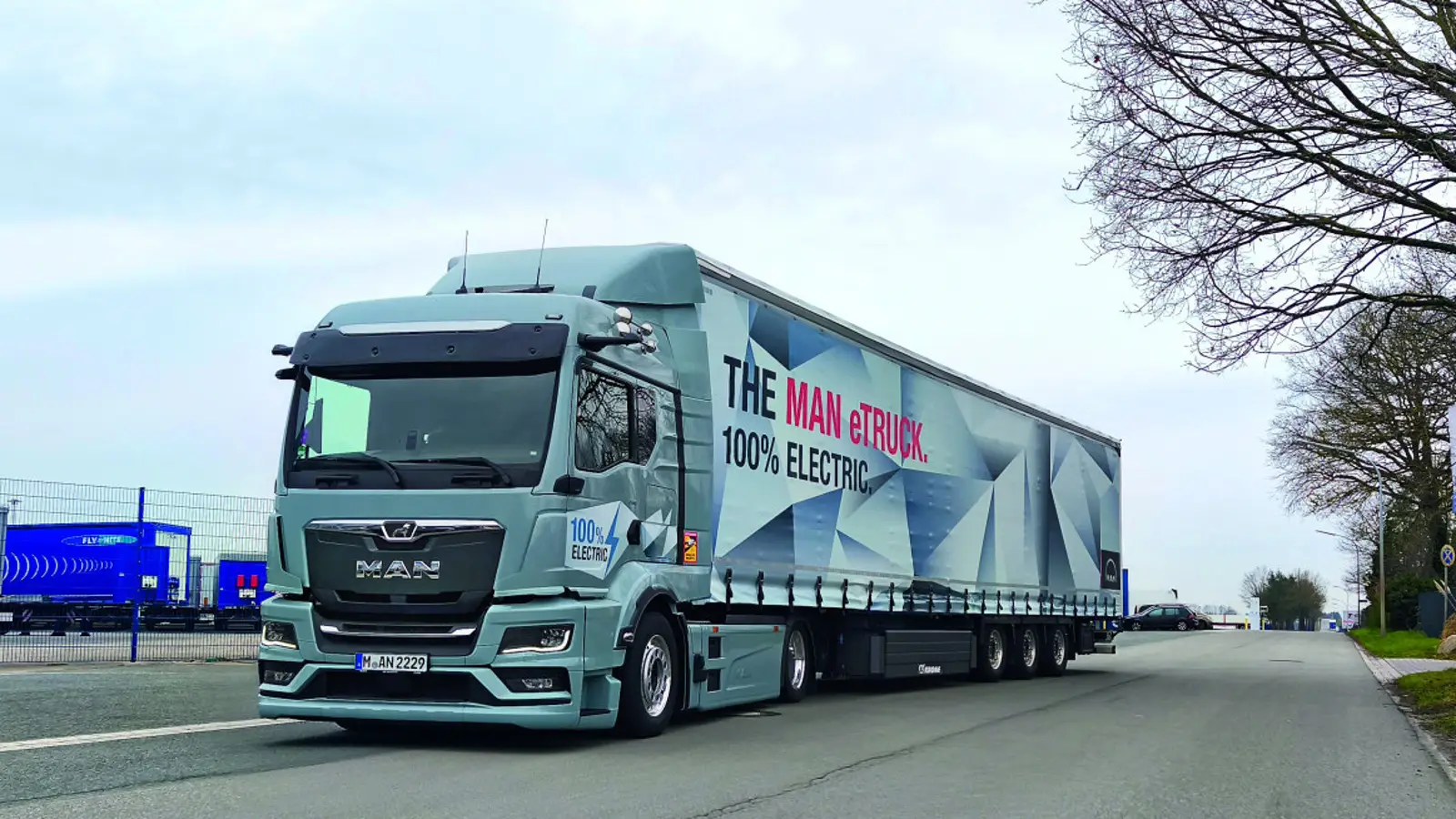
MAN presents an eTruck journey from Paris to Berlin, showing real-world electric long-haul logistics and charging infrastructure across Europe.
An electric MAN eTGS Ultra truck has set out on a roughly 1,000-kilometre journey from Paris to Berlin, aiming to prove in real conditions that long-distance electric freight transport in Europe is already viable.
The route, running from April 15 to 23, includes stops at Milence charging hubs across four countries. The network itself is a joint venture between TRATON Group, Daimler Truck and Volvo Group, designed to address one of the biggest challenges in electric logistics — the lack of dedicated high-power charging infrastructure for heavy trucks. By 2027, Milence plans to deploy at least 1,700 high-performance charging points across Europe, including megawatt-level systems.
For MAN, the journey is not just about showcasing a vehicle but testing an entire ecosystem. The eTGS Ultra and eTGX Ultra are currently the only series-production electric trucks with a low fifth-wheel height, enabling the use of high-volume trailers. This design allows operators to increase cargo capacity — up to 67 Euro pallets in certain configurations — while maintaining regulatory height limits. At the same time, the trucks offer a range of approximately 500–570 kilometres without intermediate charging, with megawatt charging systems capable of replenishing batteries in about half an hour.
The significance of this demonstration becomes clearer when placed in a broader context. Electric trucks from MAN have already accumulated millions of kilometres in customer operations across Europe, with logistics companies such as DACHSER and DB Schenker integrating them into regular transport cycles. In some cases, daily routes have reached up to 850 kilometres with planned charging stops, indicating that electric long-haul operations are no longer limited to pilot projects.
Economics is increasingly part of the equation. Studies suggest that battery-electric trucks are moving toward lower total cost of ownership compared to diesel vehicles, particularly under intensive usage conditions. However, this transition depends heavily on infrastructure expansion. European regulations already set clear targets, requiring charging stations for heavy-duty vehicles at intervals of 60 to 100 kilometres along major corridors, with steadily increasing power capacity.
MAN is addressing this shift with a broader strategy that combines vehicles with services. Its offering includes access to public charging through Charge&Go, digital tools for monitoring energy use and vehicle status, financing solutions, and driver training. The aim is to make the transition to electric transport more manageable for fleet operators, although large-scale adoption still hinges on the pace of infrastructure deployment.
The Paris-to-Berlin journey ultimately serves as a real-world test of the entire system — from battery performance and route planning to charging access and digital integration. If these elements continue to align in everyday operations, electric long-distance trucking could move from demonstration projects to standard practice sooner than previously expected.
Mark Havelin
2026, Apr 16 09:02