
Porsche patent shows color-changing body panels in motion
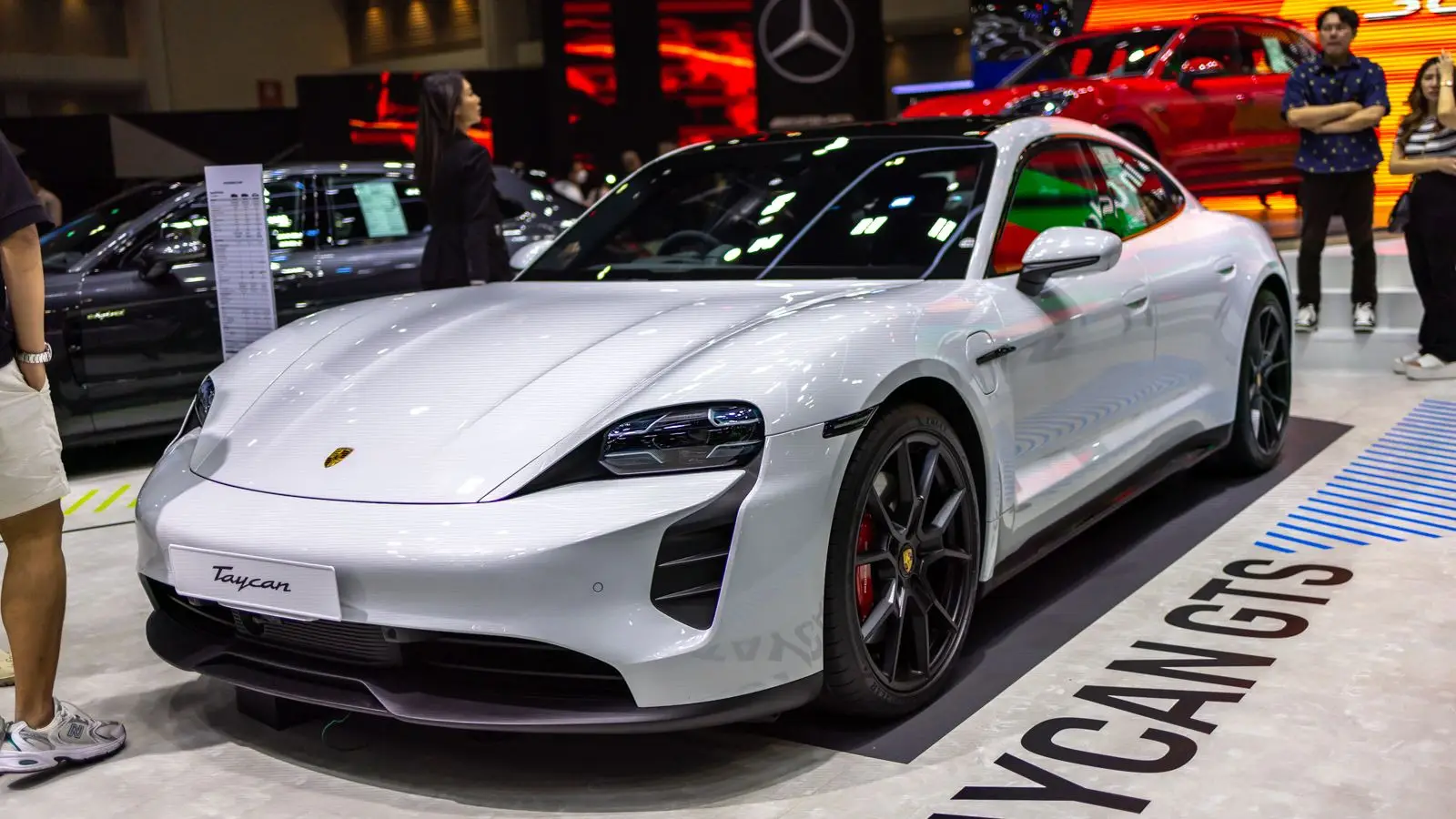
Porsche has presented a patent for body panels that can change color depending on driving mode and battery status. Explore how this technology could reshape car design.
Porsche has patented a body coating that can change color and visual elements in motion — not on glass, but directly on the car’s exterior panels. The concept is described in publication WO/2026/068006, outlining a vehicle with an actively controllable, optically variable coating that responds to electrical current and adjusts depending on driving mode or battery state.
At its core is a special layer or film capable of altering its appearance when voltage is applied. Patent descriptions and industry reports reference technologies such as electronic paper and paramagnetic coatings. This is not limited to styling: the surface can generate visual features like racing stripes that appear or shift color depending on whether the car is in a calm or performance-oriented mode.
The distinction from existing solutions is significant. Similar principles already exist in automotive glass, where electrochromic materials can dim under electrical input. Porsche’s proposal moves that concept onto the body itself, turning the exterior from a static surface into an active visual interface.
The functionality extends beyond aesthetics. The patent explicitly states that the vehicle’s color could reflect the battery’s state of charge. In practice, this would allow the car to communicate its condition externally by shifting color as energy levels change. Some descriptions also point to specific application areas, such as the rear diffuser or sections behind the rear wheels, where dynamic elements could be displayed.
The broader context reinforces the significance of the idea. BMW has already showcased concepts using E Ink technology capable of displaying multiple colors across the body. In contrast, Porsche’s approach appears more closely tied to vehicle operation, linking visual changes directly to driving modes and system status.
For now, the technology remains at the patent stage. There is no confirmed timeline for production, nor details on cost or durability. Questions remain about how such coatings would perform under real-world conditions, from environmental exposure to physical damage. Even so, the direction is clear: the car body is evolving from a passive shell into a functional and communicative surface.
Allen Garwin
2026, Apr 20 23:55