
Mercedes-Benz presents MB.DRIVE ASSIST PRO for urban driving
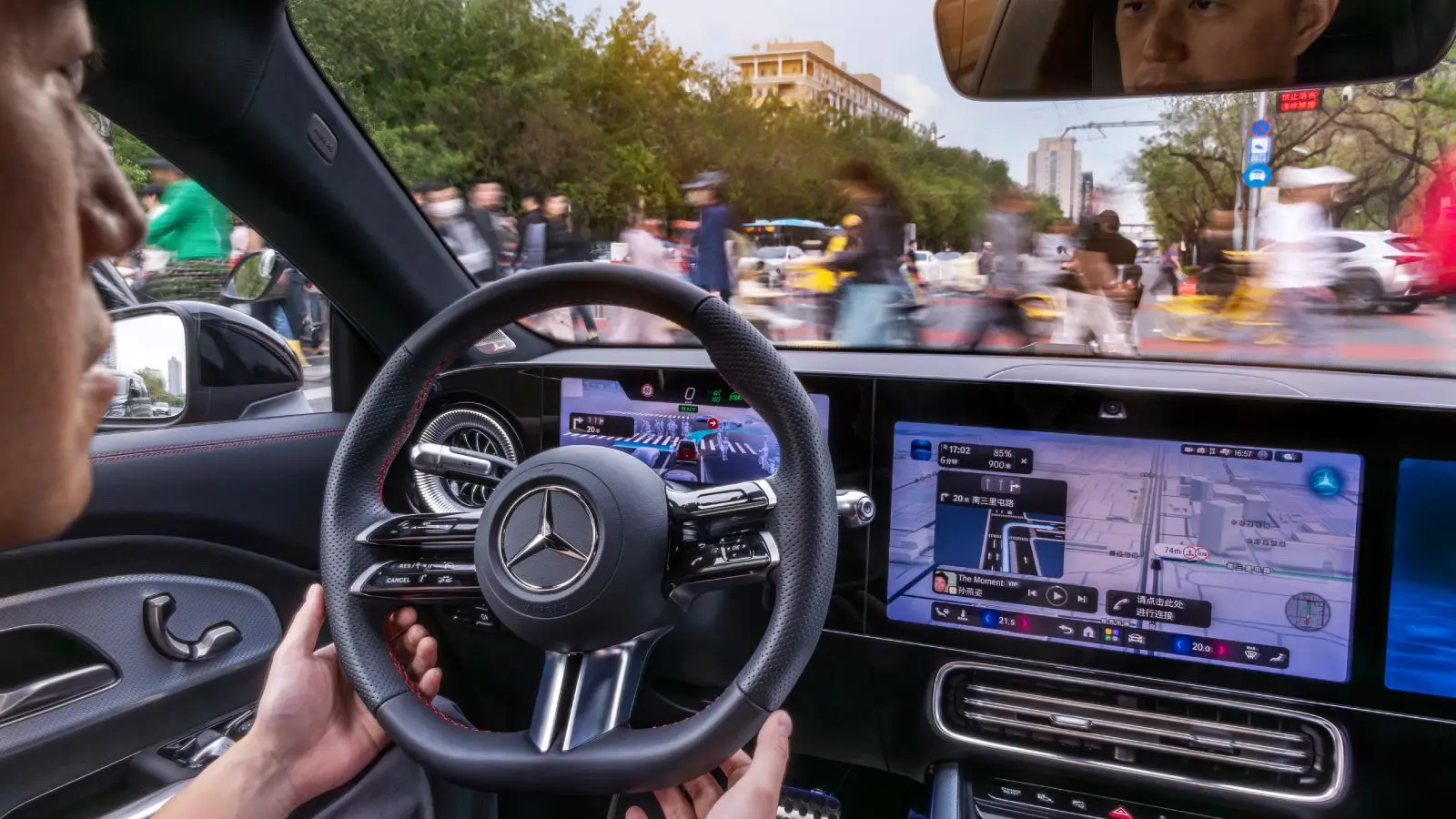
Mercedes-Benz unveils MB.DRIVE ASSIST PRO, a Level 2 driver assistance system combining navigation and automated city driving. Explore features and rollout details.
Mercedes-Benz has brought to the road a system capable of guiding a car through the city almost from parking to the final destination — yet without removing responsibility from the driver. The system, called MB.DRIVE ASSIST PRO, combines navigation and automated driving into a single continuous journey, operating within SAE Level 2.
The system is designed for complex urban environments. It can handle traffic lights, intersections, pedestrians, lane changes and dense traffic. A key feature is cooperative steering: the driver can adjust the trajectory without switching the system off, allowing it to continue assisting instead of disengaging completely.
The technical foundation relies on a broad sensor setup and high-performance computing. The vehicle processes data from around 30 sensors, including cameras, radars and ultrasonic units, using a computing system delivering up to 508 TOPS. Development is carried out in cooperation with NVIDIA, which provides both the AI driving stack and the computing architecture. The system uses a dual approach, combining AI-based driving with a parallel safety layer that supervises its actions.
Despite its capabilities, the system remains within Level 2. This means the driver must continuously monitor the road and remain responsible for the vehicle. Even if only light contact with the steering wheel is required, the system tracks driver attention and issues warnings if contact is lost, eventually slowing the vehicle if necessary.
This structure aligns with current regulations. In Europe, such technologies are classified as Driver Control Assistance Systems, which support but do not replace the driver. Higher levels of automation, such as Level 3 and above, require different legal frameworks and are only permitted under specific conditions.
The decision to focus on advanced Level 2 functionality also reflects strategic considerations. In the United States, regulatory differences between states complicate the deployment of higher-level autonomy, making enhanced assistance systems a more practical near-term solution. At the same time, these systems are seen as a foundation for future progression toward higher automation levels.
The technology was first introduced in China at the end of 2025, a market where similar features are already offered by local manufacturers and customer demand is strong. The United States is expected to follow in 2026, while deployment in Europe is planned later, around 2027, once new regulations come into force.
Early tests show that the system can already handle a significant portion of urban driving tasks, although driver intervention is still required in complex situations. This highlights the current stage of development: the system reduces workload, but does not replace the driver, reflecting the broader trajectory of automated driving technologies today.
Mark Havelin
2026, Apr 27 11:36