
McLaren-Atlas Copco smart tools transform MPC builds
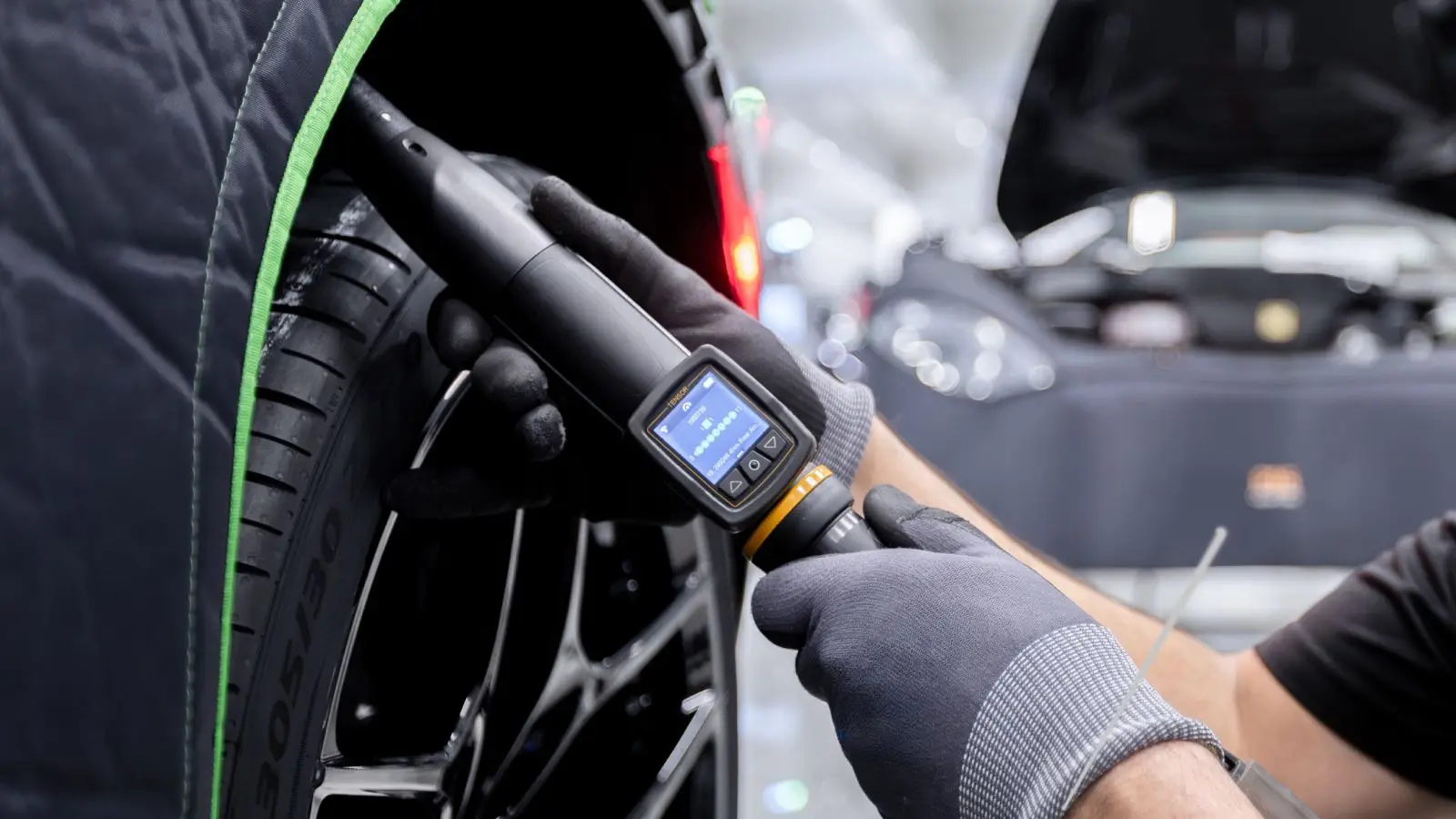
McLaren says Atlas Copco smart tools and software add real-time tightening traceability and analytics at the McLaren Production Centre for W1 builds.
McLaren Automotive and Atlas Copco are pushing hand-built supercar manufacturing into a more data-driven era at the McLaren Production Centre (MPC), using smart tools and real-time digital process control to raise precision without abandoning craftsmanship.
The systems are already integrated into the production of the Artura, 750S and GTS, and are now being applied to the McLaren W1 from the very first client cars. In McLaren’s description, data for every fastening operation is captured automatically into a digital “passport”, turning assembly into a continuously documented build record rather than a set of isolated manual steps.
At the core of the setup is a connected tooling ecosystem. Avantguard is positioned as an error-proofing and assembly-process control platform, designed to guide operations and integrate with industrial systems. ToolsNet 8 handles tightening-process monitoring and real-time readouts, supporting continuous improvement through documented results. On top of that, ALTURE Optimize adds advanced analytics and machine learning intended to spot trends and potential issues before they surface on the line.
McLaren’s W1 is used in the release to illustrate why repeatable accuracy matters. The car’s suspension incorporates lightweight titanium fasteners that demand controlled, repeatable torque-angle application to protect joint integrity. For those operations, McLaren operators use the STRwrench Compact Controller paired with a 250Nm smartHEAD. For work on the W1’s rear aerodynamic system, the release cites the one-handed Tensor ICB-A.
The W1’s aero context is also spelled out elsewhere in McLaren’s official information: in Race Mode, the McLaren Active Long Tail extends by around 300 mm. In the release’s framing, achieving the intended packaging and clearances in such systems depends on guaranteed assembly conditions—precisely the kind of repeatability the connected tooling stack is meant to support.
This direction fits the broader MPC philosophy: cars are meticulously hand-assembled, but the line is increasingly supported by modern digital infrastructure. McLaren’s own description of the Production Centre notes an output of 22 cars per day, a scale where consistent execution and traceability become as important as artistry.
If the approach delivers as intended, the combination of traceable fastening data, operator guidance and predictive analytics could become a defining layer for low-volume performance manufacturing—keeping the “hand-built” character intact while making critical assembly steps measurable, repeatable and easier to safeguard as engineering complexity rises.
Mark Havelin
2025, Dec 03 22:50