
CLS 350 CGI Featured in Mercedes-Benz Museum’s Youngtimer Exhibit
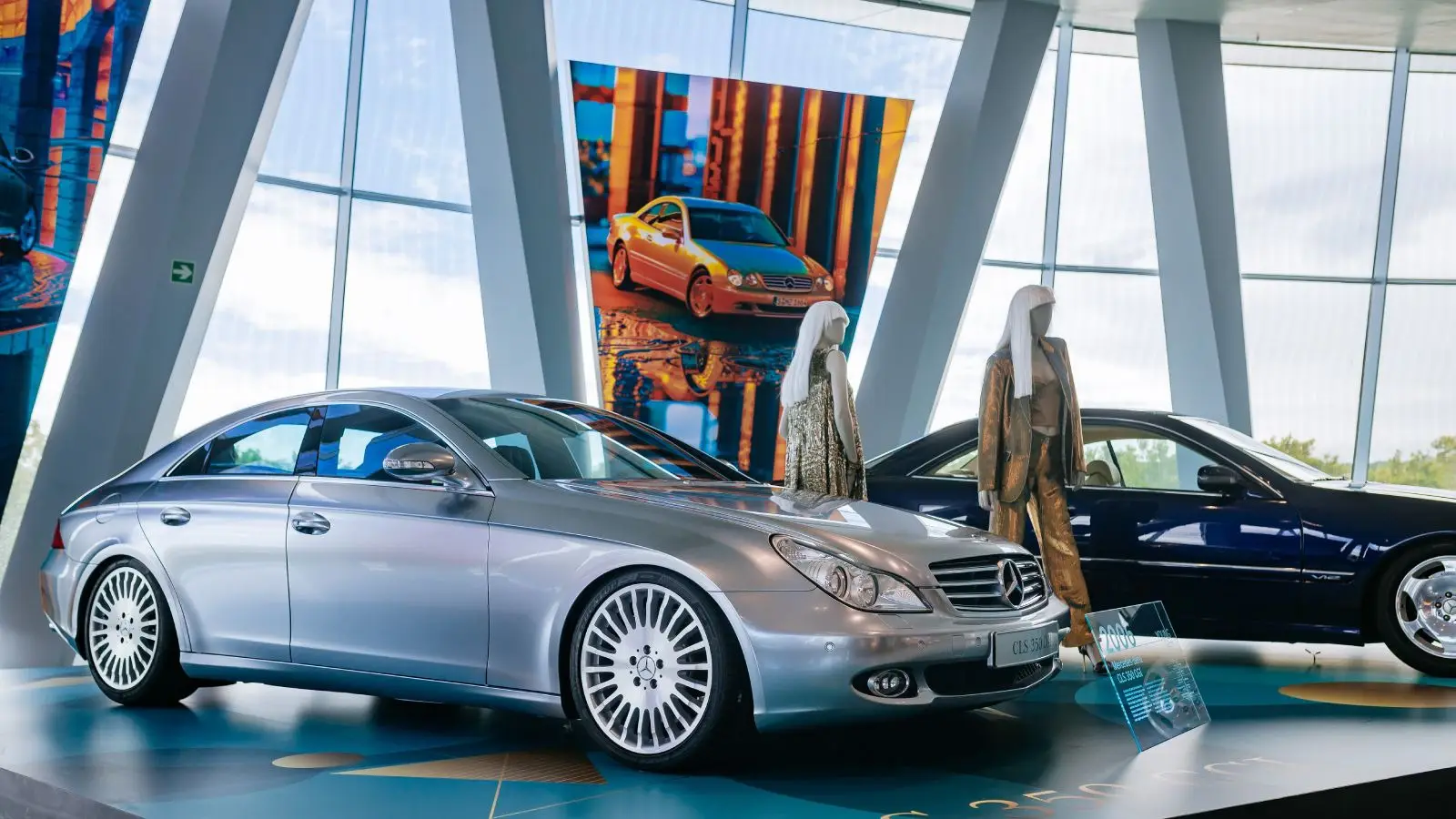
Explore how Mercedes-Benz Museum presents the original CLS 350 CGI show car within the Youngtimer exhibition, highlighting its design legacy and CGI technology.
In Stuttgart, the Mercedes-Benz Museum is bringing one exhibit into sharp focus again—close enough that paint, leather and technology start to read like a time capsule. The latest instalment of the museum’s Close-up series (No. 8/2025) centres on the Mercedes-Benz CLS 350 CGI (C219): the original Geneva Motor Show display car from 2006, now on view in the special “Youngtimer” exhibition in Collection Room 5.
At first glance, this CLS is a showcase of early-2000s design thinking. Its exterior finish, Satin alubeam silver—created exclusively for 2006 show cars and never offered as an official production colour—creates an almost “liquid metal” effect, with light breaking softly across the sculpted surfaces. The look is reinforced by 19-inch multi-spoke wheels, striking a careful balance between dynamism and understatement—the same visual language that once helped CLS define the idea of the “four-door coupé”.
That shape had been signposted earlier. In 2003, Mercedes presented the Vision CLS at IAA Frankfurt, combining sedan practicality with coupé elegance and emphasising the gesture with frameless side windows. By spring 2004, the production CLS (C219) was presented at the Geneva Motor Show, cementing the new template. Contemporary museum and specialist accounts link the project to design leadership around Prof. Peter Pfeiffer, describing the CLS as part of a broader push to give the brand a more emotional, confident presence.
Yet this particular exhibit matters for more than its roofline. The CLS 350 CGI served as a technology carrier in 2006, when Geneva provided a high-profile stage for CGI (Charged Gasoline Injection): a petrol engine with piezoelectric direct injection and spray-guided combustion. Archival descriptions and technical material associate the concept with roughly 10% lower fuel consumption in the European test cycle; English-language summaries cite a figure of 9.1 l/100 km. The performance numbers, meanwhile, were unmistakably assertive: a 3,498 cc V6 delivering 215 kW (292 hp), with top speed limited to 250 km/h.
Inside, the car tells its era in a different register: semi-aniline Nappa leather in black anthracite, root-wood trim, and a distinctly formal, lounge-like ambience. Together, these details help explain how the CLS quickly became more than a model line—it became a marker of Mercedes-Benz’s shift toward an image shaped as much by emotion and design presence as by comfort and engineering.
The CLS 350 CGI can be seen as part of the “Youngtimer” special exhibition until 12 April 2026. The show presents ten iconic vehicles from the 1990s and 2000s, and places the CLS 350 CGI alongside the CL 600 (C215) within the themed section “Feinsinn”. For the museum, it is a clear way of showing how yesterday’s show cars are already becoming documents—of changing tastes, and of the moments when design and technology quietly reset expectations.
Mark Havelin
2025, Dec 05 08:55