
Mercedes-Benz details the new GLB’s tech, safety and design
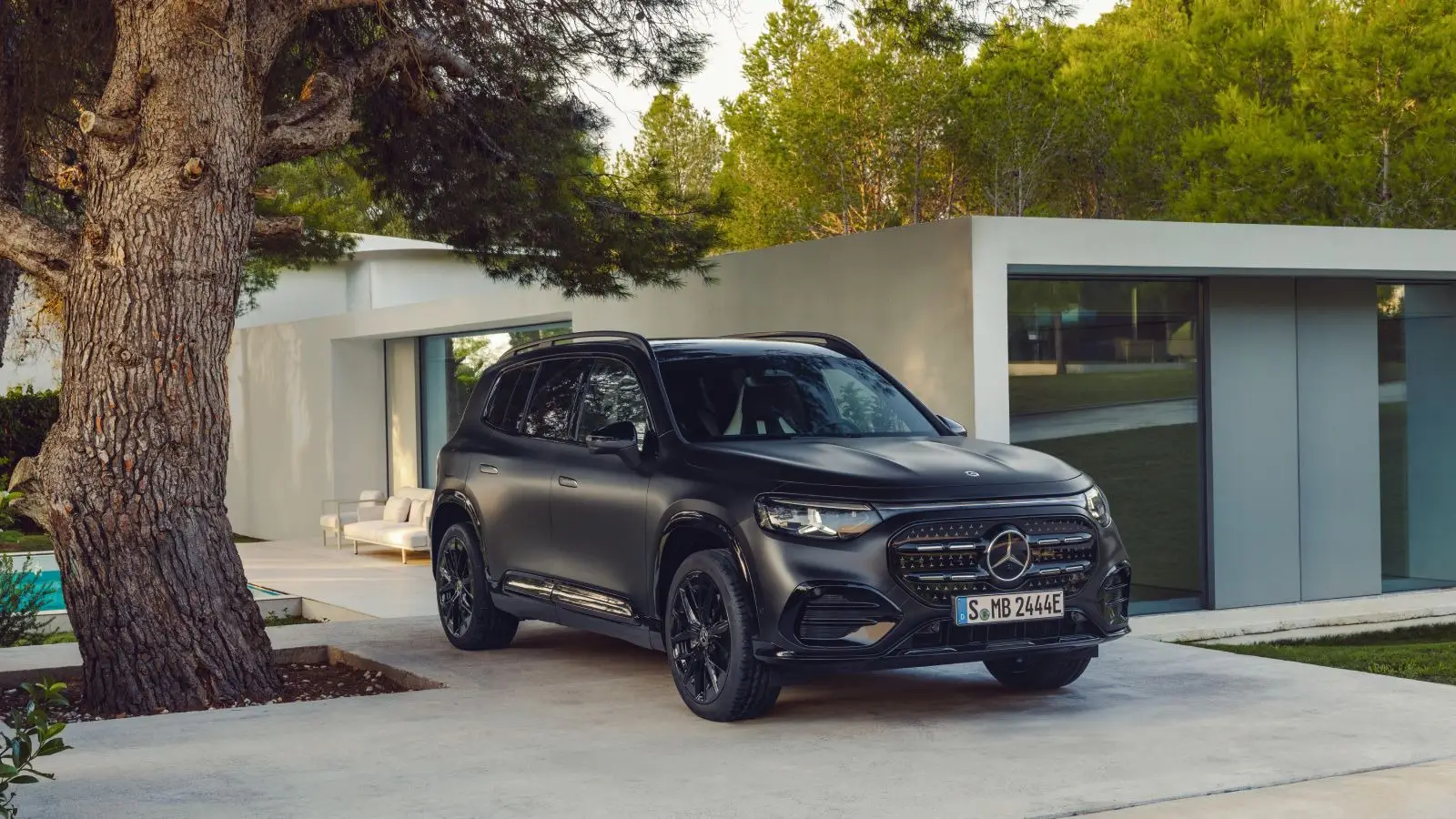
Mercedes-Benz press materials detail the new GLB: up to 631 km WLTP range, 800V fast charging, MB.DRIVE safety tech and updated design. Read key specs.
Mercedes-Benz has published fresh technical and design details on the new GLB, presenting it as both an engineering-focused compact SUV and a day-to-day vehicle shaped around digital features and usability. The focus is split between drivetrain, safety and driver assistance on one side, and design plus aerodynamics on the other—an especially relevant pairing for an electric model where airflow can translate directly into real-world range.
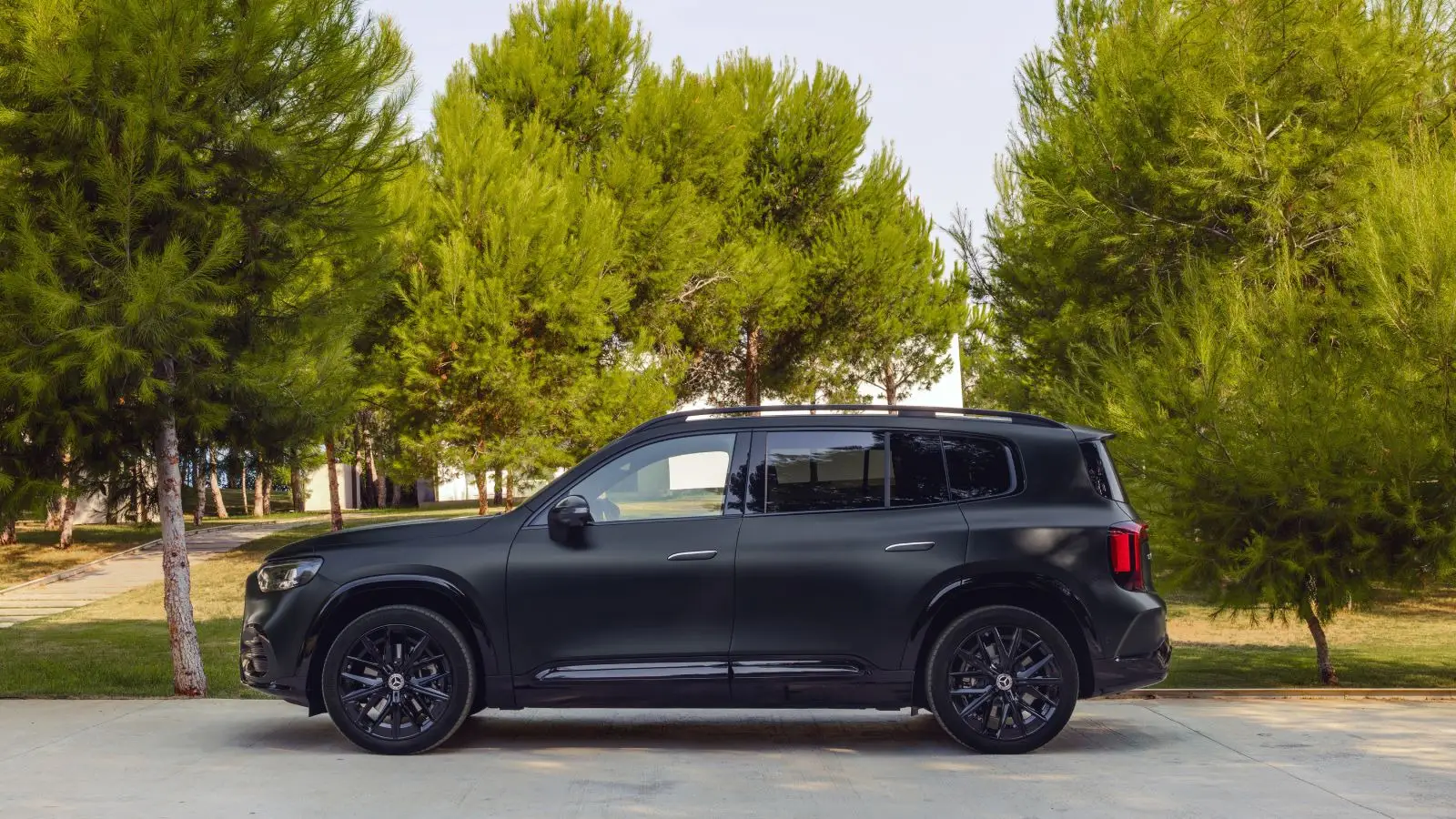
At launch, Mercedes-Benz outlines two battery-electric versions: the GLB 250+ with EQ Technology and the GLB 350 4MATIC with EQ Technology. For the GLB 250+, the brand states a range of up to 631 kilometres (WLTP), supported by an 800-volt electrical architecture. In this configuration, the company claims brief charging stops are possible: DC fast charging on 800-volt stations is said to reach up to 320 kW, and the GLB can add up to 260 kilometres (WLTP) in 10 minutes under the ISO/SAE 12906 conditions. Mercedes-Benz also describes a pathway for 400-volt charging infrastructure via an optional DC converter. On AC, charging is listed at up to 22 kW, with the note that 11 kW is standard and 22 kW is optional.
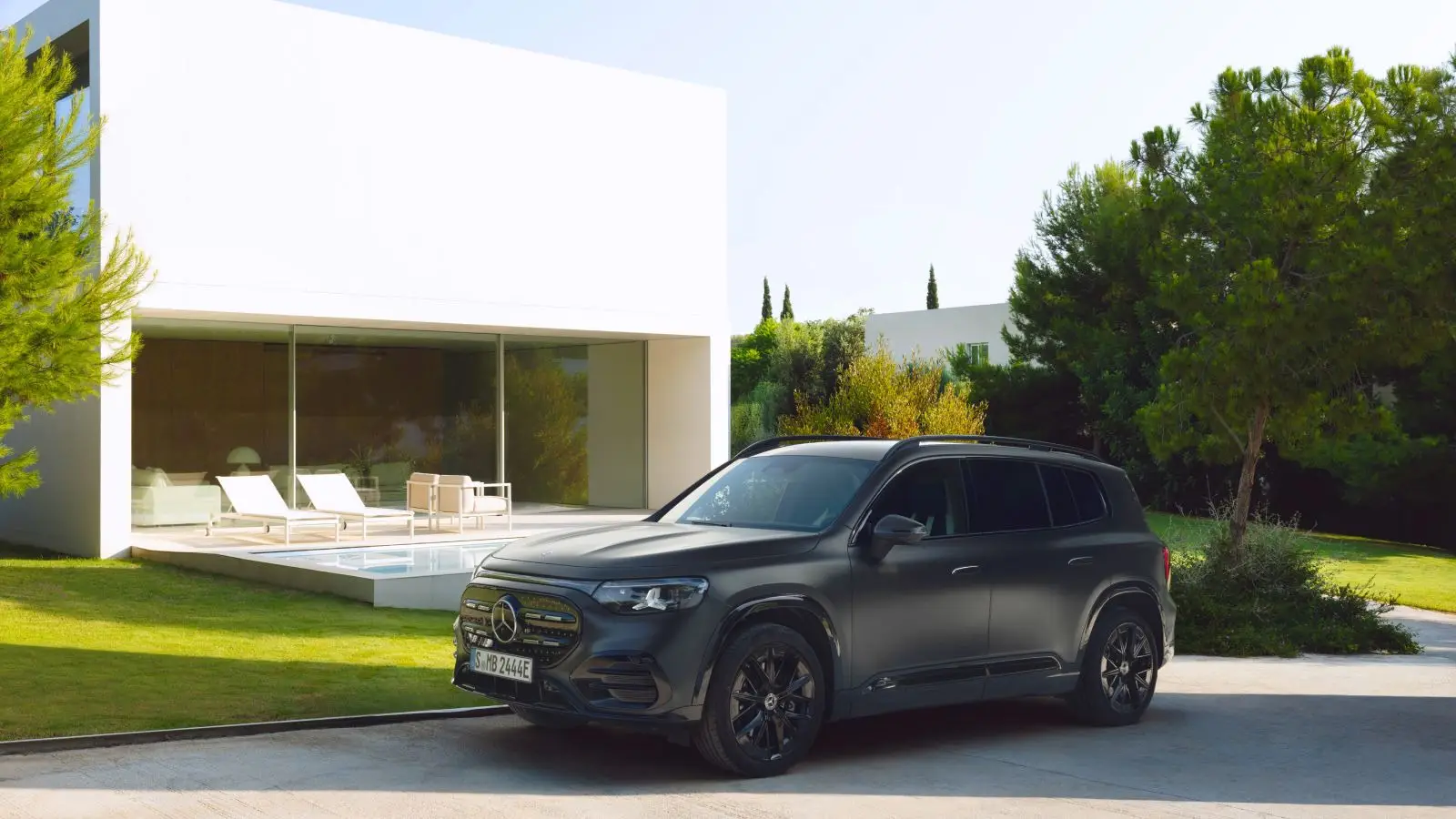
The electric powertrain story is framed around both efficiency and pulling power. Mercedes-Benz highlights a new Electric Drive Unit, EDU 2.0, with a stated 93% battery-to-wheel efficiency over long distances. The main drive layout is rear-wheel drive, which the company positions as bringing a configuration associated with higher segments into this class. The hardware description includes a permanently excited synchronous motor (PSM), a silicon carbide (SiC) inverter for energy efficiency, and a reduced share of heavy rare earth elements compared with previous motor generations.
A notable technical feature is the two-speed transmission on the rear axle. Mercedes-Benz says the first gear is short for strong launches, towing and urban efficiency, while the second gear is designed for high-speed power delivery and motorway efficiency—also noting that the top speed is reached in second gear.
On the GLB 350 4MATIC, Mercedes-Benz adds an 80 kW front drive unit that functions as a “boost” motor and engages when additional power or traction is required. The company points to a Disconnect Unit (DCU) that can decouple the front motor under low load, stating that front-axle losses can be reduced by up to 90%, supporting range benefits.
Practical capability is underlined with a towing claim: Mercedes-Benz states the all-electric GLB models can tow up to two tonnes with an optional semi-electric trailer hitch, positioning them as suitable towing vehicles for full-size caravans. The brand also says the GLB is prepared for bidirectional charging (Vehicle-to-Home and Vehicle-to-Grid), with the function planned for a later over-the-air update after market launch and subject to market-specific legislation and energy-provider requirements.
Efficiency is also addressed through braking and recuperation. Mercedes-Benz describes a new one-box brake system intended to optimise energy recovery, with recuperation power stated at up to 200 kW. Four recuperation modes are listed (including coasting without recuperation and an intelligent automatic setting), and in the automatic mode an ECO Assistant can prompt the driver to lift off and, in certain scenarios, bring the vehicle to a complete stop.
Driver assistance is grouped under the MB.DRIVE umbrella. For Europe, Mercedes-Benz specifies the hardware basis as eight cameras, five radar sensors and 12 ultrasonic sensors, supported by a water-cooled high-performance computer designed with headroom for future functions and regular OTA updates. The brand also lists optional digital packages ranging from MB.DRIVE ASSIST (SAE Level 2) with lane change support, to more advanced assistance functions planned for later, as well as updated parking assistance including improved space detection, angled parking support and automated manoeuvres when leaving a space.
In passive safety, Mercedes-Benz outlines structural measures such as a honeycomb structure in the side skirts for improved side-impact energy absorption, and introduces a centre airbag as standard for the GLB. High-voltage safety is described as a multi-stage concept with both reversible and irreversible shutdown logic depending on crash severity, along with dedicated cut-off points for rescue workers.
Mercedes-Benz also outlines a hybrid path that follows the EV launch: a 48-volt hybrid featuring an electric motor integrated into a compact eight-speed eDCT. The company notes the hybrid can drive electrically at inner-city speeds under certain conditions, with “electric sailing” up to around 100 km/h and recuperation of up to 25 kW. The combustion engine is named as the M 252, a 1.5-litre four-cylinder from the FAME family, using the Miller cycle with a 12:1 compression ratio and an emphasis on NVH refinement.
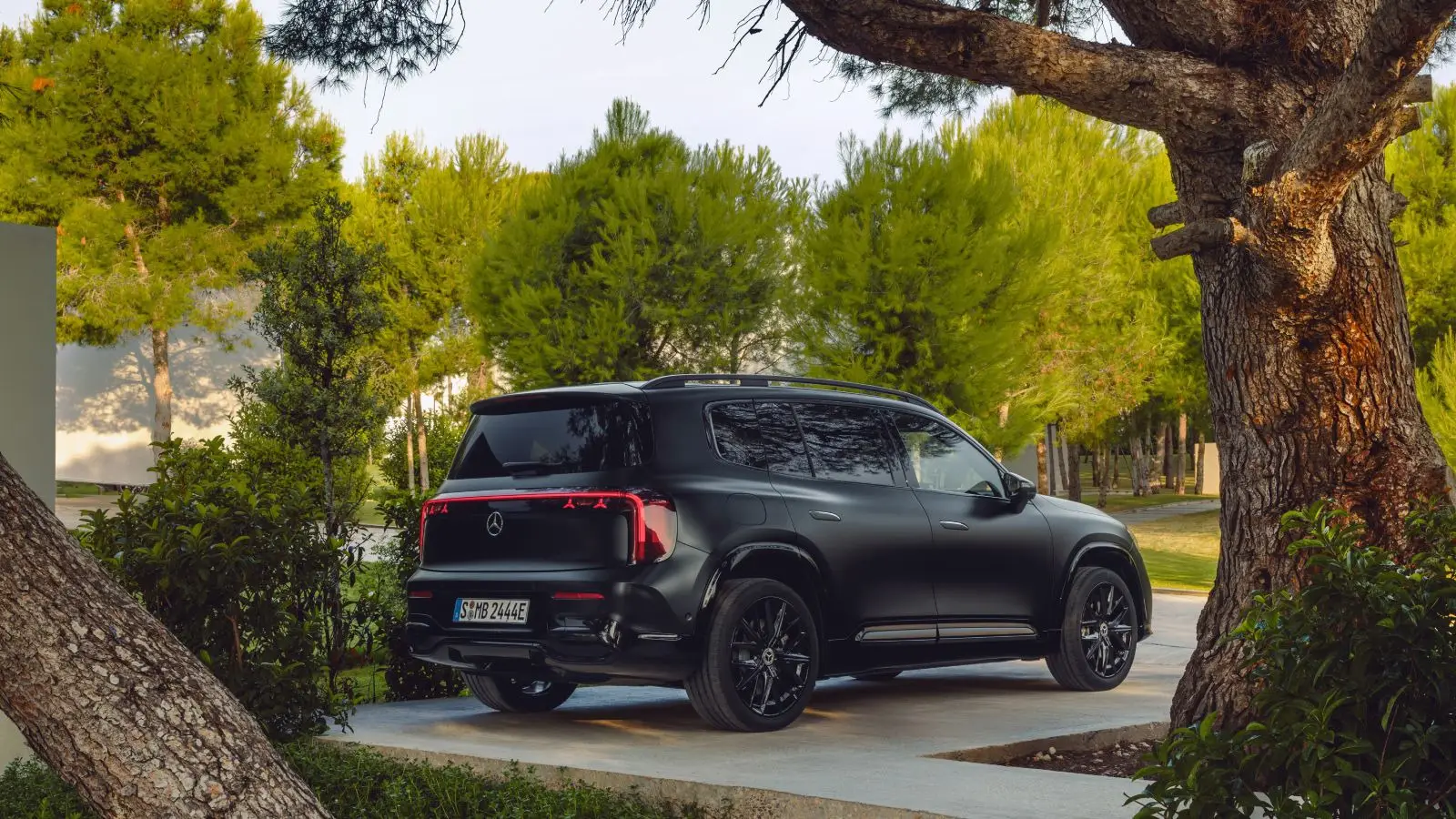
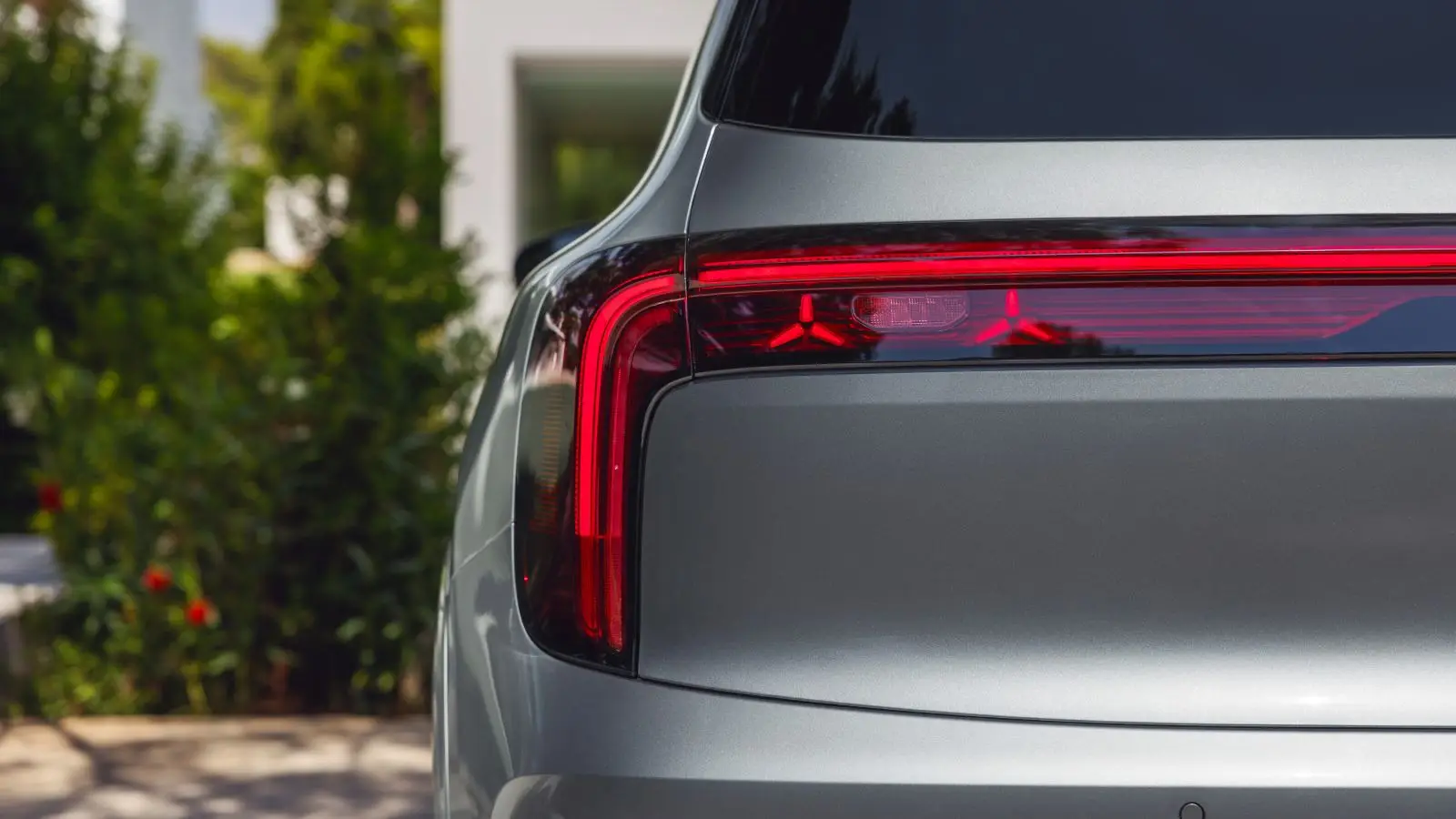
Design-wise, Mercedes-Benz leans heavily into a light-based brand signature. The front is defined by an illuminated panel that reinterprets the classic grille, featuring a pattern of 94 chrome-look stars plus welcome and farewell animations. The illumination of the central star is described as market-dependent due to legal regulations. The overall exterior is presented through classic SUV cues—upright stance, short overhangs and wheels up to 20 inches—while the lighting theme continues with star elements in the headlamps and a light strip connecting the rear lamps.
A standout option is the panoramic roof technology. Mercedes-Benz describes an optional SKY CONTROL roof that can change transparency segment-by-segment in 10 to 20 milliseconds, with clear, opaque and motif settings. It also features a starry-sky effect with 158 illuminated stars linked to ambient lighting, while the company notes that the SKY CONTROL roof with illuminated pattern will be offered later and timing may change.
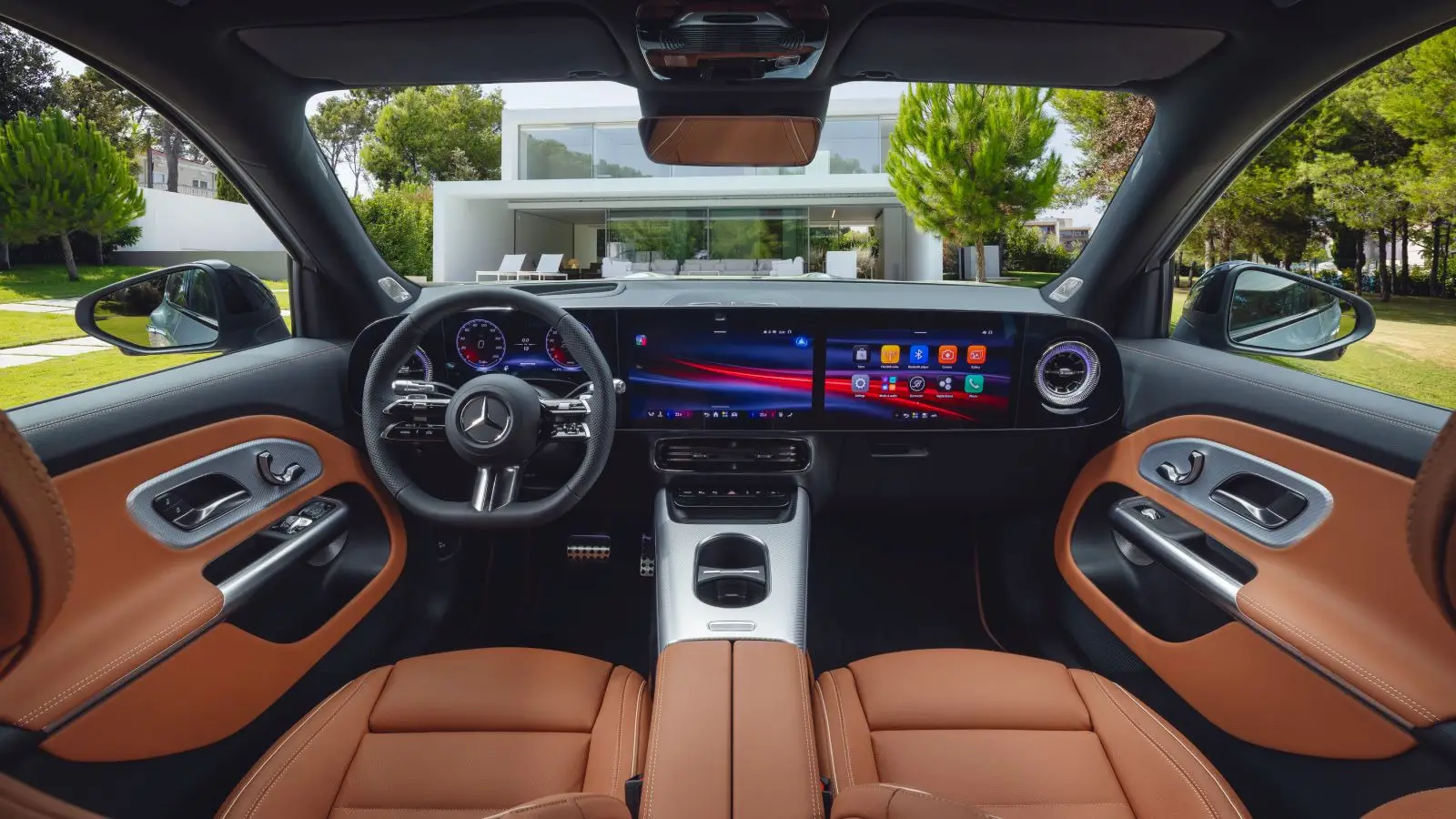
Inside, Mercedes-Benz describes a shift to a minimalist architecture centred on high-tech elements, led by the optional MBUX Superscreen. The brand lists a 10.25-inch driver display and a 14-inch central display, with an additional 14-inch passenger display planned after market launch; without it, a star-pattern trim continues the glass-like look, optionally backlit. The steering-wheel controls are also mentioned, including the return of physical rockers for limiter and DISTRONIC and a volume roller, described as a response to customer feedback.
For an electric vehicle, aerodynamics is presented as a measurable contributor to range. Mercedes-Benz states a drag coefficient of cd = 0.28 with a frontal area of 2.6 m², and notes that total air resistance (cd × A) is lower than the predecessor’s despite the slightly larger frontal area. The measures listed include smoothed front and rear aprons, sealing of joints, optimised A-pillars and mirrors, a largely closed underbody, and aero-optimised wheels and tyres. The brand also highlights aeroacoustics work—better sealing and insulation and optional noise-insulating laminated front side glass—and notes that aerodynamic detailing helps reduce soiling on side windows and mirror glass from about 80 km/h and above.
In Mercedes-Benz’s own framing, the new GLB is built around fast charging scenarios enabled by 800-volt architecture, an efficiency-focused electric drive layout with a two-speed transmission, and a broadened driver-assistance platform designed for ongoing OTA improvements. The emphasis on future software activation—ranging from assistance features to bidirectional charging—suggests Mercedes-Benz is positioning the GLB not just as hardware, but as a vehicle intended to expand its capabilities after launch.
Mark Havelin
2025, Dec 10 20:15