
How Porsche’s 911 Turbo tartan links back to Scotland
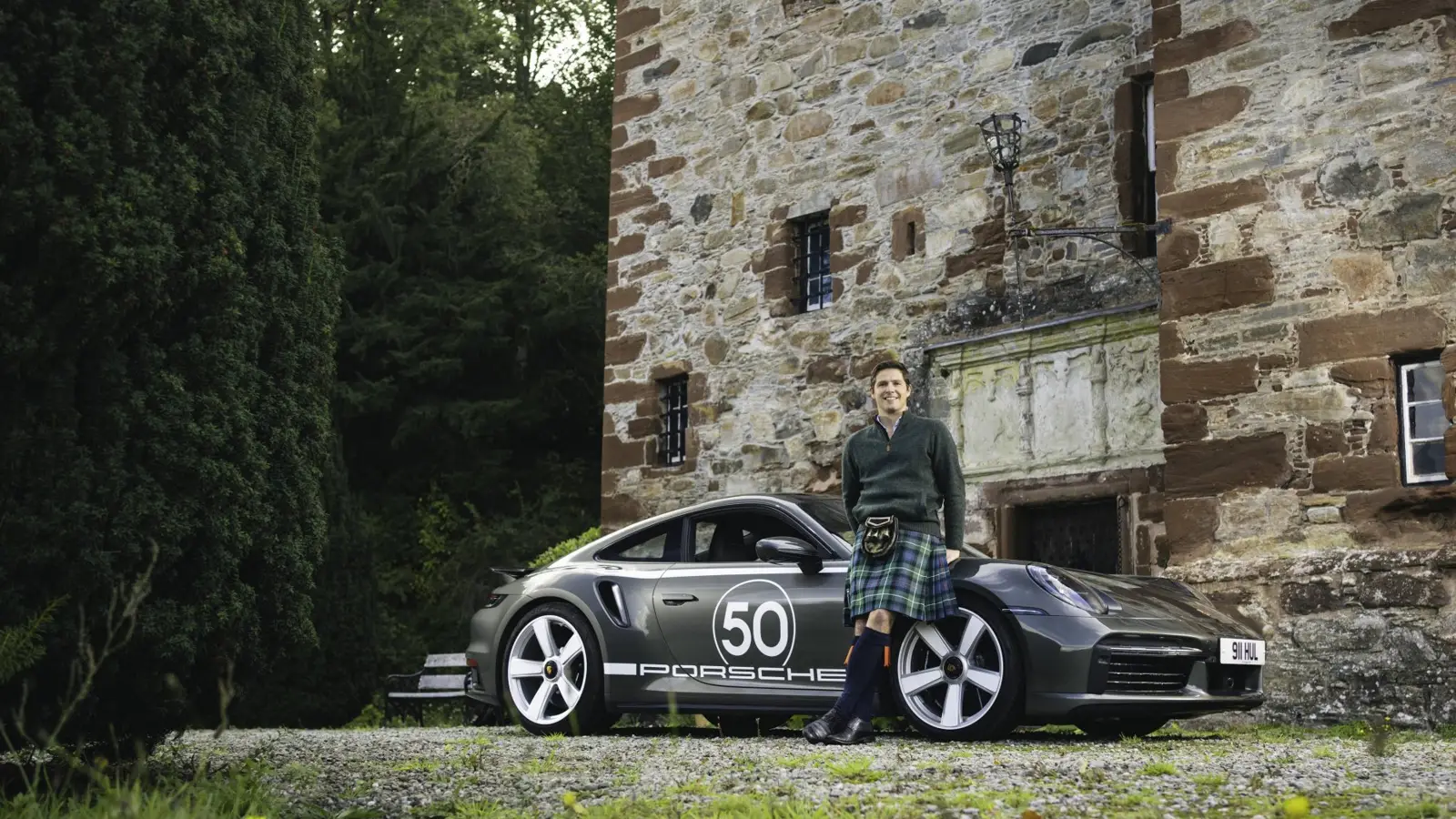
Porsche Newsroom traces 911 Turbo tartan interiors from 1975 to the 911 Turbo 50 Years at Castle Leod, showing how heritage supports customization. Read more.
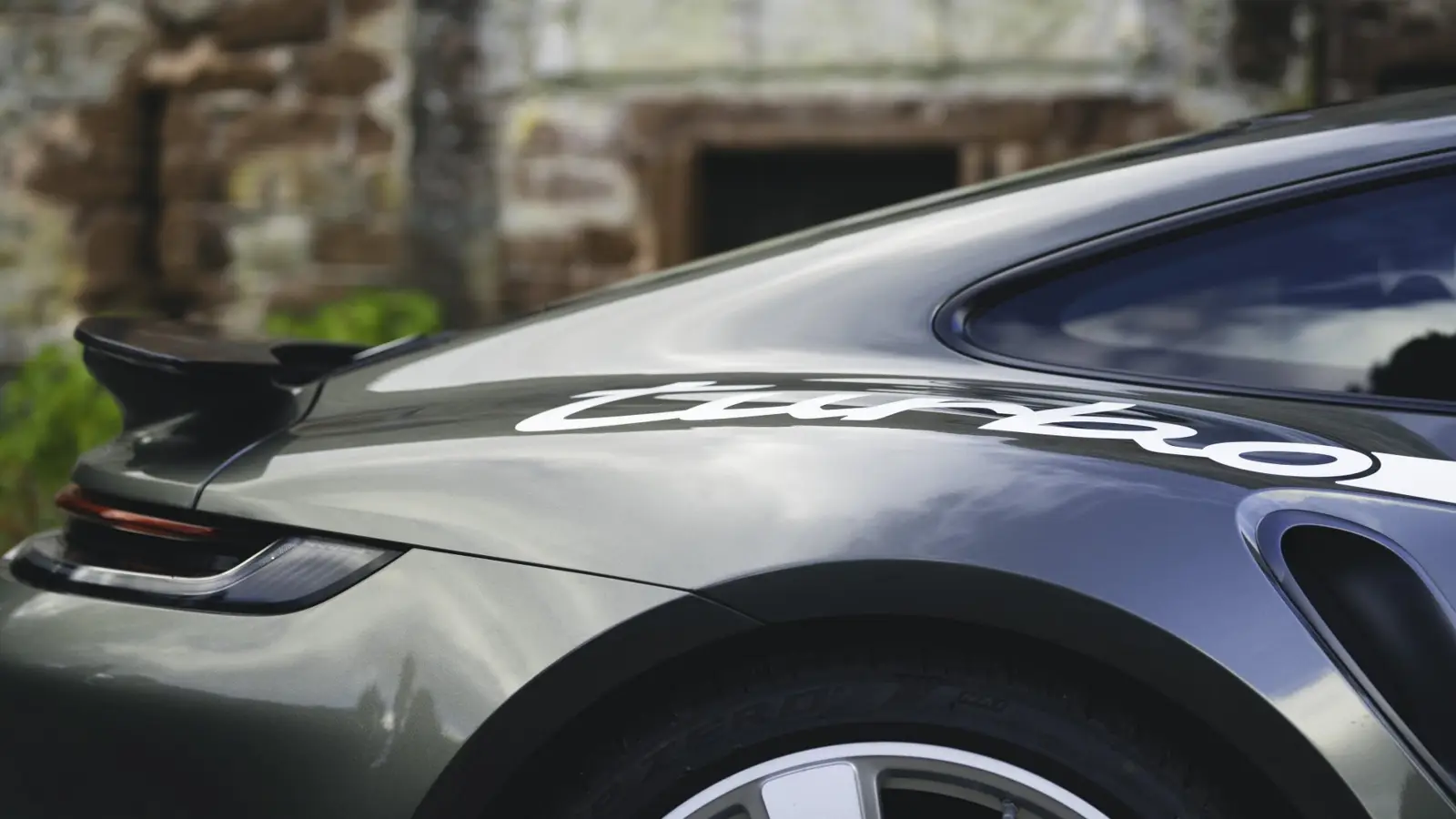
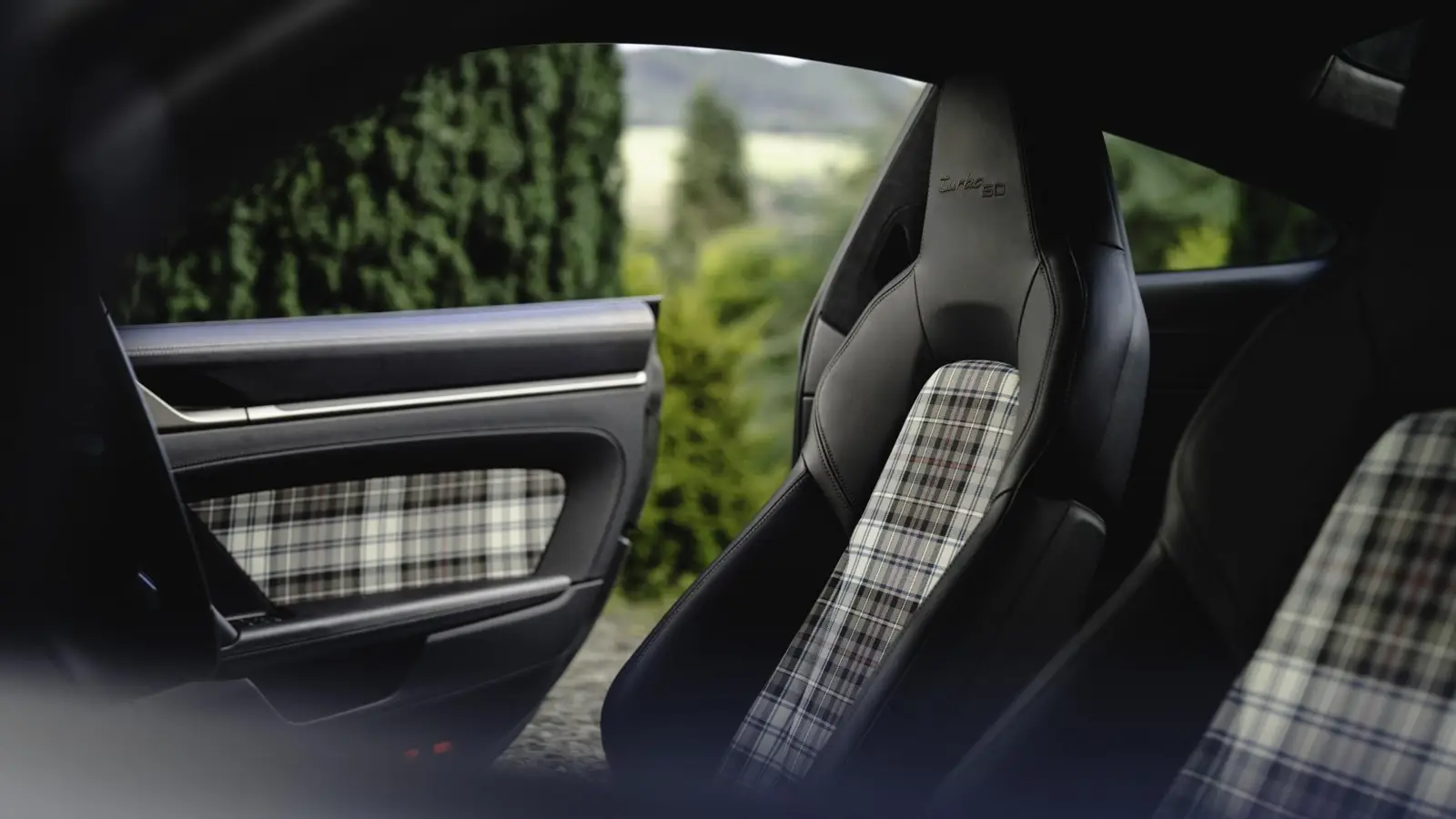
Tartan has long been one of Porsche’s most recognizable interior signatures, but a new story from the brand’s newsroom frames it as something bigger than a retro flourish. At the center is the 911 Turbo 50 Years—a limited series of 1,974 cars—whose cabin can be trimmed in Weathered Dress Mackenzie tartan, a pattern that carries the narrative straight to the Scottish Highlands.
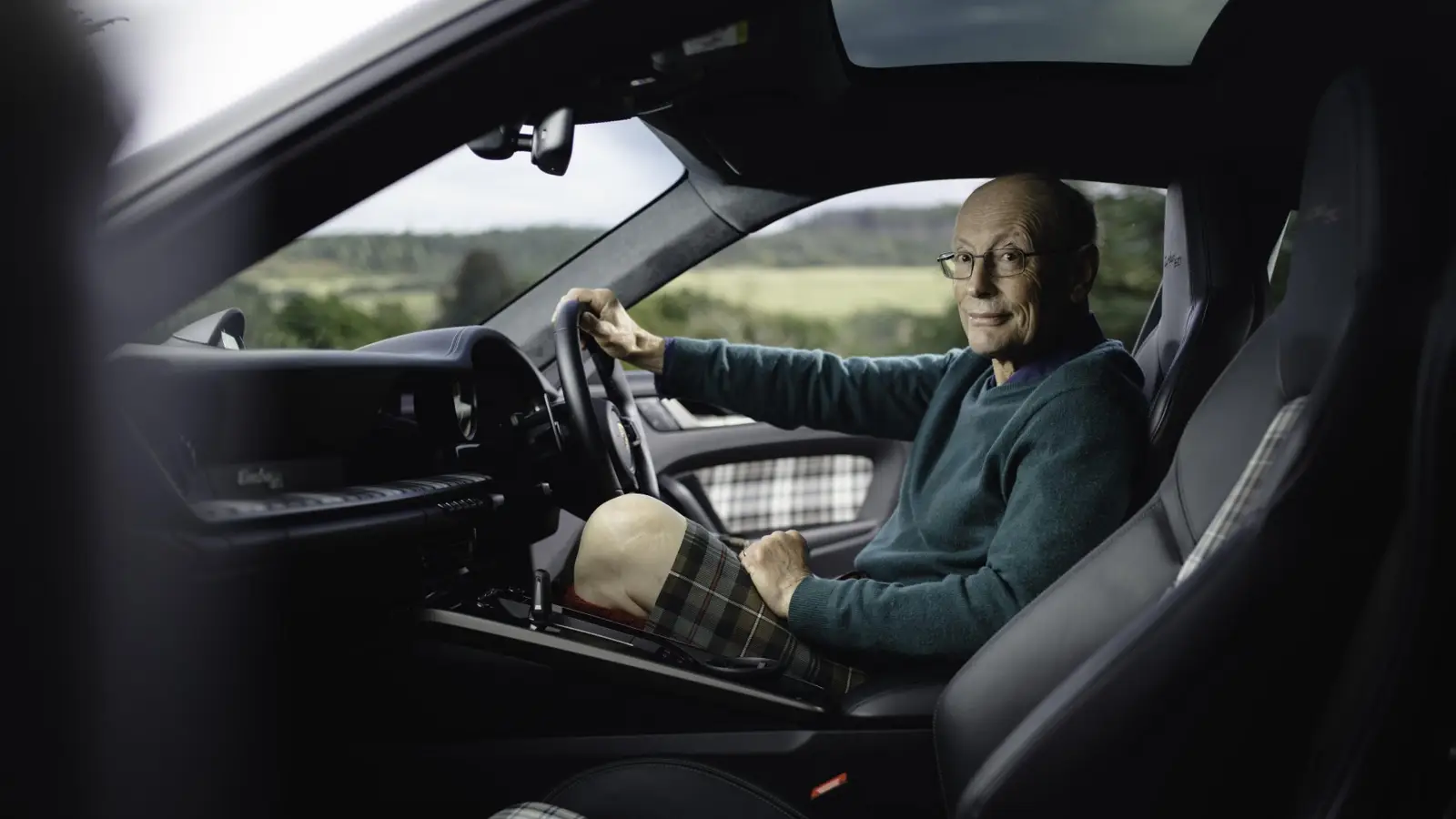
The setting is Castle Leod, the seat of the Mackenzie clan. As the anniversary Turbo arrives and its tartan interior comes into view, Colin Mackenzie, Viscount of Tarbat, reacts not as a casual observer but as someone meeting a familiar symbol in an unexpected place. In the story, tartan is presented as a modern marker of belonging—less about pageantry today, more about identity and continuity.
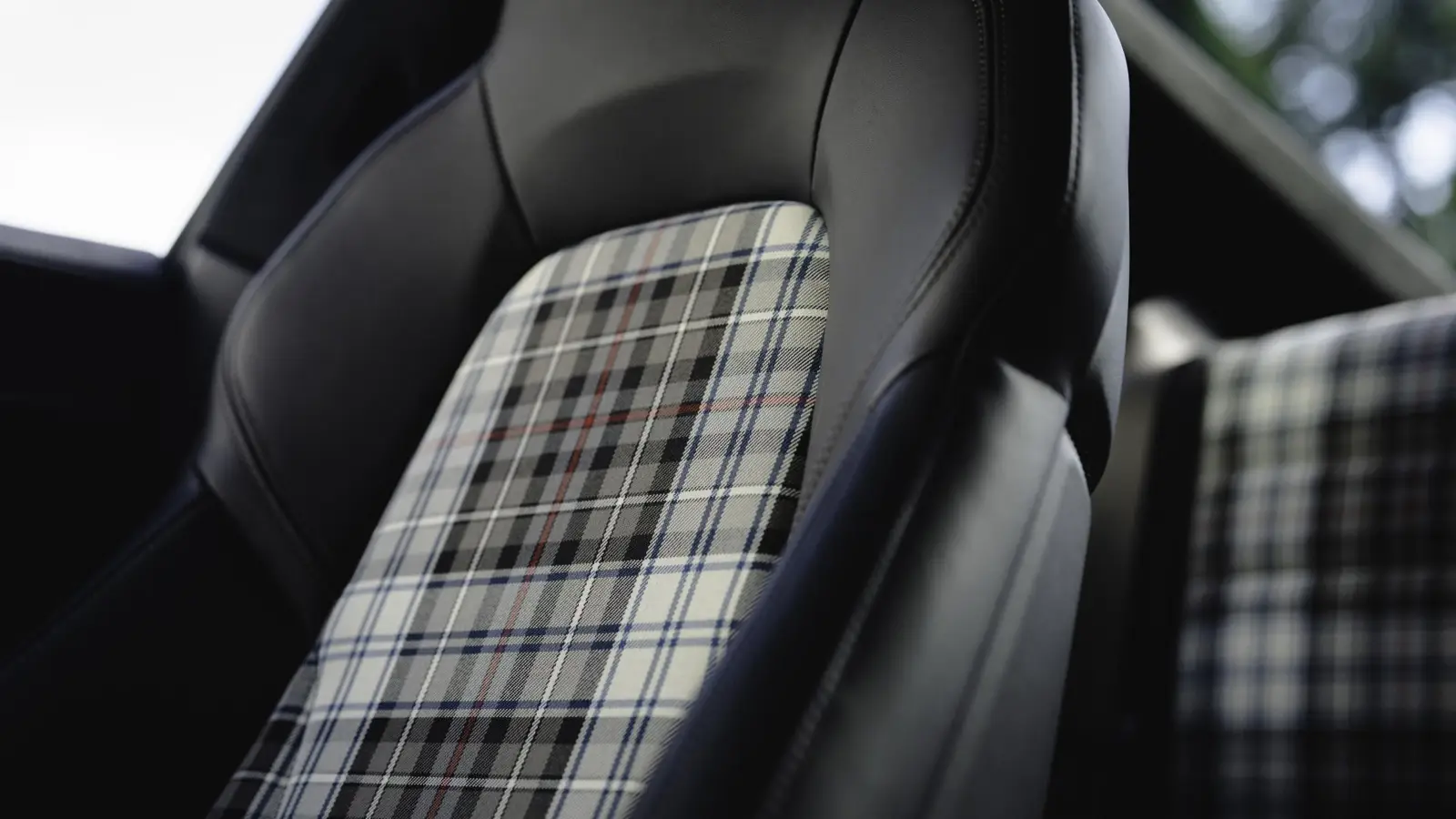
Porsche then rewinds the timeline to show how tartan entered its design language in the first place. After early one-off experiments, it became a customer choice: in 1975, buyers of the 911 Turbo could select from three tartan upholstery options, and the motif carried over to the 911 in the following model year. Behind that romance sits a practical reality: traditional Scottish makers could not supply the lightfast, abrasion-resistant qualities required for sports-car interiors, so production cars relied on an automotive textile manufacturer in the Swabian Alps.
The Scottish thread continues in Edinburgh at Kinloch Anderson, presented as a key stop for understanding tartan’s wider history. The narrative touches on how clan tartans were once outlawed after the Jacobite era, before later fashion and codification helped cement them again. Today, tartan can signal clan roots—but it can also be chosen for personal meaning, tied to a place, a home, or a story someone wants to carry.
That flexibility mirrors Porsche’s own approach to individuality. Through the Porsche Sonderwunsch program, customers can turn personal tartan ideas into factory-executed reality, often supported by archival work and documentation such as delivery certificates for historically accurate restorations. The broader implication is clear: heritage at Porsche is increasingly a tool for personalization—where cultural symbols like tartan can function alongside engineering to make a car feel unmistakably one-of-one.
Mark Havelin
2025, Dec 11 06:43