
Mercedes-Benz presents Tomorrow XX sustainability innovations
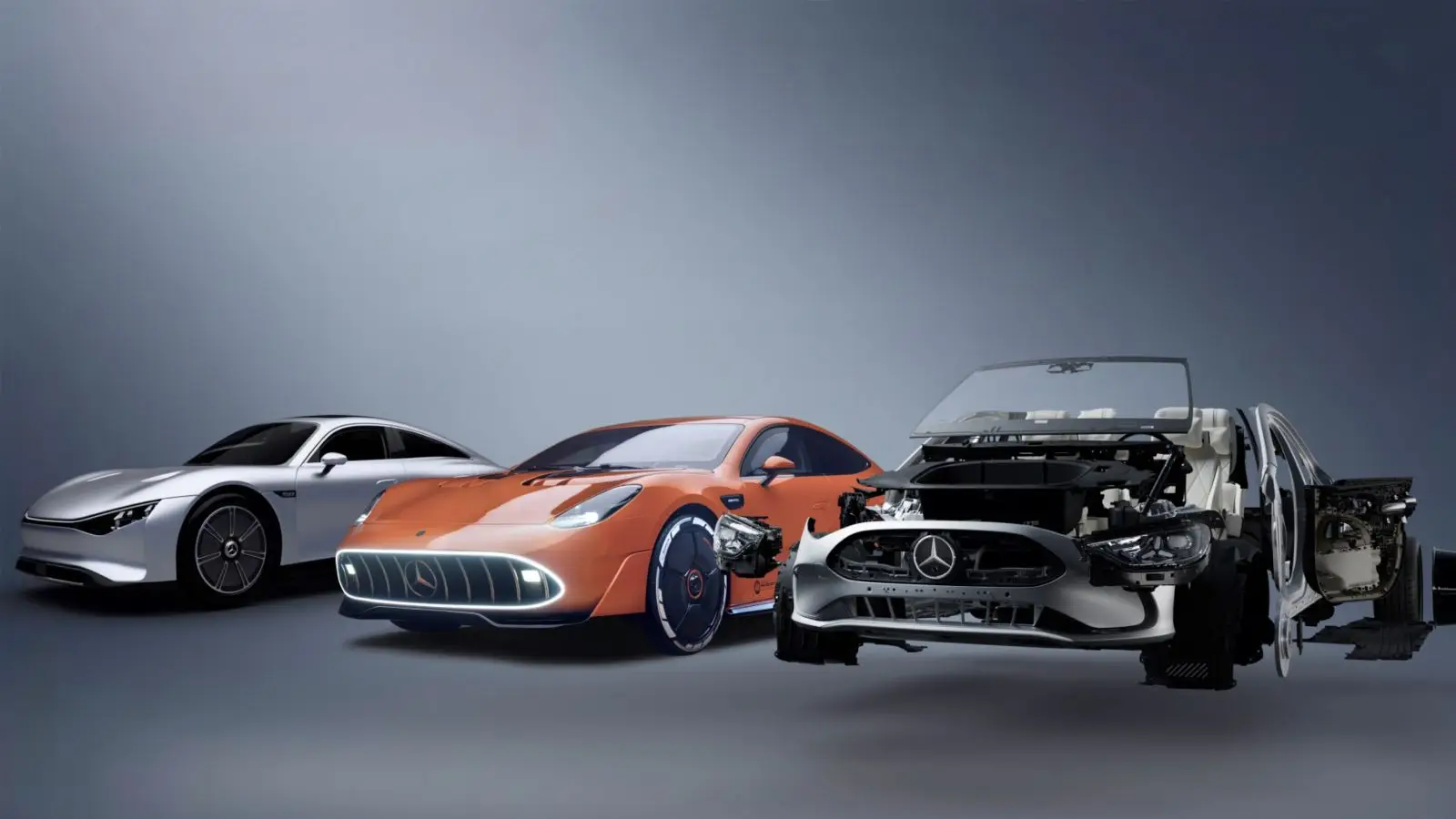
Mercedes-Benz introduces the Tomorrow XX program, outlining new sustainability technologies and materials across its lineup. Learn how the company advances circular design.
Mercedes-Benz is turning its sustainability agenda into a full-scale technology programme. With Tomorrow XX, the company is moving beyond experimental show cars like VISION EQXX and CONCEPT AMG GT XX and applying the same holistic thinking to its entire model range. According to Mercedes-Benz, the programme has already identified more than forty new, more sustainable components and materials within roughly two years, each with the potential to significantly cut the carbon footprint of future series-production vehicles and raise the share of secondary materials.
At the heart of Tomorrow XX are the principles of Design for Environment and Design for Circularity. Engineers are reassessing virtually every component, from the battery and body panels to hidden insulation materials. The key idea is to make parts easy to dismantle, repair and recycle. One flagship example is a future headlight concept whose modules are screwed rather than glued together. Each sub-assembly is made from a single material, which makes sorting and recycling more efficient. After a stone chip, in principle only the lens would need to be replaced instead of the entire unit, and the share of secondary material in such a headlight could almost be doubled while substantially reducing associated CO₂ emissions compared with today’s designs. A similar rethink is underway for interior door panels, where a thermoplastic fastener that can be released replaces permanent ultrasonic welds, making repairs and material recovery easier.
Plastics are a major focus. A modern Mercedes-Benz contains around 250 kilograms of plastic, much of it in complex composites that are difficult to recycle and often end up being thermally recovered. Tomorrow XX targets a rapid shift towards mono-materials and higher recyclate content. One headline project is the PET mono-sandwich: a three-layer composite made entirely from recycled PET, with a lightweight, bone-like foam core sandwiched between PET fibre layers. This concept cuts the weight of a door pocket by more than 40 percent compared with the previous primary-plastic solution while maintaining performance. It has already won the MATERIALICA Technology + Design Award 2024 in the “CO₂ Efficiency” category and is being prepared for series use. For many years, Mercedes-Benz has also used seat covers and wheel-arch liners made from 100 percent recycled PET bottles and is now working on carpets and floor mats made entirely from PET with a high recycled content that could reduce their carbon footprint by up to 75 percent. On the new electric CLA, the washer fluid tank is made from 100 percent recycled polypropylene, while front and rear bumpers can contain up to 25 percent post-consumer recyclate.
Another major strand of Tomorrow XX is to turn end-of-life vehicles into a valuable source of raw materials. Together with TSR Recycling, Mercedes-Benz has launched a pilot urban mining project in northwestern Germany, which started in the summer of 2025. At this innovative take-back site, vehicles of all brands are purchased, dismantled and carefully sorted so that metals, plastics and other materials can be fed back into the production cycle. The project is embedded in the company’s Ambition 2039 strategy and linked to a target of raising the share of secondary materials in new vehicles to around 40 percent over the next decade. In the same spirit, Mercedes-Benz has developed an underbody cladding concept made from mixed plastics recovered from shredder residue during vehicle recycling. This material is based entirely on post-consumer plastic, and internal calculations suggest that it could reduce the carbon footprint of the underbody trim by up to 40 percent compared with virgin plastic. The solution has already received a MATERIALICA award in the “Process” category and is about to enter series production.
Tomorrow XX also looks for value where previous systems only saw waste. Used tyres are a case in point. In a chemical recycling route, they are converted into pyrolysis oil, which is then combined with biomethane from agricultural waste via a mass balance approach. The resulting plastic offers the same properties as fossil-based material and is already used, for example, in a pull-out door handle. Building on this, Mercedes-Benz works with partners to combine tyre-based recyclate with bio-based proteins to create a high-quality leather alternative. According to the company, this material resembles real leather in composition and structure, but offers twice the maximum tensile strength, excellent temperature resistance, good breathability and waterproofing, significantly lower weight and a roughly 40 percent lower carbon footprint compared with genuine leather, while remaining recyclable. In addition to chemical recycling, tyres can also be mechanically recycled. Shredded fibres and rubber particles are turned into acoustic absorbers that are welded directly onto underbody panels, where they act as vibration dampers. A similar approach is used for airbags: fibre-glass-reinforced polyamide from deployed airbags is recycled into components such as engine mounts and a valve housing in the thermal management system. The latter has to withstand pressures from 0.01 to 5 bar and temperatures from -40 to +130 degrees Celsius.
Metals are another critical lever, and Tomorrow XX builds on a growing network of low-carbon aluminium and steel suppliers. In aluminium, the focus is on electrolysis powered by renewable energy and higher scrap content. For the new electric CLA, around 40 percent of the aluminium is already produced in electrolysis plants running on renewable electricity, delivering a reduction of roughly 400 kilograms of CO₂ per vehicle compared with its non-electric predecessor. Mercedes-Benz is also using low-carbon aluminium from partner Hydro, which has around 70 percent lower CO₂ emissions than the European average, with a joint goal of cutting the footprint by about 90 percent by 2030. Another promising example is an aluminium side wall containing up to 86 percent post-consumer scrap from old wheel rims, window frames and scrap vehicles, with no compromise in material properties or surface finish.
On the steel side, the company is systematically shifting away from the classic blast-furnace route. A supply agreement with H2 Green Steel covers around 50,000 tonnes of almost zero-carbon steel per year for European stamping plants. This material is produced using hydrogen-based direct reduction combined with an electric-arc furnace powered by renewable electricity. Cooperation with SSAB has made Mercedes-Benz one of the first carmakers to test body components made from steel produced via a similar hydrogen-based process. In the United States, Steel Dynamics Inc. supplies more than 50,000 tonnes of CO₂-reduced steel per year to the Tuscaloosa plant, where models such as the EQS SUV and EQE SUV are built. This steel is melted in electric-arc furnaces running on 100 percent renewable power and contains at least 70 percent scrap. Nucor contributes its Econiq-RE steel grade, with lifecycle emissions around 70 percent below the global average. Taken together, these and other partnerships underpin a Mercedes-Benz plan to use more than 200,000 tonnes of low-CO₂ steel per year in Europe. At the same time, the company is already using steel made from 100 percent scrap in some components, produced in electric-arc furnaces and offering more than 60 percent CO₂ savings versus conventionally produced steel. For visible body panels, the current standard is 16 to 25 percent pre-consumer scrap content, while ongoing tests explore the use of specially processed post-consumer scrap from end-of-life vehicles.
The battery is another major pillar of Tomorrow XX, as it currently represents the highest share of an electric vehicle’s carbon footprint. Mercedes-Benz follows a multi-stage approach to decarbonising the battery cell value chain. Cell suppliers contracted by the company commit to using green electricity and implementing energy-efficient production processes, while Mercedes-Benz itself works with partners on dry-coating electrodes, which eliminates the need for the NMP solvent and cuts energy consumption. In parallel, the company is increasing the share of secondary cathode and anode materials in battery cells. Within this strategy, the pilot battery recycling plant in Kuppenheim plays a key role. It is an integrated facility that combines mechanical treatment of modules with hydrometallurgical processing of the resulting black mass on a single site. The plant is designed for around 2,500 tonnes of battery material per year, enough for roughly 50,000 new battery modules, and is described by its technology partners as one of the first projects in Europe to cover all stages from shredding to refined materials. The process engineering is supplied by Primobius, a joint venture between Neometals and SMS group. The aim is to develop and validate a fully closed-loop solution for battery materials that can later be scaled up.
Structural optimisation is another way in which Tomorrow XX links engineering detail to sustainability goals. The BIONICAST® approach, first demonstrated on VISION EQXX, uses bionic design methods to place material only where it is structurally needed. For the BIONEQXX rear floor structure and for components such as a wiper motor bracket, this delivers weight and material savings on the order of 15 to 20 percent compared with conventional designs. Mercedes-Benz reports that selected bionically optimised castings have already made their way into series-production models, including the EQS, and that the method can deliver up to 25 percent savings in material use in individual components by integrating production constraints directly into the digital optimisation workflow.
Tomorrow XX also builds on the search for fossil-free or fossil-reduced plastics. A good example is an innovative door module whose body and cable-drive housing are made from bio-based polypropylene reinforced with recycled glass fibre. Its guide rails use an aluminium alloy with a high scrap content, the sliders are made from mechanically recycled polyamide, and the pulleys from polyoxymethylene produced via a CO₂-to-plastic mass balance process using captured CO₂. According to internal calculations, this module has around 30 percent lower carbon emissions than today’s equivalent component. In 2025 Mercedes-Benz became the first carmaker to join the Renewable Carbon Initiative (RCI), founded by nova-Institute. RCI brings together chemical and materials companies to replace fossil carbon with biomass, CO₂-utilisation and recyclate. Within this framework and through its own projects, Mercedes-Benz supports pilot programmes that use captured CO₂ as a feedstock for plastics and expand the use of bio-based materials, with several initiatives planned from 2026 onwards.
All of these strands converge in a broader strategy to decouple business growth from the consumption of primary resources. Mercedes-Benz has stated that it aims to increase the share of secondary materials in its new vehicles to around 40 percent over the next decade. In production, the company already reports an almost 100 percent recycling rate for its own metal scrap and has closed the loop for steel offcuts, with aluminium scrap loops following. Set against this backdrop, Tomorrow XX appears less as a single project and more as a framework that connects dozens of material- and component-level innovations: low-CO₂ steel and aluminium, battery recycling in Kuppenheim, urban mining with TSR, circular plastics and textiles, and bionically optimised structures. Many of the solutions highlighted so far are on different rungs of the maturity ladder, from early-stage research to technologies already rolled out in series production. Mercedes-Benz positions the programme as open-ended, signalling that new concepts will join Tomorrow XX as soon as they meet the company’s stringent standards for quality, design and comfort.
Mark Havelin
2025, Dec 12 13:43