
Bloomberg Links Tesla Door Failures to Fatal Crash Cases
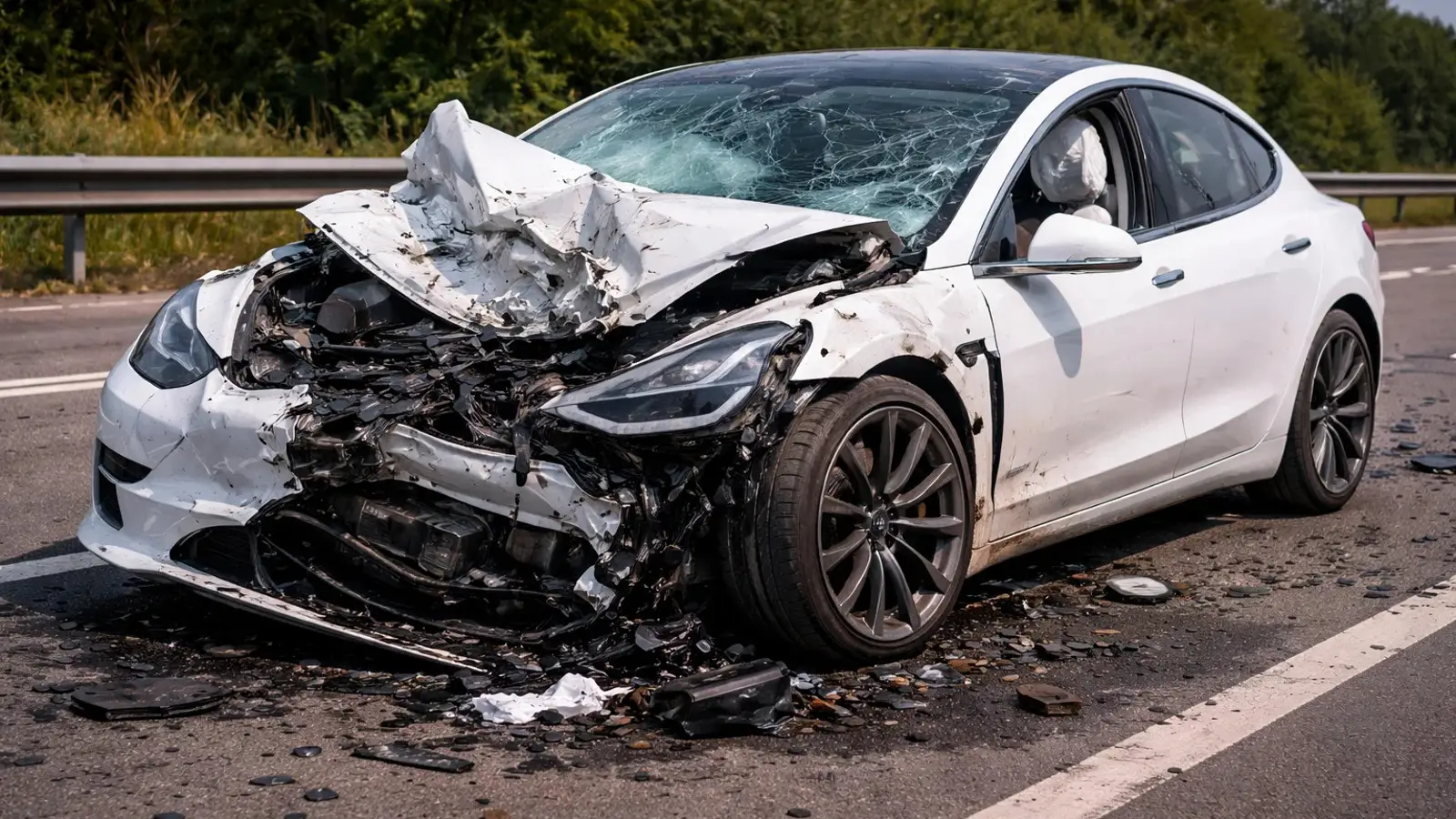
Bloomberg reports at least 15 deaths in Tesla crashes where doors failed to open after impact, prompting NHTSA investigations into door handle safety.
Over the past decade, at least 15 deaths have been linked to crashes involving Tesla vehicles in which the doors could not be opened after impact. According to a Bloomberg investigation, these cases often followed a similar pattern: after a collision — and in some instances a subsequent fire — occupants were trapped inside, while first responders struggled to gain access.
The Bloomberg investigation was based on an extensive review of data. Reporters examined federal records of every fatal U.S. crash involving a vehicle fire from 2012 to 2023, then independently identified comparable incidents in 2024 and 2025. Thousands of pages of police and fire reports, autopsy records, crash-scene photographs, 911 call audio, and body-camera footage were reviewed to reconstruct what happened in the moments after each crash. This work revealed roughly a dozen incidents in which inoperable Tesla doors were a contributing factor, accounting for at least 15 deaths.
One detail stood out in the findings: timing. More than half of the reported fatalities occurred after November 2024, suggesting that the issue may be intensifying rather than fading.
At the center of the problem is Tesla’s reliance on electronically operated door handles powered by a 12-volt low-voltage battery. In severe crashes, that battery can be damaged or lose power entirely. When that happens, electronic door mechanisms may stop working even if the doors themselves are not physically jammed.
Tesla vehicles are equipped with mechanical backup releases, but their effectiveness in real emergencies has been called into question. Bloomberg found that front-door manual releases can be poorly labeled, while rear-door solutions are inconsistent across models and production periods. In some vehicles they are absent altogether; in others they are hidden beneath trim, floor mats, or speaker grilles. In a smoke-filled or high-stress situation, locating these releases can be extremely difficult.
The issue has drawn the attention of regulators. In September 2025, the National Highway Traffic Safety Administration opened an investigation into the Tesla Model Y following reports of exterior door handles becoming inoperable. In December, the agency launched a separate review of the Tesla Model 3, focusing on whether its emergency mechanical door releases are sufficiently accessible and clearly identifiable in a crash.
Tesla says its vehicles are designed to automatically unlock doors after a serious collision to allow emergency access, but notes that this feature may not be available on all models and can depend on build date and configuration. The company’s design leadership has also stated that Tesla is working on a new door-handle system combining mechanical and electronic elements into a single, more intuitive design.
Electronic door handles are not unique to Tesla, but the company stands out for the volume of complaints tied to doors that fail to open after crashes. While the 15 deaths identified by Bloomberg represent only a fraction of fatal electric-vehicle accidents, the lack of a centralized system tracking entrapment cases makes the true scale of the problem difficult to measure. What is clear is that as regulators continue their scrutiny, the balance between advanced design and basic emergency accessibility is likely to remain under close examination.
Allen Garwin
2025, Dec 27 07:12