
2026 Lucid Air Touring review: engineering, range and value
Independent reviewers assess the 2026 Lucid Air Touring—engineering details, performance, range and pricing. See the key pros, quirks and takeaways today.
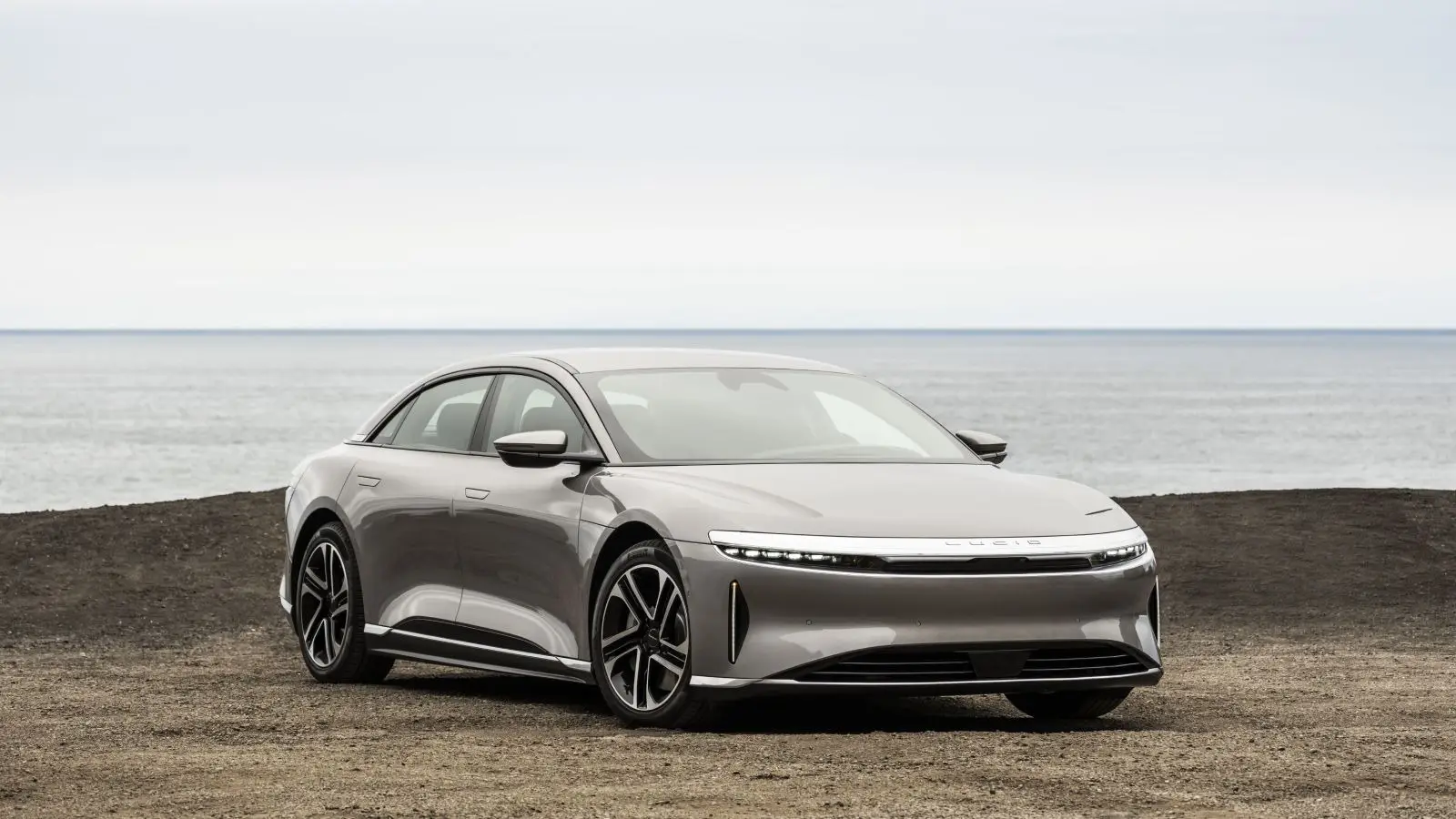
Lucid Air is an electric sedan that begs to be judged as engineering, not just as a rolling gadget. The brand’s roots in high-performance EV development show up in the way the car gathers speed, settles into a line, and still feels composed when the road starts asking questions.
For 2026, the spotlight falls on the Lucid Air Touring—a more accessible trim in the lineup, yet still built with serious hardware underneath. Touring is all-wheel drive with a dual-motor setup: one motor up front and one at the rear, mechanically separated (no driveshaft between them). Each axle has its own differential, and the drive modules use a single-speed reduction gear with a 7:1 ratio. Total system output is quoted at 620 hp and 885 lb-ft of torque, which explains why Touring remains genuinely rapid even without the full “top-trim drama.”
What makes the Air more interesting than a simple numbers game is how much attention Lucid paid to airflow and packaging. Underneath, aero is treated like a design language: a large rear diffuser, purposeful fins guiding air rearward, and an underside that avoids the usual fuzzy sound-deadening panels in favor of more rigid coverings and fiber material in key areas. There are also details that feel quietly confident, like factory stainless steel braided brake lines and proper jack pads for lifting the car.
The Touring doesn’t read like a stripped-down chassis either. At the rear there’s an all-aluminum multi-link arrangement with adaptive Bilstein dampers and aluminum knuckles; up front, an all-aluminum double-wishbone layout backed again by adaptive Bilsteins. Even the anti-roll bars are notably substantial—approximately 32 mm at the front and around 20 mm at the rear (the measurement is approximate, but the intent is clear). Steering is electric assist rack-and-pinion, described as 13:1 on-center with 2.3 turns lock-to-lock, and the turning circle is noted at roughly 40 ft.
None of that changes the blunt fact that the Air Touring is heavy—around 5,090 lb in the discussed configuration. Its battery is described as a 92 kWh pack with 18 modules. Yet the driving impression is that the car does a remarkably good job of hiding its mass in normal use; to really “feel” the weight, it seems you’d need to push it hard enough to justify a track. Interestingly, the tire widths on the featured setup aren’t extreme for the weight: 245 up front and 265 at the rear on optional 20-inch wheels with Michelin Pilot Sport EV tires.
Braking hardware is anything but modest. The front uses a six-piston caliper with a massive 380 mm (15-inch) rotor, while the rear is a four-piston setup with a 375 mm (14.8-inch) rotor. Regenerative braking works alongside the friction brakes, and the first pedal bite is described as impressively immediate—though the car’s weight inevitably asserts itself as the stop continues.
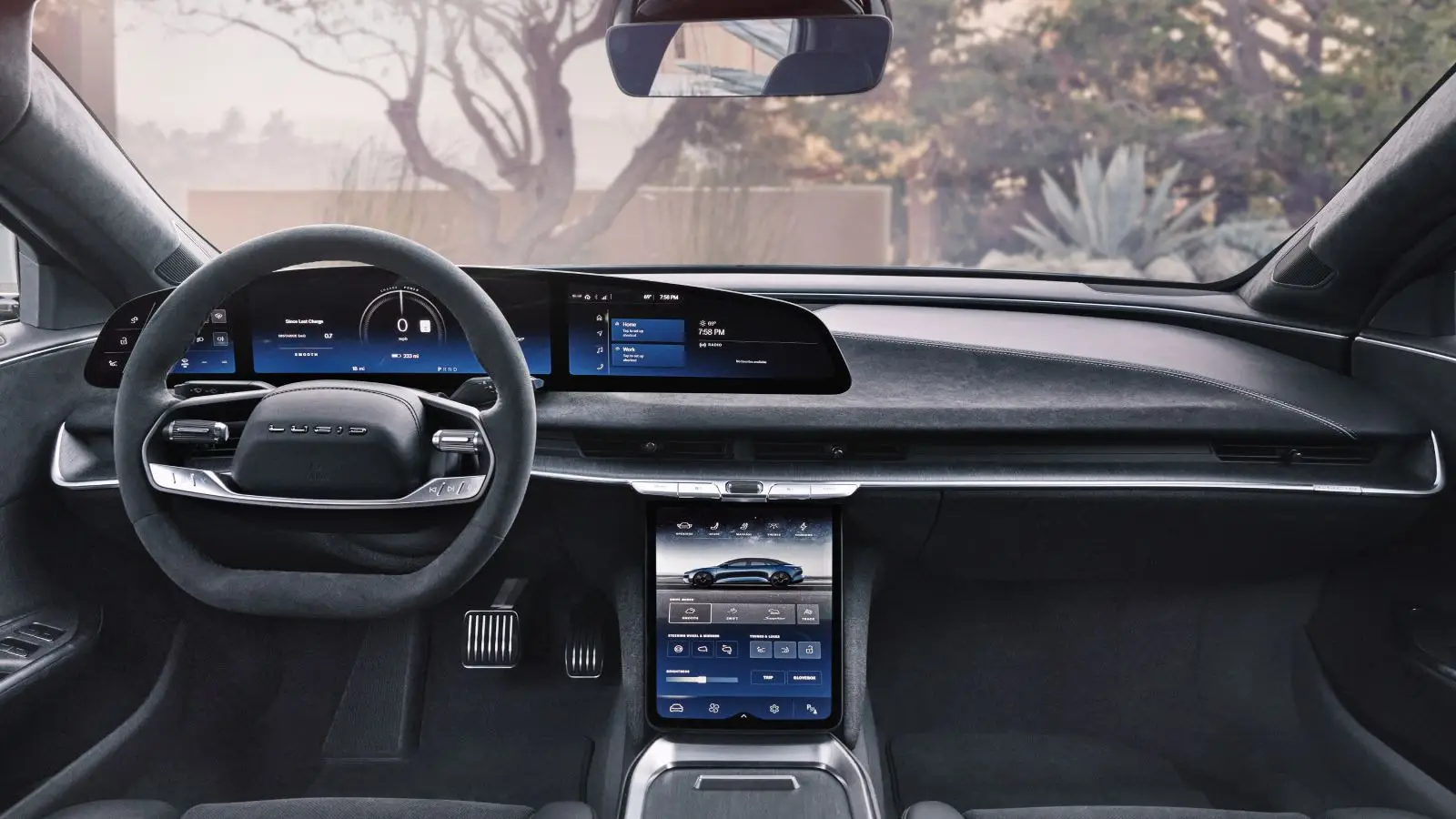
Inside, the Air leans into premium atmosphere with a mix of materials and a very deliberate sense of storage and space. The Touring’s front seats are praised for strong bolstering and a feature set that includes heating, ventilation, and massage—called out as among the best encountered. The catch is that many adjustments live inside the center screen, including seat fine-tuning and steering wheel positioning. It’s modern, but it can feel needlessly complicated when you just want a quick ergonomic tweak.
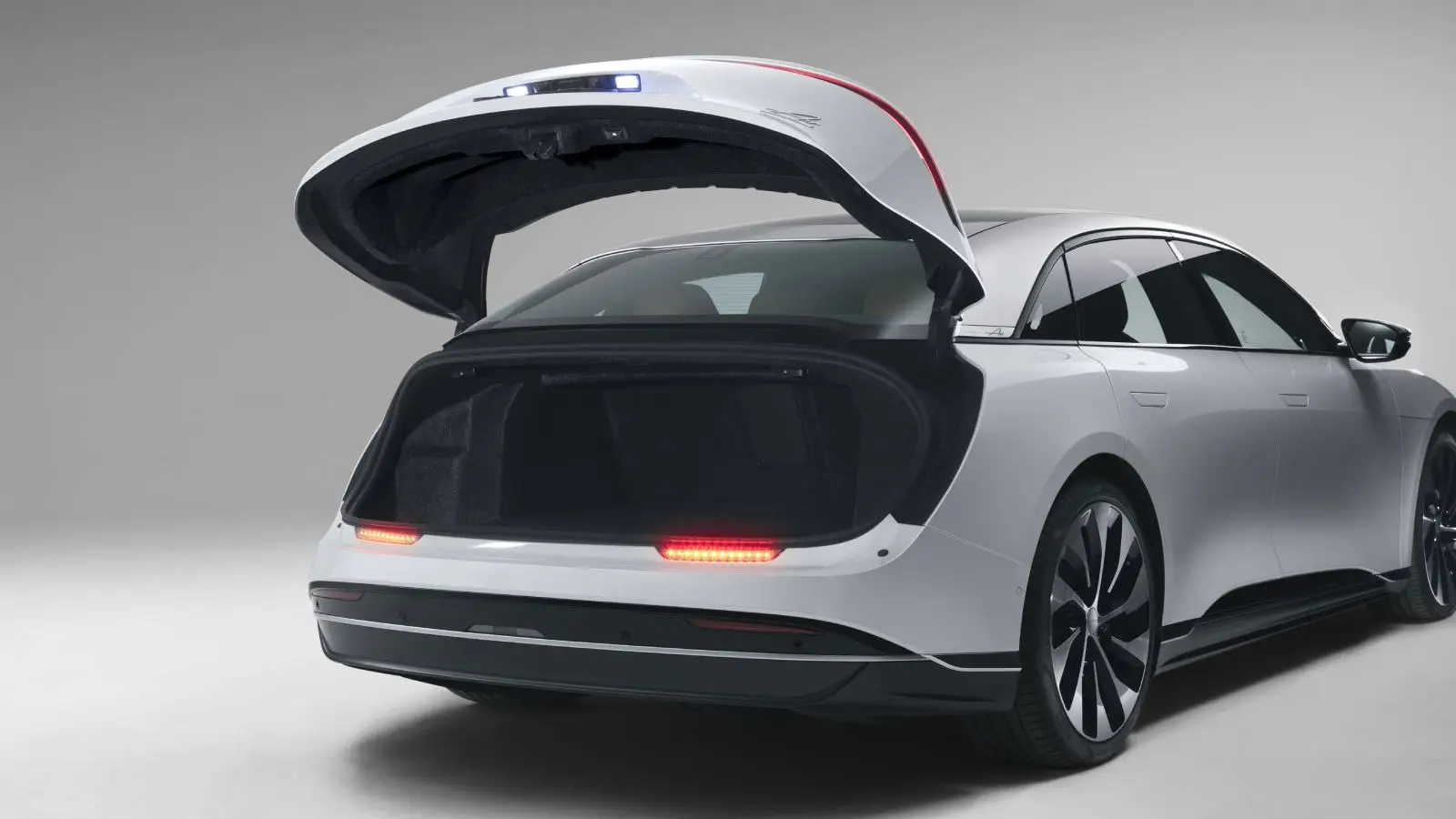
Rear passengers get serious legroom, their own control screen for climate and seating, heated rear seats, and built-in window shades. The glass roof adds an airy, almost cockpit-like feeling, though there’s also mention of configurations that delete the large roof cutout—useful in hot climates. Cargo practicality is a recurring theme: the rear opens into a large space with additional compartments and underfloor storage, and the front trunk is described as generous; elsewhere, Lucid’s claimed front-trunk capacity is quoted at 283 liters.
Then come the “smart product” frustrations. One notable complaint is the lack of a straightforward “miles remaining” readout on a full charge—percentages are easy to display, but they push the real-world calculation back onto the driver. Add menu-dependent controls for basic functions, and the Air can occasionally feel like it was optimized for engineers who assume everyone enjoys doing energy math on the fly.
In broader Lucid Air impressions, the list of irritations becomes more specific: regenerative braking modes that feel too aggressive without a truly gentle setting or a full coast option; no individualized drive mode to mix preferred settings; rear camera placement that collects dirt quickly; and small ergonomic annoyances such as distracting dashboard reflections or slightly awkward control reach. On the plus side, the cabin is described as very quiet, helped by double-glazed windows, and the camera suite is highlighted—one account mentions 23 cameras and a video-game-like ability to visualize the car around you.
Range is treated with a refreshing lack of romance: it depends on how you drive. Drive hard and efficiency can fall to around 2 miles per kWh; baby the throttle and it can climb above 4 miles per kWh, though that higher figure is tied to minimizing accessories like HVAC and audio. Wheel size is also flagged as a major lever—19-inch wheels are described as the smarter choice for maximum range, while 20-inch wheels can cut it noticeably.
Price and value remain the sharpest edge. In the U.S., the Touring is said to start at $79,000, but options can push a car to just over $100,000 without necessarily delivering an obvious “$20,000 worth” of added substance. In Europe, the Lucid Air is framed as significantly pricier, with an entry point noted at over £150,000 and a higher-performance version referenced at over £190,000. The conclusion is neatly conflicted: the Air is undeniably fast and technically impressive, but it still has to prove its everyday sense of value in a field full of strong alternatives.
If there’s a cautious forecast to make, it’s this: Lucid already seems to have the hard part—a compelling platform and a memorable driving experience. The next step is the unglamorous one: simplifying the interface where it gets in its own way, polishing the small daily-touch points, and proving the brand can deliver the same core character in more affordable models.
Ethan Rowden
2025, Dec 29 10:33