
Electrek Explains Why Dodge Could Return to a Practical Electric Caravan
_MYLE_Festival_2025_DSC_9748.jpg)
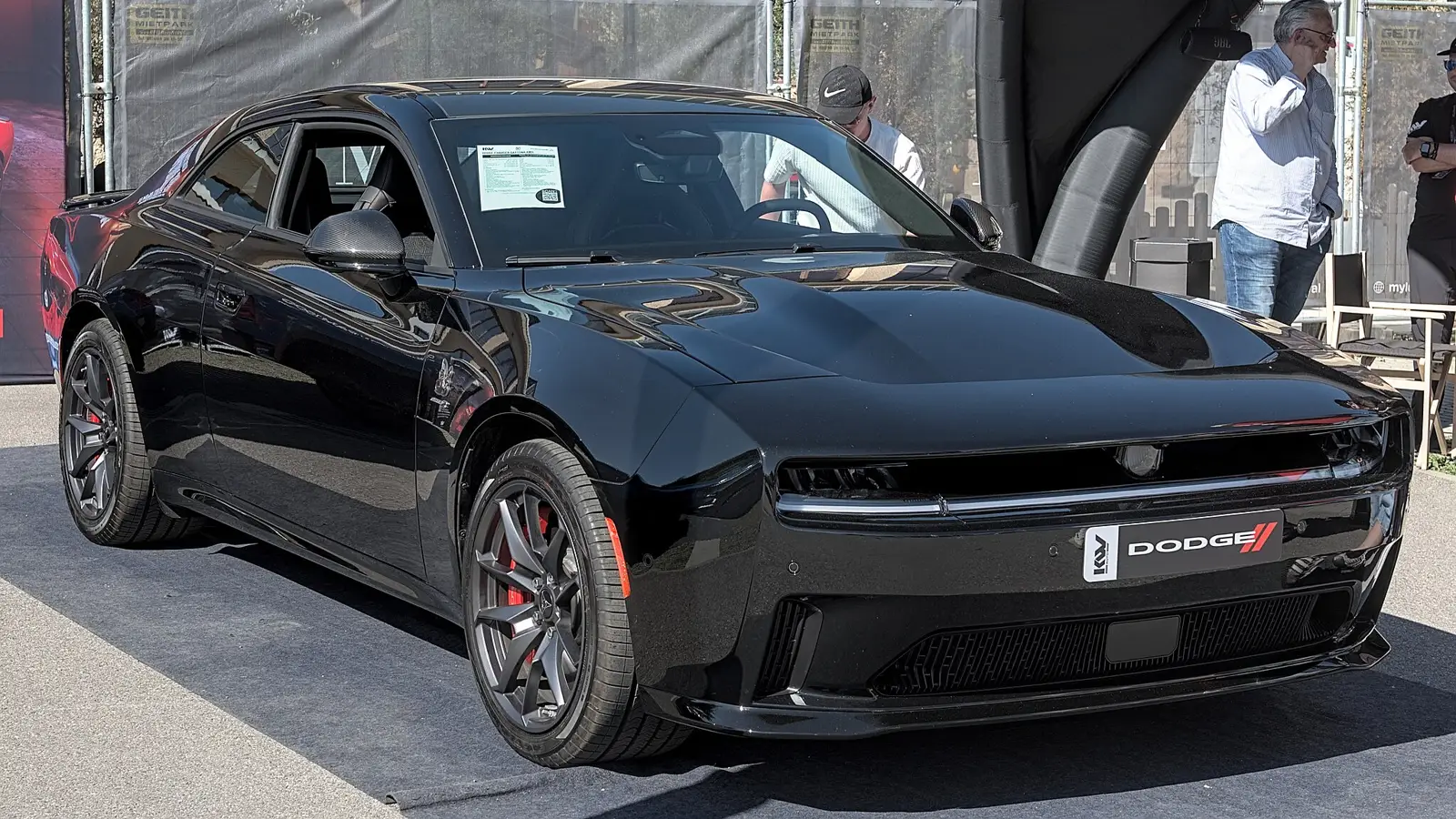
Electrek analyzes why Dodge may benefit from reviving the Caravan as a practical electric vehicle, as retro EVs like Charger Daytona face market challenges. Read more.
The market is increasingly clear: nostalgia-driven design is no longer a guarantee of success. Electric vehicles built around retro imagery are facing growing resistance from buyers. This has intensified a broader industry question — whether brands should continue focusing on image-led EVs, or return to vehicles defined by practicality and scale.
Recent market performance highlights the limits of nostalgia. The electric Dodge Charger Daytona and the Volkswagen ID. Buzz both struggled to meet commercial expectations. High pricing and limited driving range became key obstacles, while emotional ties to past design language proved insufficient to sustain demand. These cases are now frequently cited as evidence that visual appeal alone cannot offset practical shortcomings.
Against this backdrop, the idea of a practical family vehicle is regaining relevance. In the late 1980s and 1990s, the Dodge Caravan was one of the most common vehicles on US roads, valued not for status but for everyday usability. Its spacious interior, flat floor, affordability, and efficiency made it a staple of family life until large SUVs gradually took over the segment. Production of the Caravan in the US ended in 2020, but the underlying concept has not disappeared.
From a technical perspective, suitable foundations already exist. In Europe, Stellantis offers compact electric vans such as the Peugeot e-Partner, Citroën ë-Berlingo, and Opel Combo Electric. These models deliver roughly 330–345 km of WLTP range with battery capacities around 50 kWh and form part of Stellantis’ second-generation electric van lineup designed for high-volume use. At the same time, there has been no official confirmation of a new Caravan or an electric Dodge minivan.
Market dynamics nonetheless point to renewed interest in functional vehicle formats. Kia has introduced the PV5 as the first production model under its PBV strategy, while Renault continues to expand electric versions of the Trafic and other commercial vans. Together, these developments indicate that demand for practical electric vans is rising, particularly for everyday urban and suburban transport.
There is also a longer-term technology angle. Stellantis has confirmed the validation of solid-state battery cells and plans to deploy a demonstration fleet in 2026, including charging from 15 to 90 percent in around 18 minutes. However, this technology has not yet been tied to any specific production vehicle.
Taken together, these signals suggest a clear shift. As enthusiasm for retro-styled EVs fades, market attention is moving back toward rational, accessible, and family-oriented transportation. In this context, a return to simplicity may represent not a step backward, but a pragmatic response to evolving consumer expectations.
Allen Garwin
2025, Dec 31 14:44