
How Active Aerodynamics Works in Modern Supercars
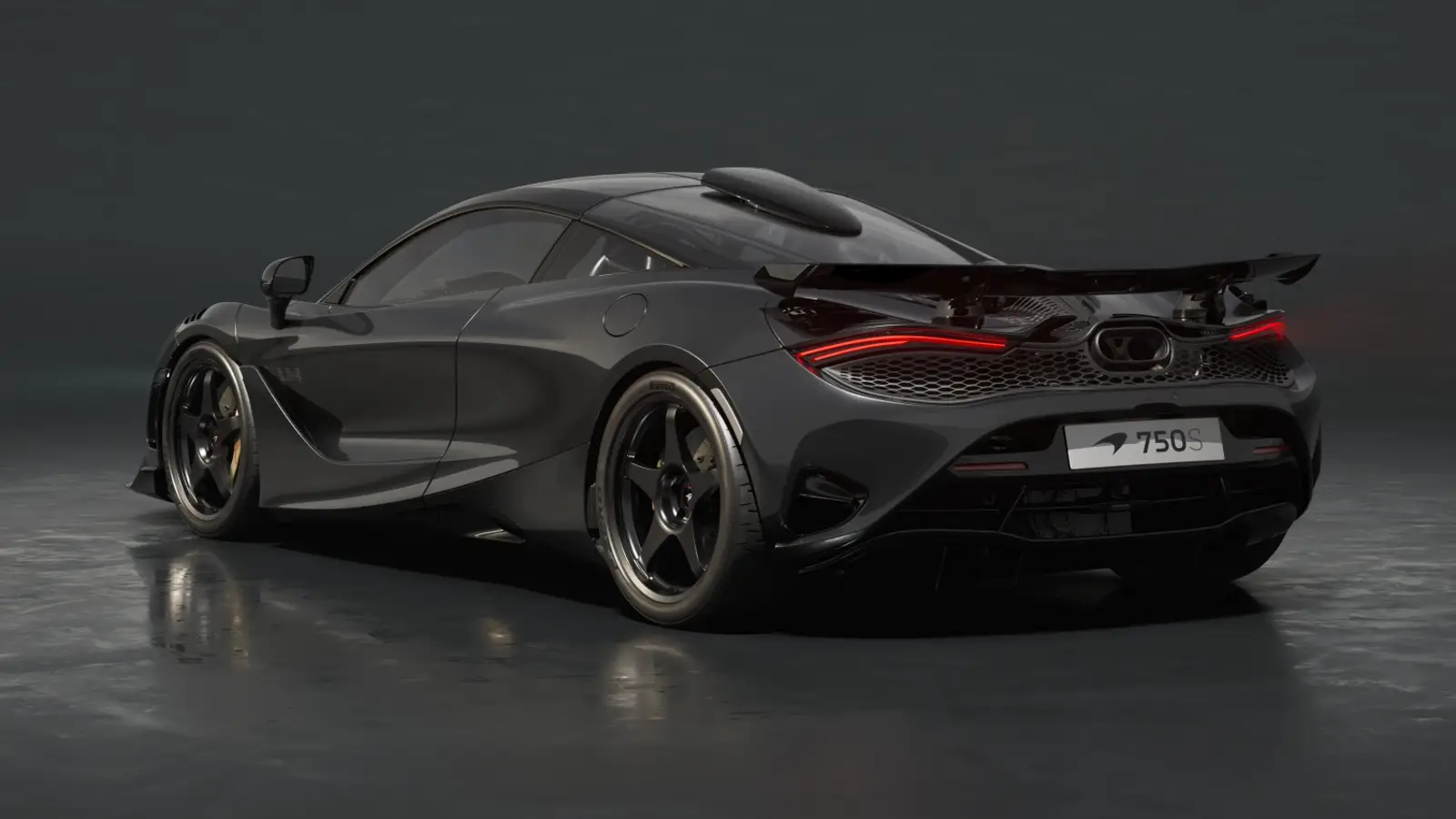
An in-depth look at active aerodynamics in supercars, based on statements from McLaren, Lamborghini, and Porsche. Learn how these systems work and why they matter.
Active aerodynamics has moved far beyond its origins in racing prototypes and is now an integral part of modern supercar engineering. Manufacturers rely on movable aerodynamic components to allow a single vehicle to adapt to very different driving scenarios, from high-speed straights to heavy braking and cornering.
The core idea behind active aerodynamics is straightforward but technically demanding: a fixed body shape cannot be equally efficient in all conditions. As a result, designers use elements that can change their position in real time. These include active rear wings and spoilers, front aerodynamic flaps, controllable airflow channels, and adjustable cooling shutters.
Supercar manufacturers emphasize the functional role of these systems. McLaren states that its active rear wing is designed not only to maintain aerodynamic balance but also to act as an aerodynamic brake, altering its position during hard deceleration. Lamborghini’s ALA 2.0 system focuses on switching between high-downforce and low-drag configurations through electronically controlled flaps at the front and rear of the car. Porsche treats active aerodynamics as a coordinated package: in the Macan, a deployable rear spoiler, active cooling flaps, and elements of a sealed underbody work together depending on speed, driving mode, and even the charging process.
The effectiveness of such systems is supported not only by manufacturer claims but also by recent engineering research. Scientific studies published in 2024 and 2025 indicate that active and asymmetric aerodynamic configurations can improve vehicle dynamics, including cornering stability and braking performance, when compared with static setups. Some research specifically examines active aerodynamic load balancing as a way to counteract lateral load transfer during cornering.
At the same time, there is no definitive answer to whether active aerodynamics in supercars should be seen primarily as engineering or marketing. Over the past year, no authoritative studies have demonstrated that these systems are largely decorative. Available evidence instead points to genuine functionality, although the real-world benefits can vary significantly from one model to another.
Any discussion about the future of active aerodynamics must therefore remain cautious. Manufacturers continue to invest in new solutions, as shown by recent patents and concepts aimed at lighter and more compact drag- and downforce-control mechanisms. Active aerodynamics is also increasingly used not only for performance, but for overall efficiency and thermal management, particularly in the context of electrification. However, there is still no formal industry consensus stating that active aerodynamics is unequivocally the future of supercars.
Allen Garwin
2026, Jan 01 16:23