
Lucid, Nuro and Uber present a production-intent robotaxi at CES 2026
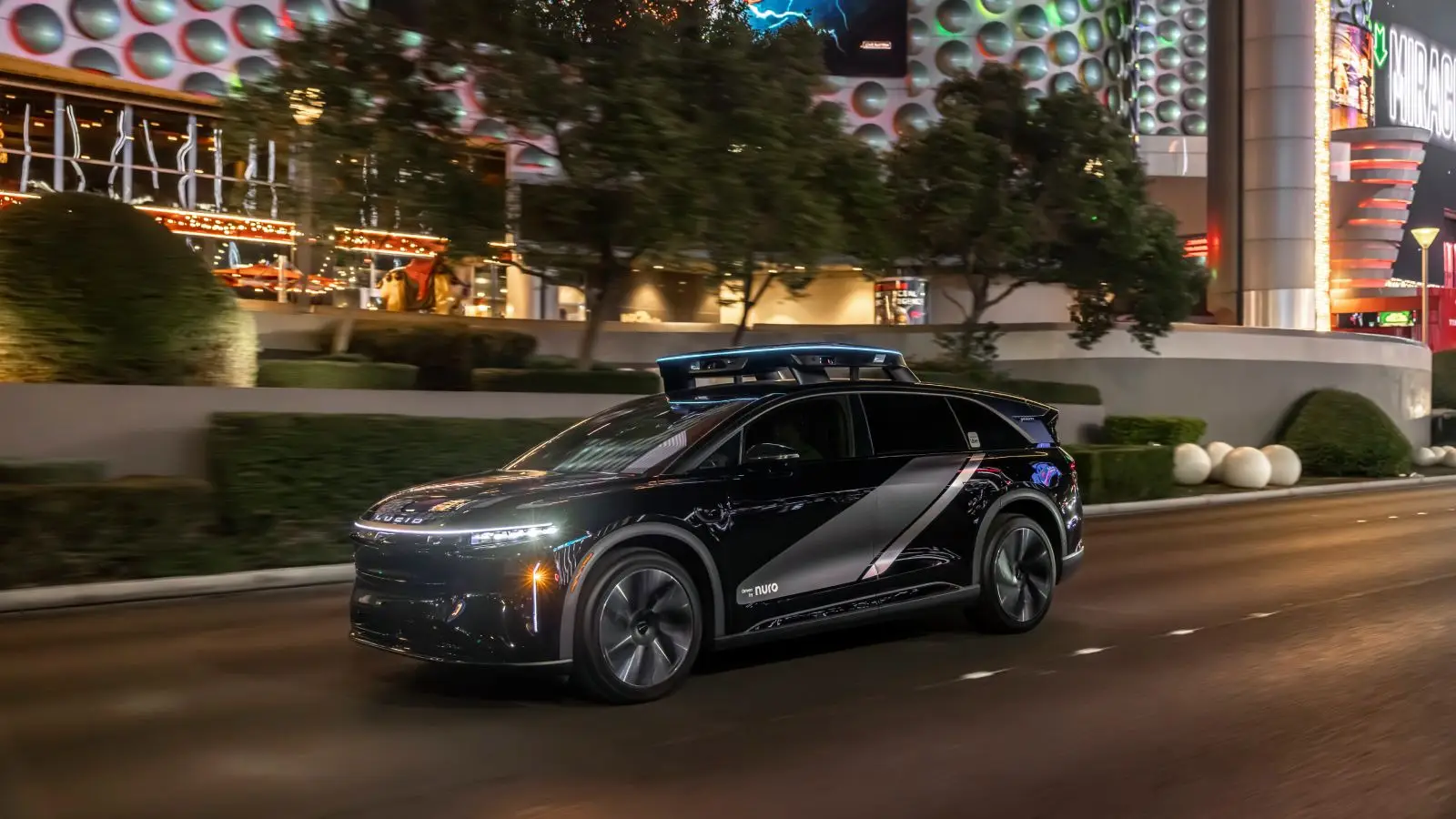
Lucid, Nuro and Uber presented a robotaxi at CES 2026 and confirmed autonomous road testing before a planned service launch later in 2026. Learn more.
Lucid, Nuro, and Uber unveiled a production-intent global robotaxi at CES 2026 while confirming that autonomous on-road testing has already begun. The announcement marked a clear transition from concept to real-world validation, with the companies targeting a commercial launch later in 2026.
At the heart of the program is the Lucid Gravity, adapted specifically for fully autonomous operation. The vehicle relies on Nuro’s Level 4 autonomous driving system and is designed to operate exclusively within Uber’s ride-hailing platform. Autonomous testing started in December in the San Francisco Bay Area under the supervision of safety operators, underscoring a gradual and controlled approach to deployment.
The robotaxi shown at CES illustrates how the partners envision the future of driverless passenger transport. It features a next-generation sensor suite delivering 360-degree perception through cameras, radars, and solid-state lidar units, integrated into the vehicle’s body and a distinctive low-profile roof-mounted halo. Real-time processing and system integration are powered by NVIDIA DRIVE AGX Thor, providing the computational backbone required for advanced autonomy.
Passenger experience plays a central role in the concept. Uber designed the in-cabin environment to emphasize comfort and transparency, offering interactive screens that allow riders to control climate settings, seat heating, and media, while also visualizing what the vehicle “sees” and how it plans its route. With seating for up to six passengers and generous luggage space, the layout is aimed at premium group travel rather than single-occupant trips.
Strategically, the robotaxi program serves different goals for each partner. Uber positions it as a scalable autonomous mobility option within its existing ecosystem. Nuro gains a pathway to deploy its autonomy stack in passenger transport. For Lucid, the project expands the use of its electric vehicle architecture and supports production activity at its Arizona facility, where manufacturing is expected to begin following final validation.
While precise rollout timelines and city-by-city plans have not been disclosed, the start of public-road testing and the presentation of a production-intent vehicle signal that the initiative has moved beyond experimentation. The next critical phase will depend on regulatory approvals and continued safety validation, which will ultimately determine how quickly robotaxis become a regular part of urban transportation.
Mark Havelin
2026, Jan 06 14:15