
Understanding Car Classes: From Compact City Cars to Luxury Sedans
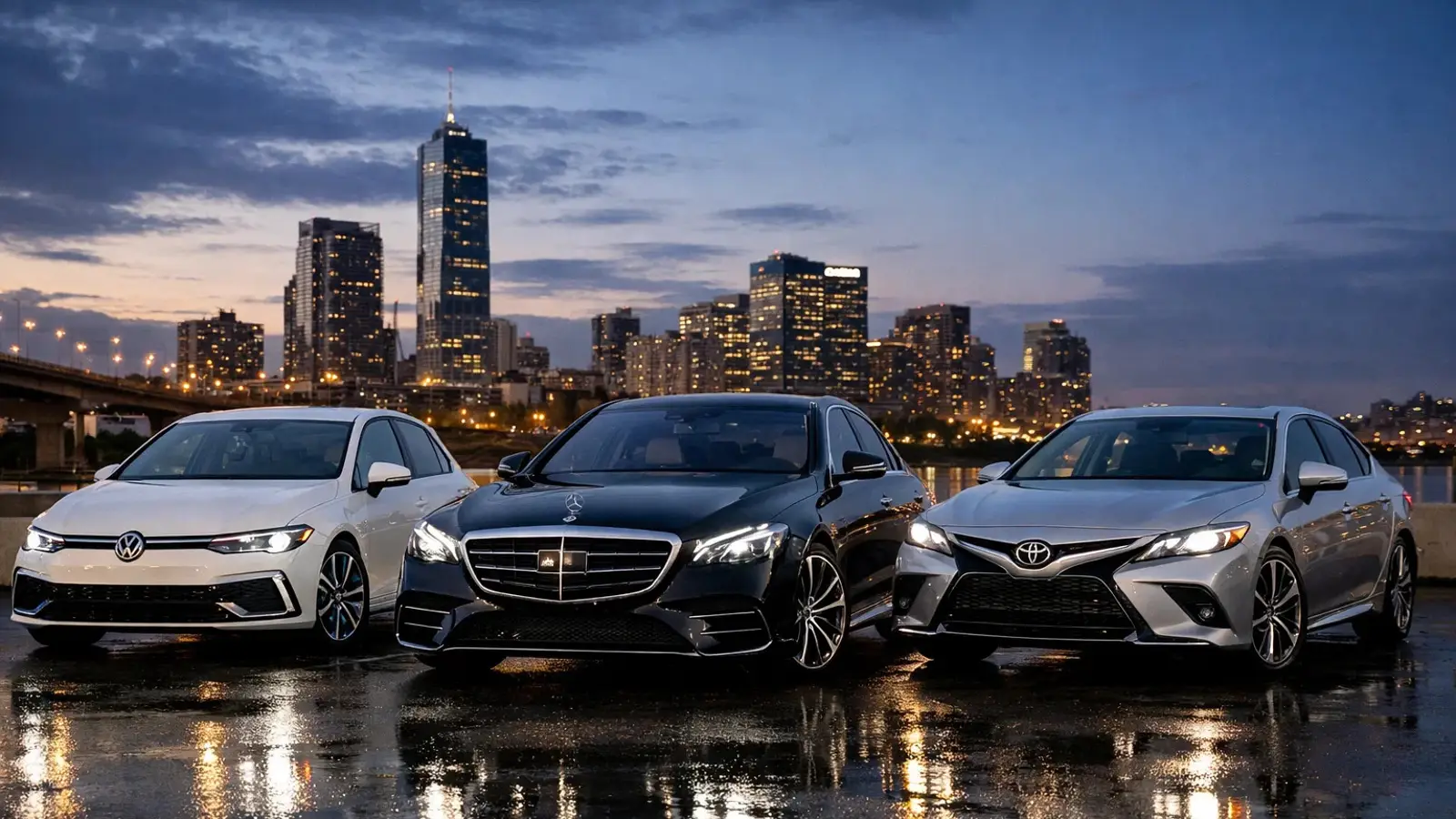
Learn how car classes from A to F are defined, what dimensions and features separate them, and how this classification helps compare vehicles and market segments.
The modern classification of cars did not appear overnight. In the past, vehicles were simply divided into passenger cars and trucks. As the automotive market expanded, a more detailed system became necessary to help both manufacturers and buyers navigate growing diversity.
Car classes are primarily based on dimensions and weight, but these factors alone are not decisive. Price level, technical equipment, engine performance, and market positioning are also considered. As a result, class boundaries remain flexible rather than strictly fixed.
The A-class includes the smallest city cars. These vehicles are designed for short trips, dense urban traffic, and easy parking. They focus on efficiency and maneuverability rather than power. Typical examples include the Daewoo Matiz, Smart, and Chevrolet Spark.
The B-class offers more interior space while remaining affordable. These cars are suitable for both city driving and suburban use and can comfortably carry up to five passengers. Common examples are the Hyundai Solaris, Volkswagen Polo, Kia Rio.
The C-class, often called the golf class, is one of the most popular market segments. It balances compact dimensions with practicality and comes in various body styles. A defining model of this class is the Volkswagen Golf, alongside cars such as the Ford Focus, Opel Astra, and Audi A3.
The D-class represents the traditional mid-size category. These vehicles provide a spacious cabin and a larger trunk, making them suitable for longer journeys and family use. Typical models include the Toyota Camry, Volkswagen Passat, Honda Accord, and Peugeot 406.
The E-class, commonly known as the business class, focuses on comfort, sound insulation, and engine performance. These cars are often used as corporate vehicles or in premium taxi fleets. Well-known examples are the BMW 5 Series, Mercedes-Benz E-Class, Audi A6, and Volvo S80.
At the top of the hierarchy stands the F-class, the representative or luxury segment. These large sedans exceed five meters in length and emphasize rear-seat comfort and advanced technology. Examples include the Mercedes-Benz S-Class, BMW 7 Series, Audi A8, Lexus LS, and Bentley models.
In addition to the alphabetical system, there are specialized categories such as sports cars, minivans, crossovers, and SUVs. For instance, the Porsche 911 represents sports cars, the Toyota Alphard belongs to minivans, while the Toyota Land Cruiser and Range Rover are typical SUVs.
Ultimately, a car class serves as a practical reference point. It helps compare vehicles more easily and understand what level of space, comfort, and technology each category offers.
Allen Garwin
2026, Jan 06 16:15