
Mercedes-Benz Presents MB.DRIVE ASSIST PRO for Urban Driving
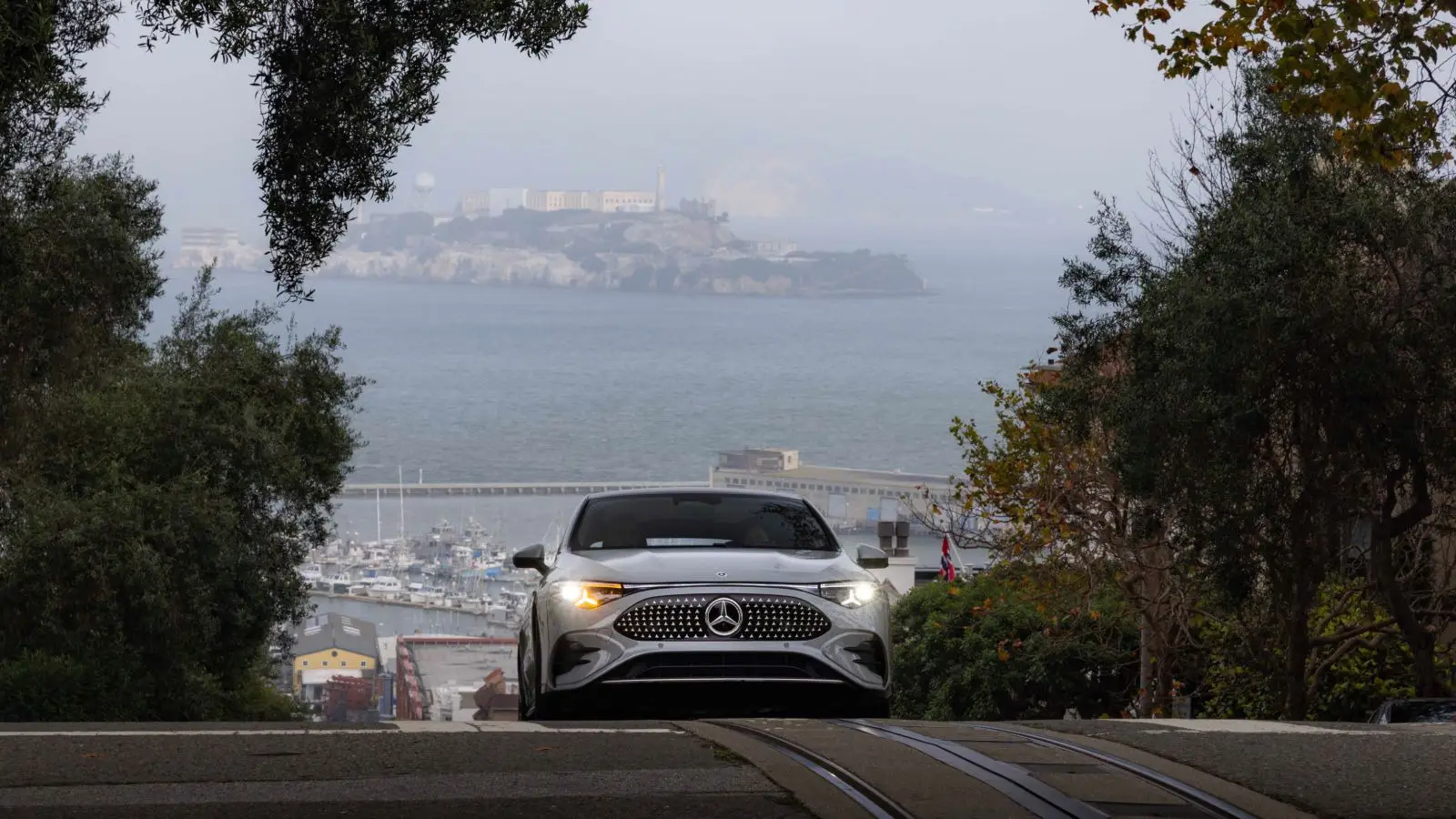
Mercedes-Benz has introduced MB.DRIVE ASSIST PRO, a Level 2 driver assistance system designed for point-to-point urban driving in the U.S. market.
Mercedes-Benz is taking its driver assistance technology to a new level with MB.DRIVE ASSIST PRO, a system designed to merge assisted driving and navigation into a single, coherent experience. The focus is on urban environments, where the vehicle can follow a route from the starting point to the destination while remaining under the continuous supervision of the driver.
A defining feature of MB.DRIVE ASSIST PRO is its emphasis on real-world city driving scenarios. The system can handle turns, lane changes, traffic lights, and interactions with other road users, all while operating within the boundaries of SAE Level 2. This means the driver remains responsible for the vehicle at all times and must be ready to intervene whenever necessary.
Mercedes-Benz places particular emphasis on its cooperative steering concept. Drivers can make steering corrections without fully disengaging the system, allowing MB.DRIVE ASSIST PRO to seamlessly resume control after brief manual input. This approach sets it apart from many conventional driver assistance systems, where any driver intervention typically leads to deactivation.
The technical foundation of the system includes around 30 sensors, combining cameras, radar units, and ultrasonic sensors. Their data is processed by a high-performance computing platform capable of up to 508 trillion operations per second, enabling real-time interpretation of the vehicle’s surroundings and alignment with detailed map data to select a safe driving trajectory.
MB.DRIVE ASSIST PRO has already been introduced in China since late 2025, with a rollout in the United States planned for 2026. In the U.S., the system is expected to be offered via a subscription model, including a three-year option priced at approximately $3,950. A European launch remains uncertain, largely due to regulatory constraints that currently limit the deployment of advanced urban assistance systems.
Positioned against competitors such as Tesla’s Full Self-Driving, Mercedes-Benz highlights a more cautious and regulation-oriented strategy. While MB.DRIVE ASSIST PRO is not marketed as autonomous driving, this conservative positioning may ultimately support broader acceptance and faster real-world adoption. In this sense, the system represents a significant step toward more advanced automated driving capabilities, without stepping beyond existing legal frameworks or customer expectations.
Mark Havelin
2026, Jan 06 21:30