
How Toyota Uses AMT to Tackle the Manufacturing Skills Gap
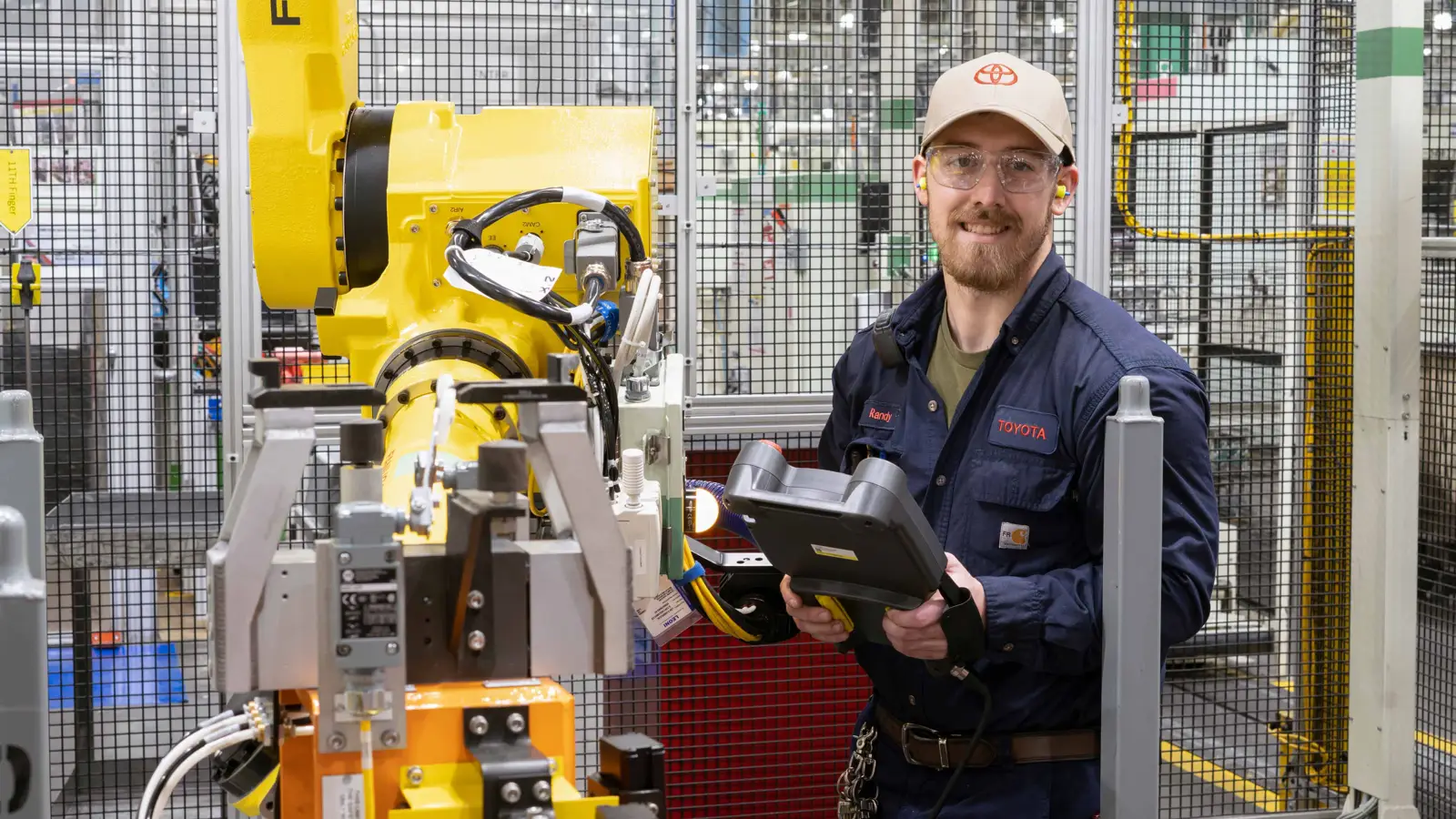
Toyota Motor North America explains how its AMT and FAME programs respond to the U.S. manufacturing skills gap and workforce shortages. Read the full story.
U.S. manufacturing is entering a period where workforce availability is becoming as critical as technology itself. According to Deloitte and The Manufacturing Institute, the sector may need up to 3.8 million skilled workers by 2033, with nearly 1.9 million roles at risk of going unfilled. The challenge is driven not only by missing skills, but by a shrinking pool of candidates willing to enter modern manufacturing careers.
Against this backdrop, Toyota Motor North America is investing in long-term talent pipelines rather than short-term fixes. At the core of this approach is the Advanced Manufacturing Technician (AMT) program, delivered through the Federation for Advanced Manufacturing Education (FAME), which combines education, paid work and early career placement.
The AMT program began in 2010 near Toyota’s manufacturing plant in Georgetown, Kentucky, in partnership with Bluegrass Community & Technical College. What started as a local initiative has since grown into a national framework, with dozens of chapters across multiple states and hundreds of manufacturing partners. Today, the program is managed by The Manufacturing Institute, while Toyota remains its founding company and a central participant.
The structure of AMT reflects the realities of advanced manufacturing. Over five semesters, students split their time between the classroom and the factory floor, studying robotics, industrial electricity, hydraulics, mechanics and equipment diagnostics. Alongside technical instruction, the curriculum emphasizes teamwork, leadership and time management. The paid, hands-on component alone can total roughly 1,800 hours of real production experience.
Financial accessibility is a defining element of the program. Students earn wages while they learn, helping them cover tuition and living costs without accumulating debt. Upon graduation, participants receive an associate degree and may qualify as Advanced Manufacturing Technicians. Approximately 85 percent of graduates transition directly into full-time roles with their sponsoring employers, arriving with practical knowledge of both the equipment and the company’s operating culture.
Graduate outcomes highlight the program’s applied focus. Many young technicians work with high-speed automated machinery and advanced diagnostic software, tackling complex technical issues early in their careers. For some, AMT represents a clear alternative to traditional engineering pathways, offering faster entry into stable, technology-driven roles.
Toyota also views the program as a way to challenge outdated perceptions of factory work. Modern manufacturing environments are increasingly clean, safe and digitally intensive, demanding a workforce comfortable with advanced systems and continuous problem-solving. As the industry’s labor gap continues to widen, education-and-employment models like AMT are emerging as a strategic response to sustaining the future of U.S. manufacturing.
Mark Havelin
2026, Jan 07 19:45