
Cars That Launched the Automobile Industry: From Benz to Beetle
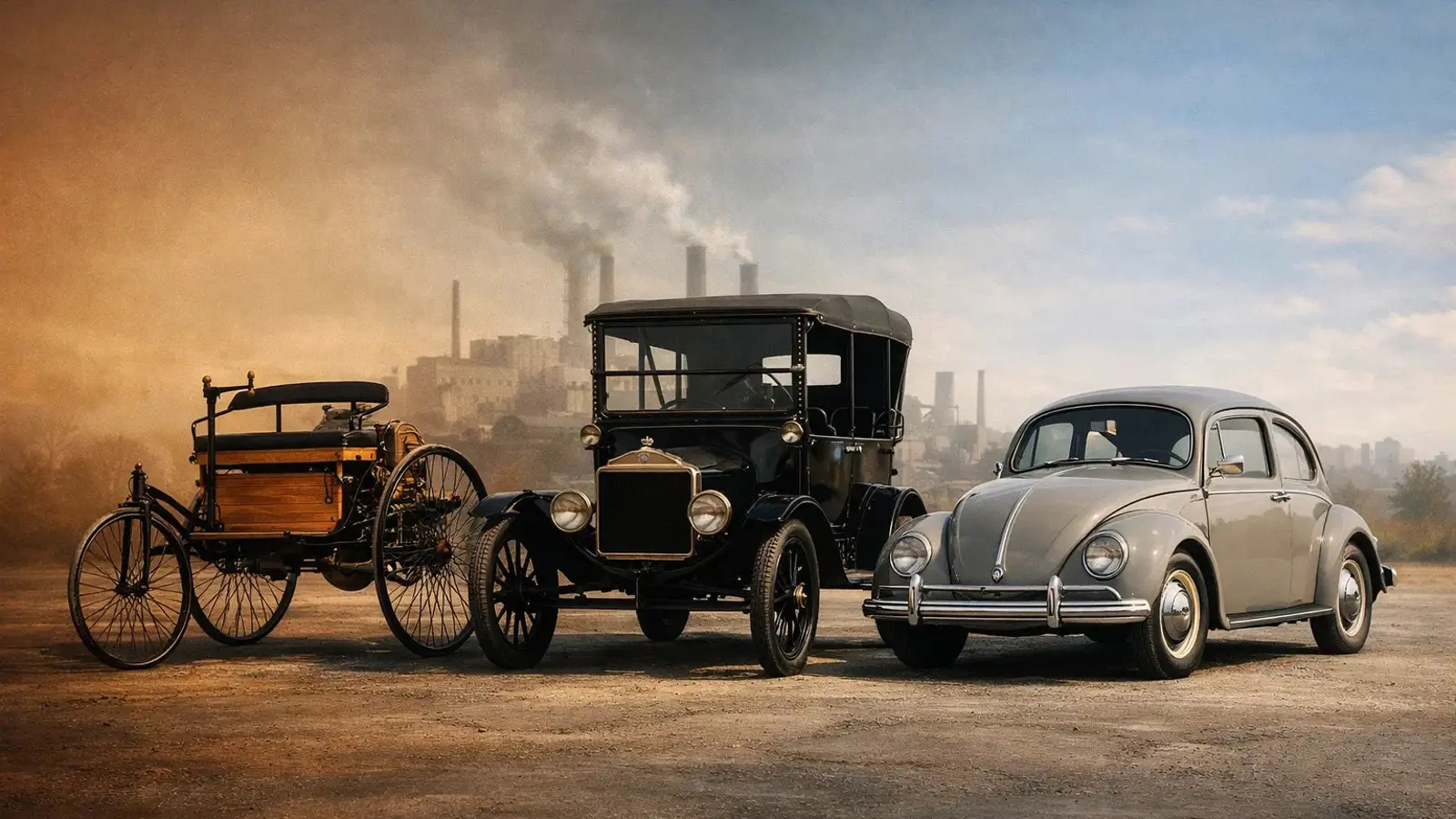
An in-depth look at Benz Patent Motor Car, Ford Model T and Volkswagen Beetle, examining how they launched and shaped the global automobile industry history
The history of the automotive industry rarely begins with a dramatic breakthrough. More often, it is shaped by a series of practical decisions that gradually redefine how people move. This process can be clearly traced through three vehicles, each playing a distinct and irreplaceable role: the Benz Patent Motor Car, the Ford Model T, and the Volkswagen Beetle.
In January 1886, Karl Benz registered patent no. 37435 for a vehicle powered by a gasoline engine. This document would later be described as the birth certificate of the automobile. What mattered was not only the presence of an internal combustion engine, but the fact that Benz designed a complete system in which the engine, chassis, and transmission formed a single functional unit. By the summer of the same year, the Benz Patent Motor Car had appeared on public roads, establishing the automobile as a real, visible form of transport.
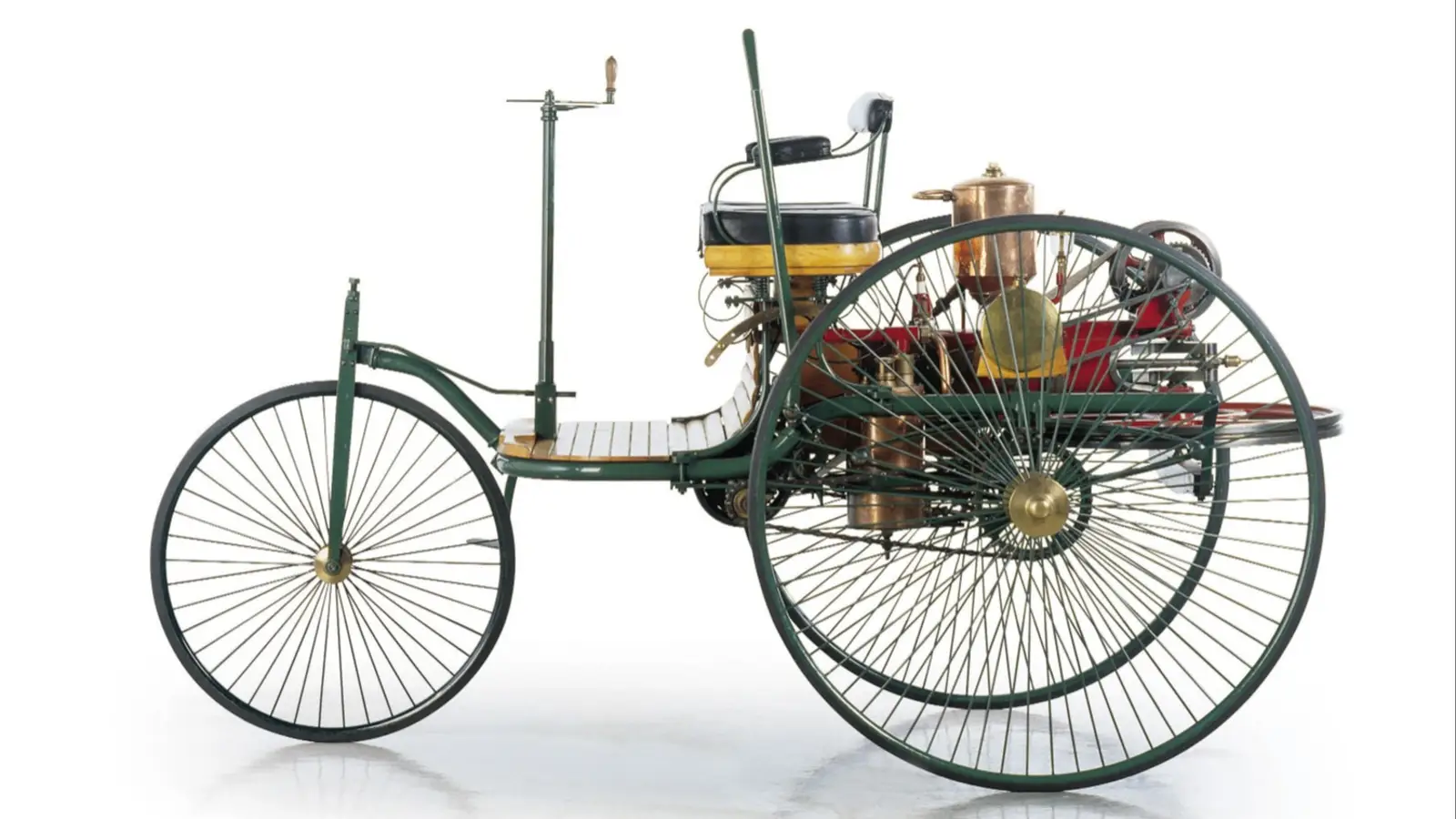

By modern standards, the Patent Motor Car was modest: a single-cylinder engine with 954 cc, less than one horsepower, and a top speed of around 16 km/h. Yet its importance lay elsewhere. It defined the basic architecture of the automobile, a layout that still underpins car design today. The concept was fully validated in 1888, when Bertha Benz undertook a journey of more than 100 kilometers on public roads, proving that the automobile could serve a practical transportation purpose.
.jpg)
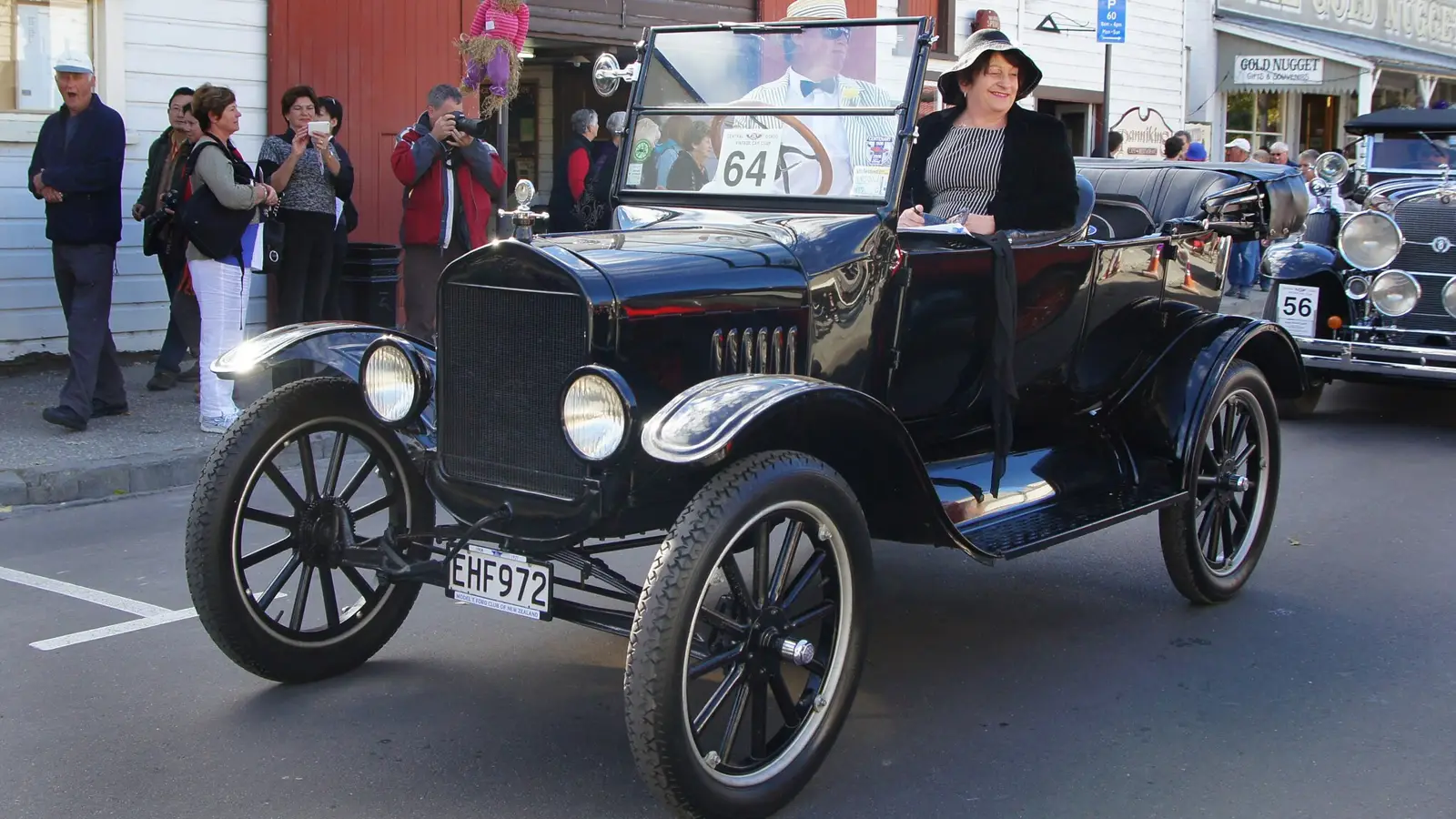
The next major shift took place in the United States. The Ford Model T was neither the first car nor a technical breakthrough in itself. Its significance was industrial. With the introduction of the moving assembly line at Ford’s Highland Park plant in 1913, automobile production was reorganized around a simple principle: the product moved to the worker. Output rose dramatically, from hundreds of cars per day to thousands.
Mass production reshaped pricing as well. Over the course of its production life, the Model T’s price fell from 850 dollars to as little as 260, bringing car ownership within reach of a much broader audience. In 1914, Ford also introduced the five-dollar workday with an eight-hour shift, linking automobile manufacturing to a new social model of industrial labor. The car was no longer a novelty; it was becoming a foundation of everyday life.
Production of the Model T lasted for 19 years. On 26 May 1927, the fifteen-millionth example rolled off the assembly line, marking the symbolic end of an era. By then, the automobile had firmly established itself as a normal part of modern society.
The third chapter began after the Second World War. Shortly after Christmas 1945, the first post-war Volkswagen Type 1 vehicles left the production line in Wolfsburg. Only 55 cars were completed by the end of that year, a modest beginning for a model that would go on to become one of the most produced cars in history.
The Volkswagen Beetle embodied the idea of a “people’s car” on a global scale. Its production continued for decades and across multiple countries. In February 1972, the Beetle officially surpassed the Ford Model T in total production numbers. On 30 July 2003, the last classic Beetle rolled off the line in Puebla, Mexico, bringing total production to 21,529,464 vehicles.


Viewed together, these three cars do not compete with one another. Instead, they form a clear sequence. The Benz Patent Motor Car established the automobile as a concept. The Ford Model T transformed that concept into a mass-produced industrial product. The Volkswagen Beetle demonstrated that the personal automobile could become a durable, global standard.
This is how the automotive industry was formed — not through a single invention, but through a progression of irreversible steps, each defined by a machine that changed what personal transport could be.
Ethan Rowden
2026, Jan 08 12:35