
Peugeot Presents the 2026 Facelift of the Peugeot 408
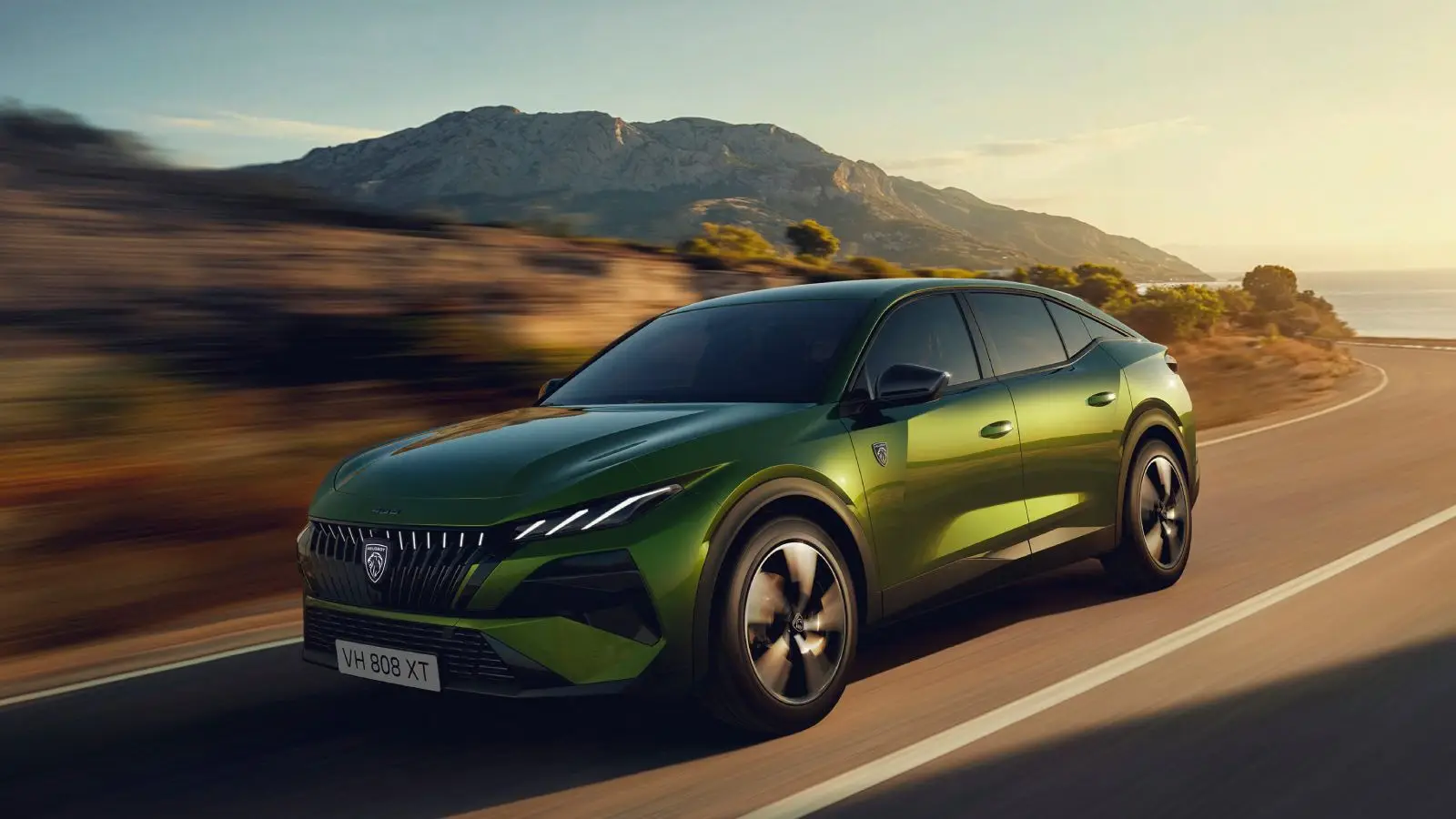
Peugeot has presented the updated 2026 Peugeot 408 with design changes and revised electrified powertrains. Read the full overview and key updates.
Peugeot has refreshed the 408 at a point when the model has already secured a distinct position of its own. Just over three years after its market debut, the car receives a scheduled facelift along with a series of targeted technical updates. This is not a reinvention, but a careful refinement of an established concept, with a clear focus on design, electrification and up-to-date digital features.
The 408 remains difficult to pin down to a single segment. Officially placed in the C-segment, its 4.69-metre length pushes it close to mid-size territory. In character, it sits somewhere between a fastback and an SUV, appealing to drivers who want something different from mainstream family cars or conventional fleet choices. On a European scale, this strategy has proven effective, with the model maintaining solid sales and positioning itself close to the segment’s best-known nameplates.
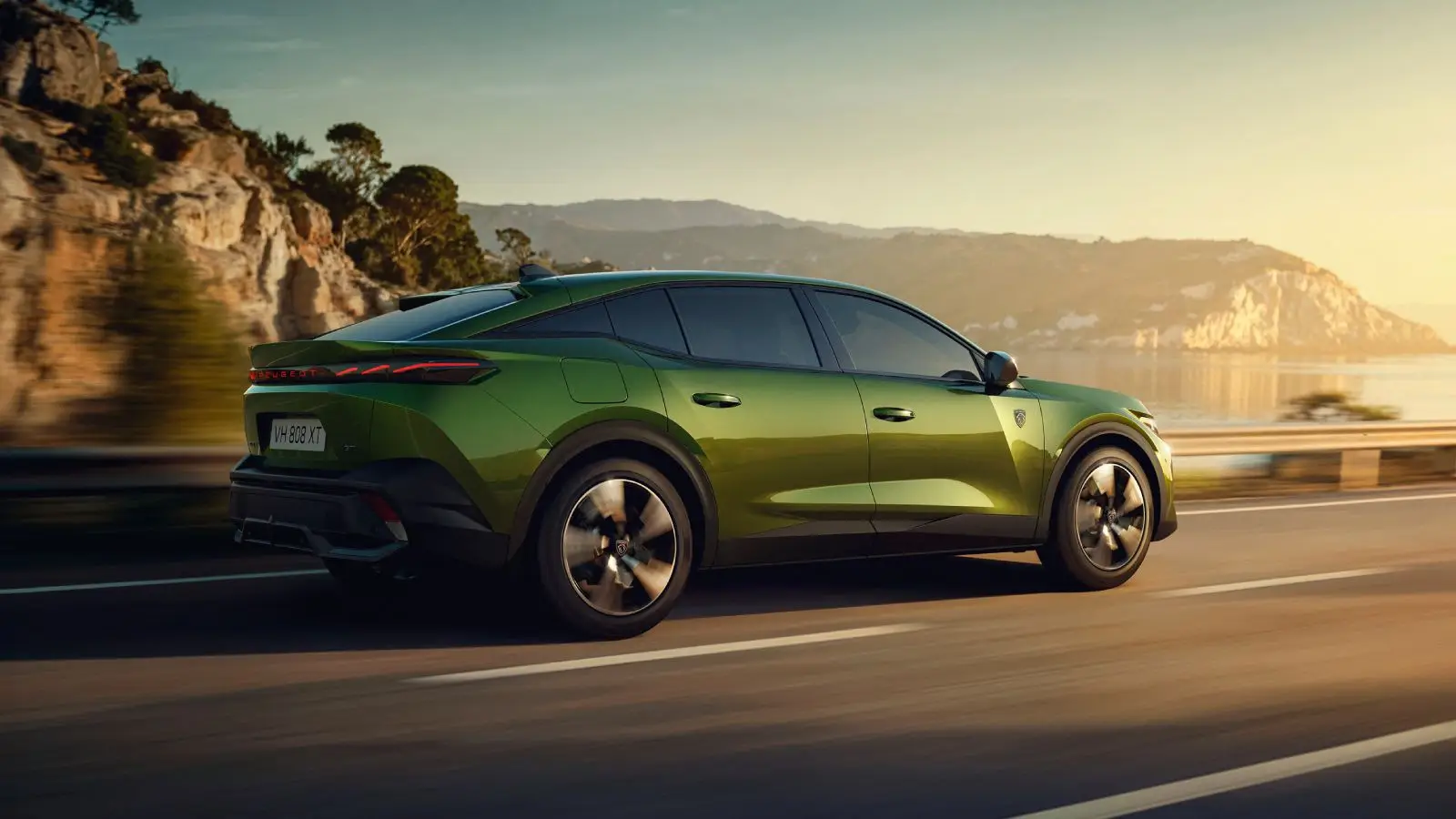
The most noticeable visual changes are found at the front. Peugeot has abandoned the previous elongated claw-shaped daytime running lights in favour of a new lighting signature made up of three diagonal LED elements that also function as indicators. The main headlights are now positioned lower in the bumper, giving the car a sharper, more assertive look. LED headlights are standard on Allure and Allure Business versions, while GT and GT Exclusive trims feature adaptive Matrix LED technology. The redesigned bumper and grille introduce a greater use of black surfaces, both glossy and matte, and higher trims add an illuminated lion badge that discreetly conceals driver assistance sensors.
The body panels and overall silhouette remain unchanged, with the 408 continuing to ride on the EMP2 platform shared with the Peugeot 308. Visual freshness is enhanced by wheels up to 20 inches in diameter and the introduction of a new exterior colour, Flare Green. This light green shade shifts depending on lighting conditions, highlighting the sculpted bodywork and giving the car a striking presence in direct sunlight.
The powertrain line-up follows a familiar structure, but with key points of emphasis. The entry-level option remains the Hybrid version with a 48-volt mild-hybrid system. Here, a 1.2-litre three-cylinder petrol engine producing 136 hp is paired with a 21 kW electric motor, delivering a combined output of 145 hp. This configuration is clearly aimed at private buyers looking for improved efficiency without fully committing to electric mobility.
The fully electric E-408 is equipped with a 157 kW (213 hp) electric motor and a battery offering 58.2 kWh of usable capacity. Its claimed driving range reaches up to 456 km under the WLTP cycle, while DC fast charging is possible at up to 120 kW. The EMP2 platform sets certain limits, meaning higher charging rates seen on newer architectures are not available. Even so, the electric version introduces some of the most significant innovations, including battery pre-conditioning, Plug & Charge functionality and Vehicle-to-Load, allowing external devices to be powered directly from the car.
The plug-in hybrid remains the “golden middle” and a crucial option for company car users. It combines a 1.6-litre petrol engine rated at 180 hp with a 92 kW electric motor. Thanks to revised software, total system output increases from 225 to 240 hp, making this the most powerful variant in the 408 range. A usable battery capacity of 14.2 kWh enables up to 85 km of electric driving, although charging performance remains modest, with a standard onboard charger of around 3.6 kW and an optional single-phase upgrade to 7.4 kW.
At the rear, the changes are equally symbolic. The sloping tailgate and pronounced cut-off edge beneath the rear window remain, allowing the 408 to dispense with a rear wiper for aerodynamic reasons. The standout feature is the illuminated Peugeot lettering integrated into a glossy black panel between the tail lights. Diagonal claw-shaped light elements are now standard across all trims, not just the GT versions.
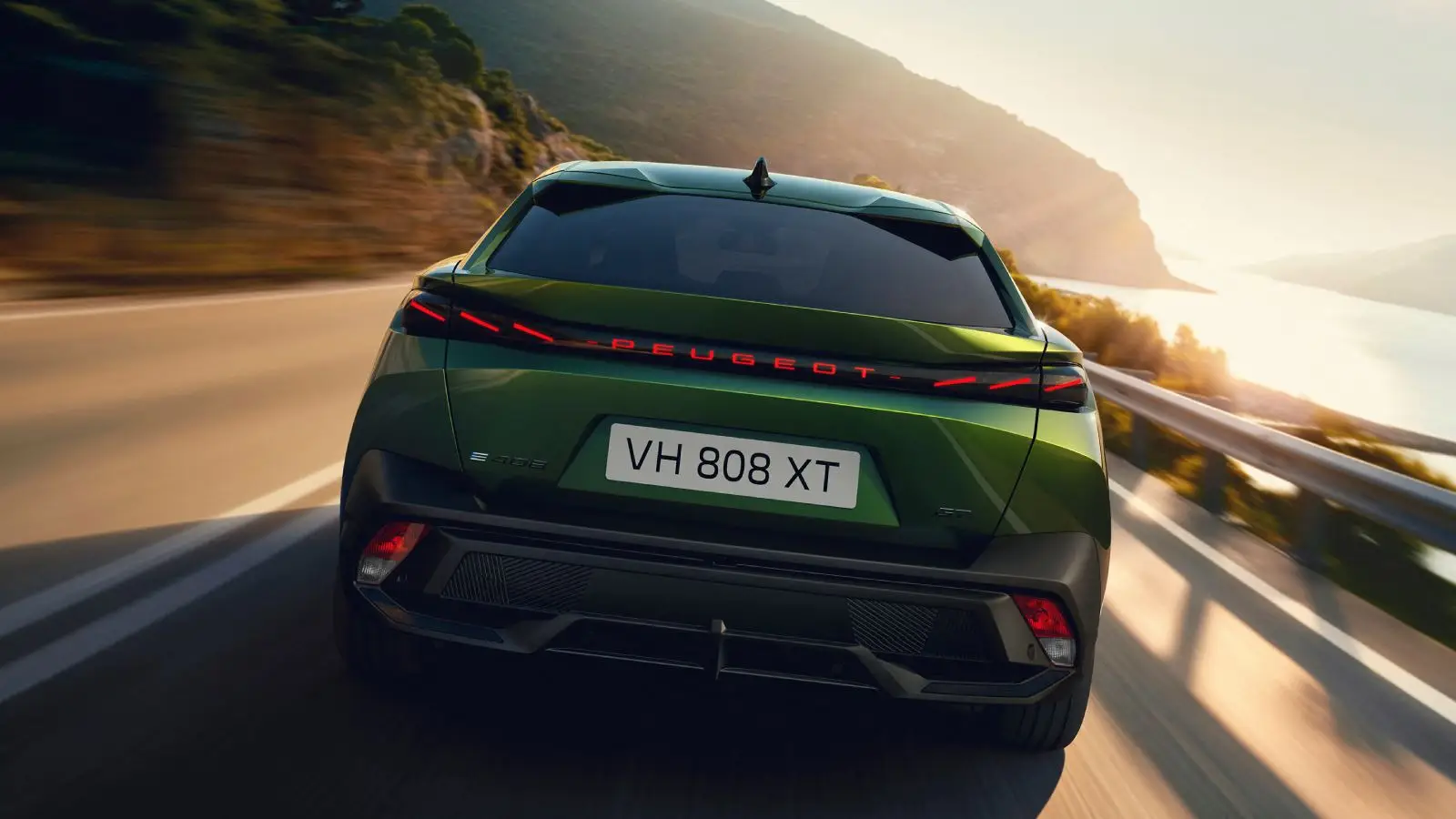
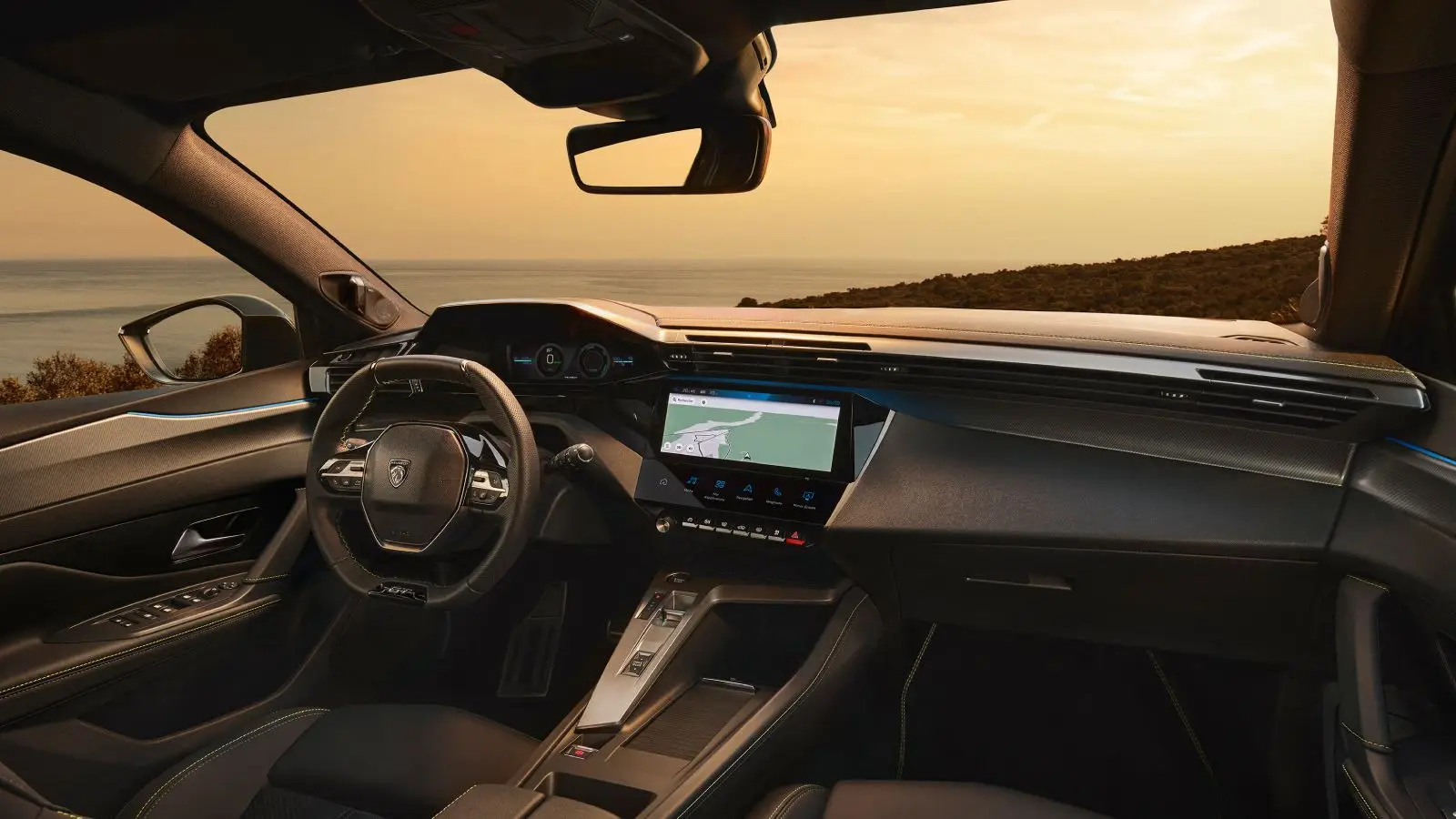
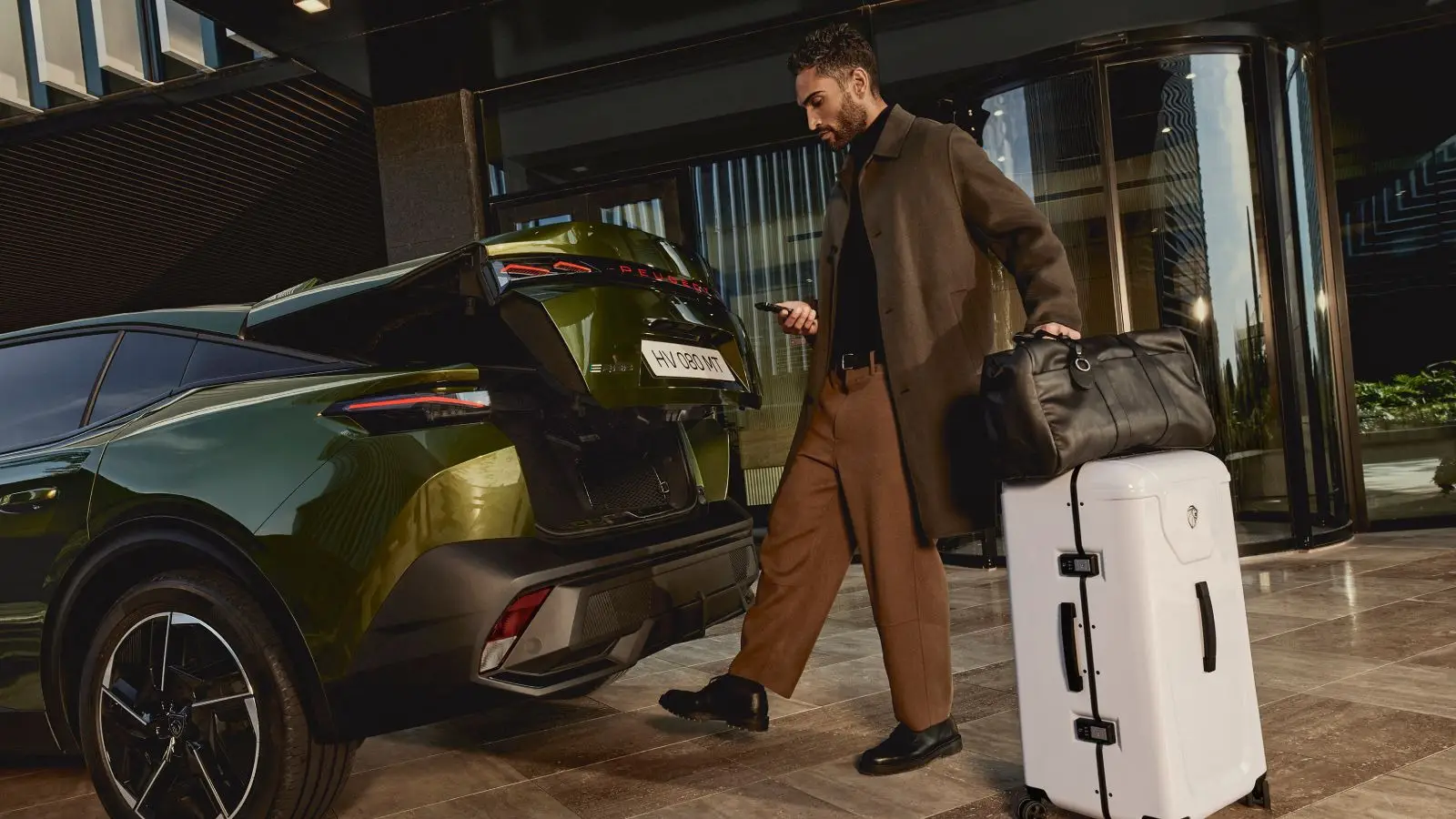
Practicality is unchanged. The boot offers 536 litres of capacity, except in models equipped with the optional Focal sound system, where part of the space is taken up by a subwoofer. The load area is neatly finished and designed for everyday use, with tie-down points, nets and hooks. Inside, the familiar Peugeot i-Cockpit layout remains, featuring a compact steering wheel, a 10-inch digital instrument cluster with updated graphics and a matching central touchscreen. Customisable i-Toggles continue to provide quick access to key functions, while GT and GT Exclusive versions add a three-dimensional display effect. AGR-certified front seats offer a wide range of adjustments and underline the ergonomic focus.
Built in France at the Mulhouse plant, the updated Peugeot 408 highlights the brand’s emphasis on local production. The facelift does not alter the model’s core philosophy, but sharpens it. In an increasingly competitive segment, this measured approach appears deliberate: the 408 continues to cater to buyers seeking distinctive design, a choice of electrified powertrains and a clearly defined character, without resorting to radical change.
Mark Havelin
2026, Jan 10 10:29