
How Bugatti Tested and Developed the Veyron Hypercar
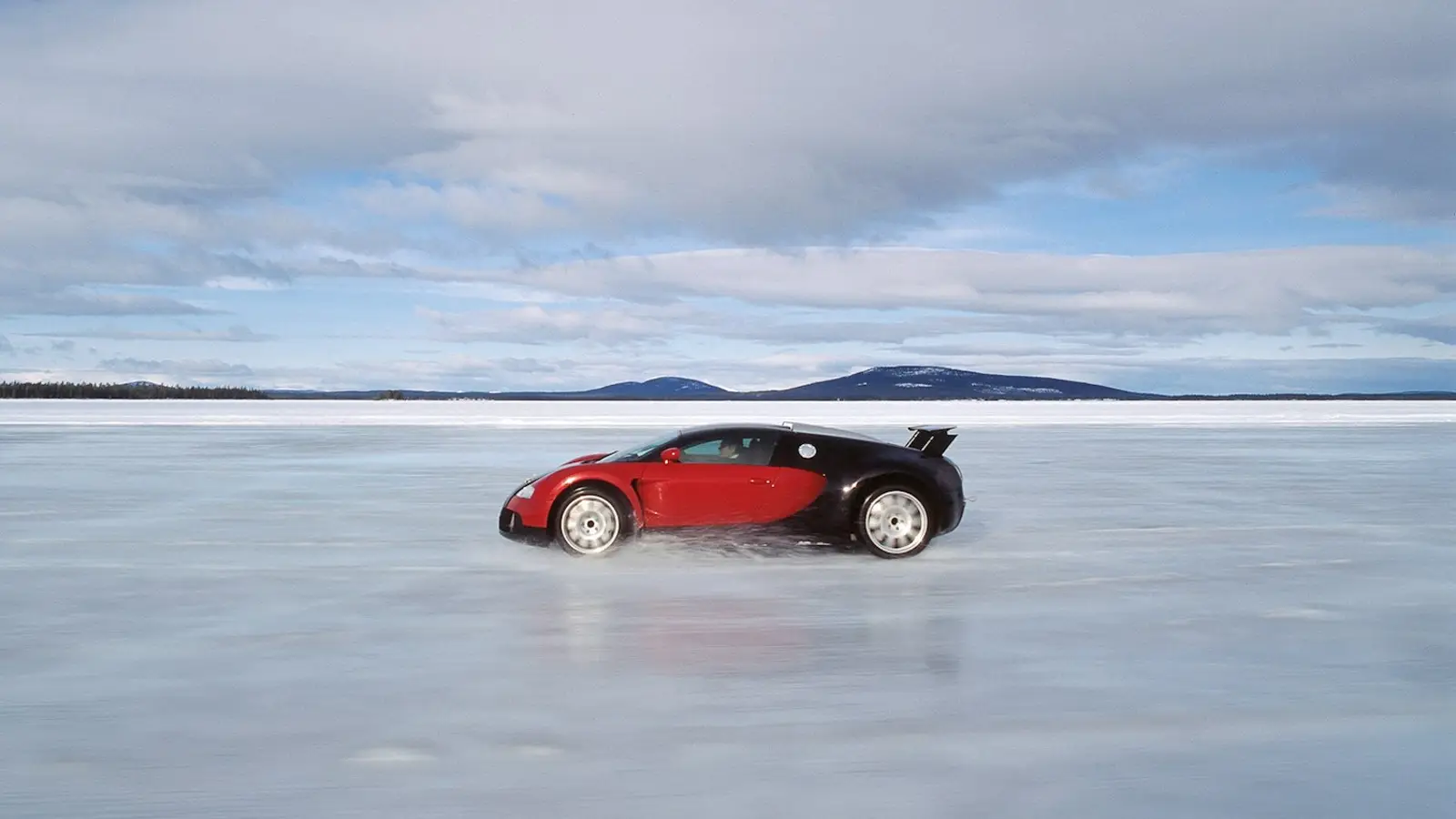
Bugatti recounts the testing and development of the Veyron through high-speed expert Loris Bicocchi. Learn how the hypercar reshaped automotive engineering.
More than two decades after its first test runs, the Bugatti Veyron remains a living memory rather than a distant chapter in automotive history for those who helped bring it to life. For Loris Bicocchi, one of Bugatti’s key high-speed testing specialists, working on the Veyron was a rare moment where engineering challenge and personal emotion became inseparable.
By the time the project began, Bicocchi already had extensive experience with extreme performance cars, including the Bugatti EB110 GT and EB110 SS. Yet the Veyron, announced with 1,001 horsepower, sixteen cylinders and a target speed exceeding 400 km/h, stood apart from anything that had come before. It was not a natural evolution of the supercar, but the creation of an entirely new category — the hypercar — without historical reference points.
The first tests took place at Michelin’s proving ground in Ladoux, where early prototypes already displayed capabilities that challenged established engineering assumptions. According to Bicocchi, even for an experienced test driver there was no clear benchmark. The sheer level of power and acceleration demanded a complete reassessment of professional instincts built up over decades.
A defining phase of development unfolded at Volkswagen Group’s Ehra-Lessien test facility. It was there that the Veyron crossed the 300 km/h threshold — a point beyond which, as Bicocchi explains, everything changes. Aerodynamics, stability and braking behavior follow new rules, and every component becomes critical. At such speeds, the car’s active aerodynamics played a decisive role, with the rear wing functioning as a full airbrake under heavy deceleration.
Bugatti’s ambition extended far beyond record-breaking figures. The Veyron was conceived as a hypercar that could be driven safely and confidently by non-professional drivers. Achieving this required unprecedented collaboration between engineers, test drivers and suppliers, including the development of bespoke Michelin tires capable of withstanding sustained speeds above 400 km/h.
For Bicocchi, the project also carried a deeper historical weight. During countless journeys between test locations, he revisited the legacy of Ettore Bugatti, viewing the Veyron as a symbol of the brand’s rebirth in Molsheim. One moment in particular — accelerating to maximum speed and performing full braking at Ehra-Lessien — remains etched in his memory as proof that the team had truly become part of automotive history.
Today, as Bugatti continues to shape the future of the hypercar, the Veyron is widely regarded as the starting point of the modern era of extreme performance engineering. Its significance goes far beyond speed records. It stands as evidence that technological risk, collective expertise and relentless attention to detail can redefine what a production automobile is capable of achieving.
Mark Havelin
2026, Jan 18 16:58