
How Machine Vision Teaches Neural Networks to Drive
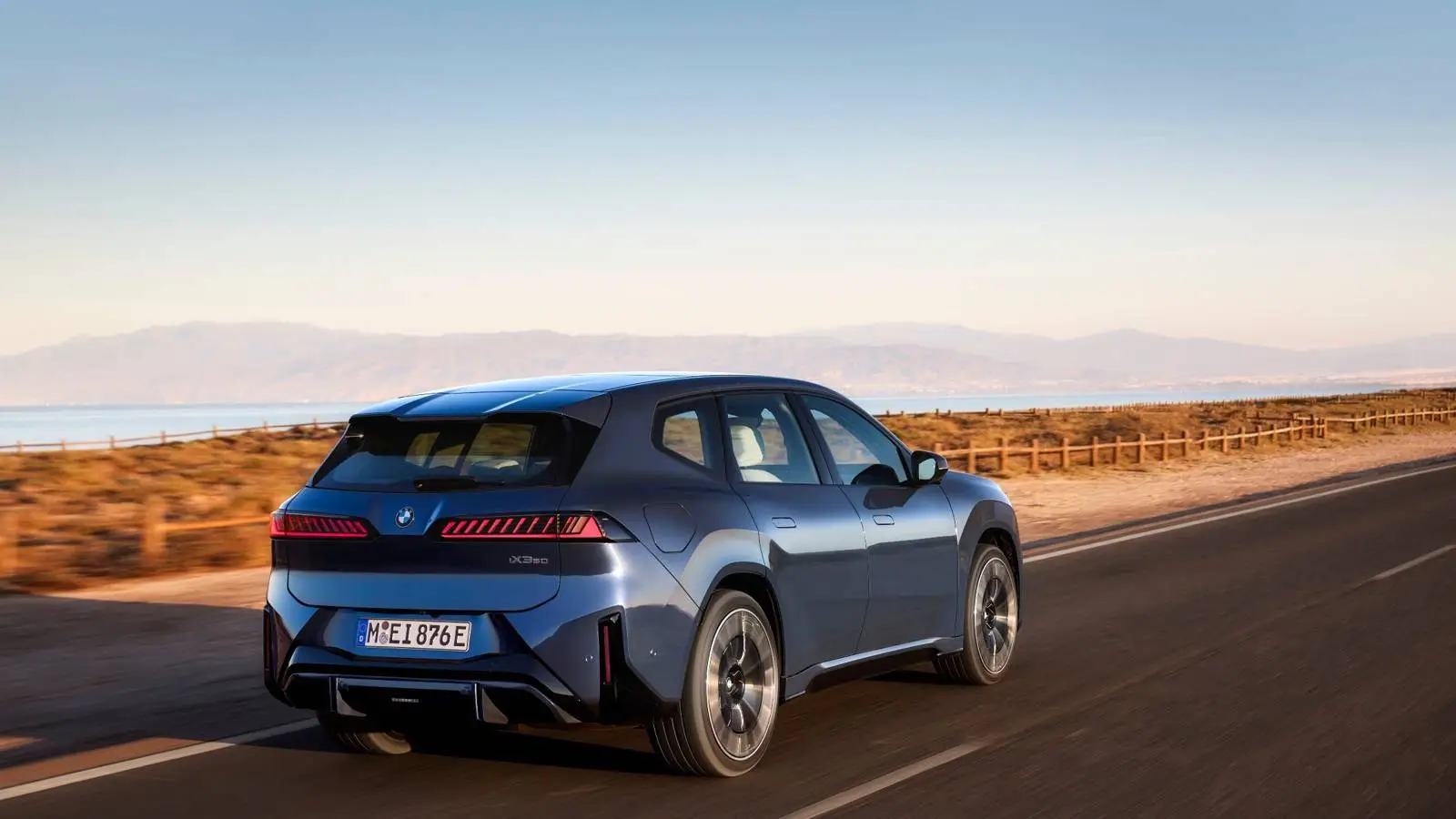
An accessible explanation of how neural networks learn to drive through machine vision, data, and sensors, and why this approach defines autonomous vehicles.
Neural networks in cars do not “learn to drive” the way humans do. They do not memorize routes or rely on intuition. Instead, their task is more constrained and more technical: they must learn to see the road scene, interpret what is happening, and choose an appropriate action based on that interpretation. At the core of this process lies machine vision, without which autonomous driving would not be possible.
A modern vehicle equipped with advanced driver assistance or autonomous capabilities perceives the world through a combination of sensors. Cameras capture visual information, LiDAR measures distances to surrounding objects, radar tracks motion, and GPS and inertial sensors provide data about position and movement. These inputs operate simultaneously, and their fusion allows the system to build a stable representation of its environment.
Machine vision is not a single algorithm but a collection of tightly connected tasks. First, the system must detect objects such as vehicles, pedestrians, cyclists, or traffic signals. Next, it needs to understand the structure of the scene: where the road is, where lanes begin and end, and which areas are not meant for driving. It then tracks how objects move over time and integrates these observations into a coherent picture. In research on autonomous driving, these stages are commonly described as perception, prediction, and planning, forming the backbone of vehicle behavior.
The key question is how neural networks learn these skills. The answer starts with data. Training machine vision systems requires vast collections of real-world driving recordings, each carefully annotated. Objects are labeled with bounding boxes, their classes are identified, and their positions in three-dimensional space are specified. Particular attention is paid to semantic segmentation, which assigns meaning to every pixel by separating roads, sidewalks, lanes, and other elements. Without this structured annotation, a neural network would not be able to interpret what it sees.
Yet even millions of kilometers of real driving data are not enough. Rare but critical situations—unusual weather, unexpected behavior from other road users, or complex traffic scenarios—occur infrequently in reality. To address this gap, synthetic data has become increasingly important. Generative pipelines can create driving videos and scenarios based on maps, LiDAR information, and other structured inputs. These synthetic examples expand the diversity of training data and expose machine vision systems to conditions that are difficult or unsafe to capture on public roads.
At the same time, the internal design of driving models is evolving. Traditional systems rely on a sequential pipeline, where perception feeds into prediction and then into planning. Research has shown that such pipelines can accumulate errors across stages. In response, end-to-end approaches aim to integrate multiple tasks within a single architecture. Transformer-based models process tasks in parallel, maintain information over time, and reduce rigid dependencies between individual components.
Another emerging direction is the combination of machine vision with language-based reasoning models. These systems attempt to connect visual understanding with higher-level semantic reasoning, linking what the vehicle observes to more abstract interpretations of the situation. By bridging visual perception and decision-making, this approach reflects a broader shift in how researchers think about “understanding” the driving environment.
Ultimately, teaching neural networks to drive is not about mimicking human instincts. It is an engineering challenge built on data collection, annotation, model design, simulation, and validation. Machine vision remains the central pillar of this process, and its continued development will largely determine how confidently and safely autonomous vehicles can operate in real-world conditions.
Allen Garwin
2026, Jan 19 11:04