
Mercedes-AMG PETRONAS F1 Team sustainability progress in 2025
Mercedes-AMG PETRONAS F1 Team reports key sustainability progress in 2025, covering bio-based materials, low-carbon logistics and team-wide initiatives. Learn more.
The 2025 season marked a significant milestone in Mercedes-AMG PETRONAS Formula One Team’s sustainability strategy, with tangible progress made across engineering, logistics, and everyday operations.
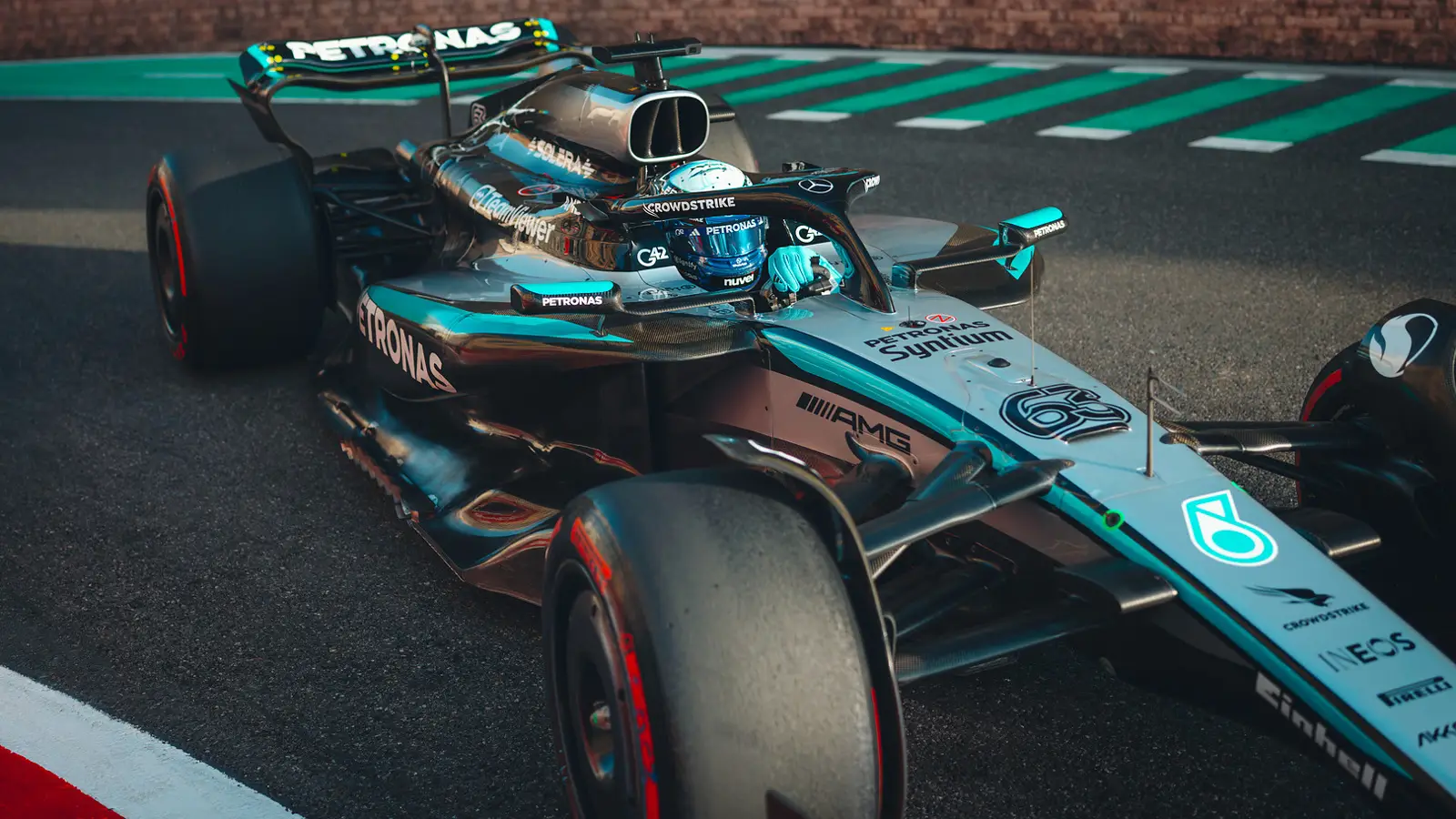
The most notable technical breakthrough came on track. For the first time in Formula One history, a bio-based carbon fibre composite was used on a race car. The rear brake duct wheel shields of the No.63 W16 featured a resin containing 30% bio-based material, debuting at the 2025 Azerbaijan Grand Prix. The component remained in competitive use for the rest of the season, withstanding the extreme demands of Formula One racing and accompanying strong results, including victory in Singapore and a podium finish in Las Vegas. The project demonstrated that bio-based composite solutions can meet the performance and durability requirements of the sport.
Beyond the car itself, the team focused on reducing emissions linked to freight and travel. Across the European season, race and marketing trucks were increasingly powered by HVO100 biofuel, avoiding more than 410 tonnes of CO₂e based on lifecycle emission calculations. Within the team, this impact has been compared to the annual carbon sequestration capacity of tens of thousands of mature mangrove trees.
Logistics also entered a new phase with the introduction of fully electric transport. Mercedes-AMG PETRONAS became the first team on the grid to use an all-electric Mercedes-Benz Trucks eActros 600 to move its race cars and equipment to a European Grand Prix. The 673 km journey from Brackley to Zandvoort followed an earlier pilot at the British Grand Prix, highlighting the potential for electric heavy-duty transport within the championship.
Sustainability efforts extended to daily operations at the team’s base. An internal car-sharing initiative helped team members save approximately 360,000 commuting miles over the season, contributing to overall emissions reduction away from the racetrack.
Environmental initiatives also reached beyond Formula One. In partnership with PETRONAS, the team launched the Blue Carbon Collective, supporting research and restoration projects focused on mangrove ecosystems in Brazil and Malaysia. These environments are recognised for their ability to store large amounts of carbon while protecting coastal biodiversity. In grassroots motorsport, collaboration with Motorsport UK enabled the introduction of sustainable fuel in the IAME Waterswift Restricted Cadet class of the British Karting Championships, delivering a reported 55% reduction in emissions compared to conventional fuel.
Taken together, these developments underline how sustainability has become embedded in the team’s operational mindset. Rather than isolated initiatives, the 2025 season reflects a coordinated approach spanning materials, transport, partnerships, and community engagement. As Formula One moves toward its long-term climate objectives, Mercedes-AMG PETRONAS appears set to build on these foundations heading into 2026.
Mark Havelin
2026, Jan 19 16:22

