
Porsche Mourns the Loss of Motorsport Pioneer Peter Falk
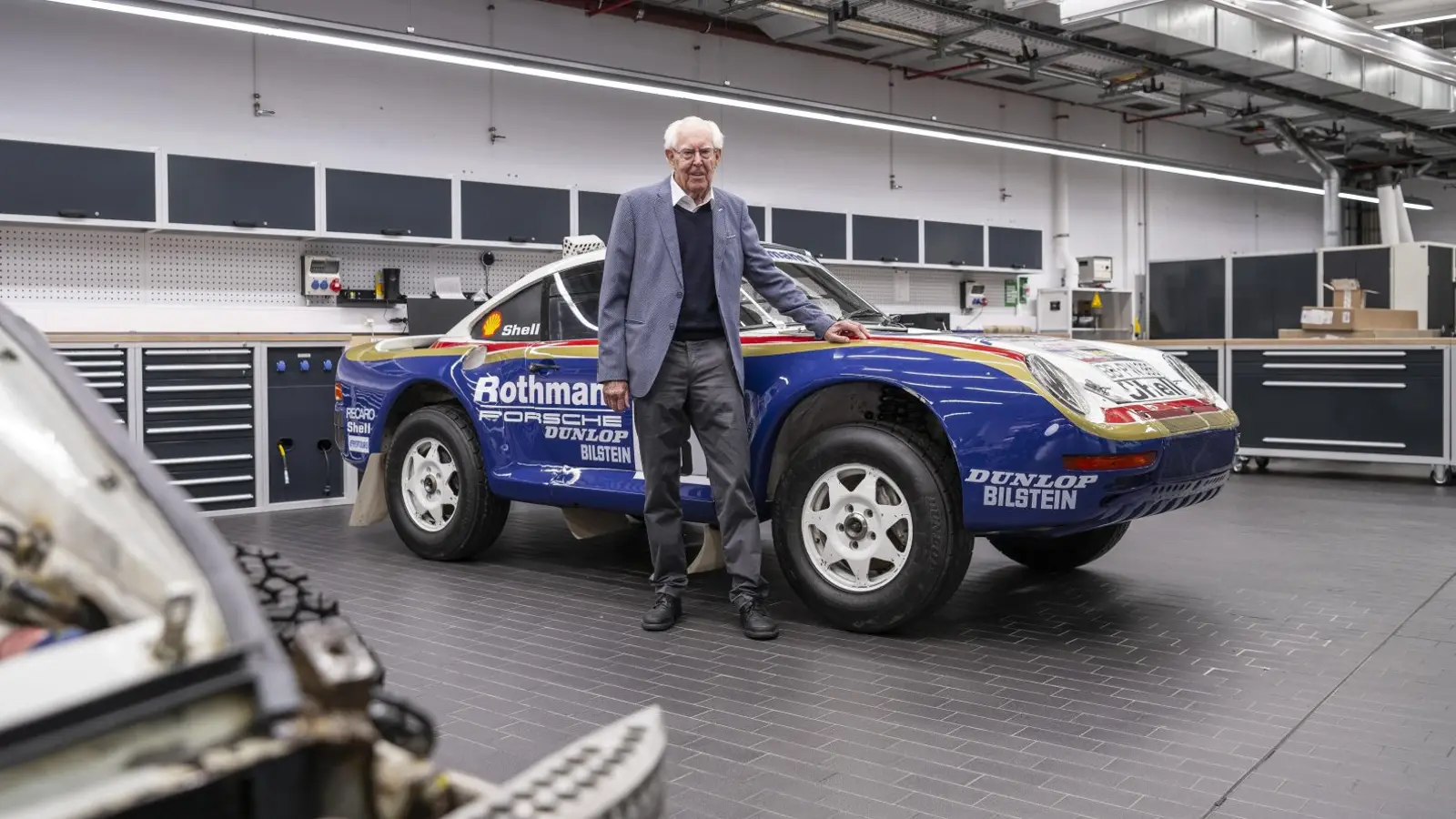
Porsche announces the death of Peter Falk, long-time engineer and race director whose work shaped Porsche Motorsport. Read about his legacy and career.
Porsche has announced the death of Peter Falk, the engineer and race director who helped shape the brand’s motorsport identity for more than three decades. He passed away on January 23, 2026, at the age of 93.
Falk was one of the defining figures in Porsche Motorsport. His career combined engineering expertise with strategic leadership, contributing to some of the most significant racing successes in the company’s history. Porsche described him not only as an outstanding engineer and race director, but as someone deeply connected to the brand and its team-oriented philosophy.
Born in Athens in 1932, Falk began his professional life as a trained car mechanic before studying mechanical engineering with a focus on automotive technology in Stuttgart. His fascination with engineering and competition emerged early, leading him into rallying in the 1950s. In 1959, he joined Porsche as one of the first employees in vehicle testing.
A pivotal moment in his early career came in 1965 at the Rally Monte Carlo, where Falk competed as co-driver alongside Herbert Linge. The event marked the first international motorsport appearance of the Porsche 911. Finishing fifth overall, the result was widely regarded as a remarkable debut and laid the groundwork for the model’s future motorsport reputation.
Over the following decades, Falk played a major role in the development of Porsche’s racing and production models, including the 904, 917, and later the iconic 956 and 962 prototypes. As race director, he oversaw the most successful era in Porsche’s Group C history. Under his leadership, Porsche secured seven overall victories at the 24 Hours of Le Mans and eleven world championship titles during the 1980s, establishing a period of sustained dominance in endurance racing.
His influence extended beyond circuit racing. Falk also directed Porsche’s rally programs, culminating in overall victories at the Paris–Dakar Rally in 1984 and 1986. The triumphs, including those achieved with the Porsche 959, highlighted the brand’s ability to transfer engineering excellence from the racetrack to the world’s toughest off-road competitions.
In the late 1980s, Falk became head of chassis development and was involved in the creation of the fourth-generation Porsche 911 (993). After retiring in 1993, he remained closely associated with the company. For many years, he supported the Porsche Heritage and Museum team as a contemporary witness, contributed to interviews, attended classic car events, and helped organize vintage car rallies.
Among drivers and colleagues, Falk was remembered for his calm demeanor, technical insight, and exceptional team spirit. His belief that success depended on the strength of the team rather than individual recognition became a defining principle of his career. With his passing, Porsche loses not only a key architect of its motorsport legacy, but also a figure whose influence continues to resonate throughout the brand’s history.
Mark Havelin
2026, Jan 28 20:22