
Tesla shifts to autonomous cars, Roadster remains driver-focused
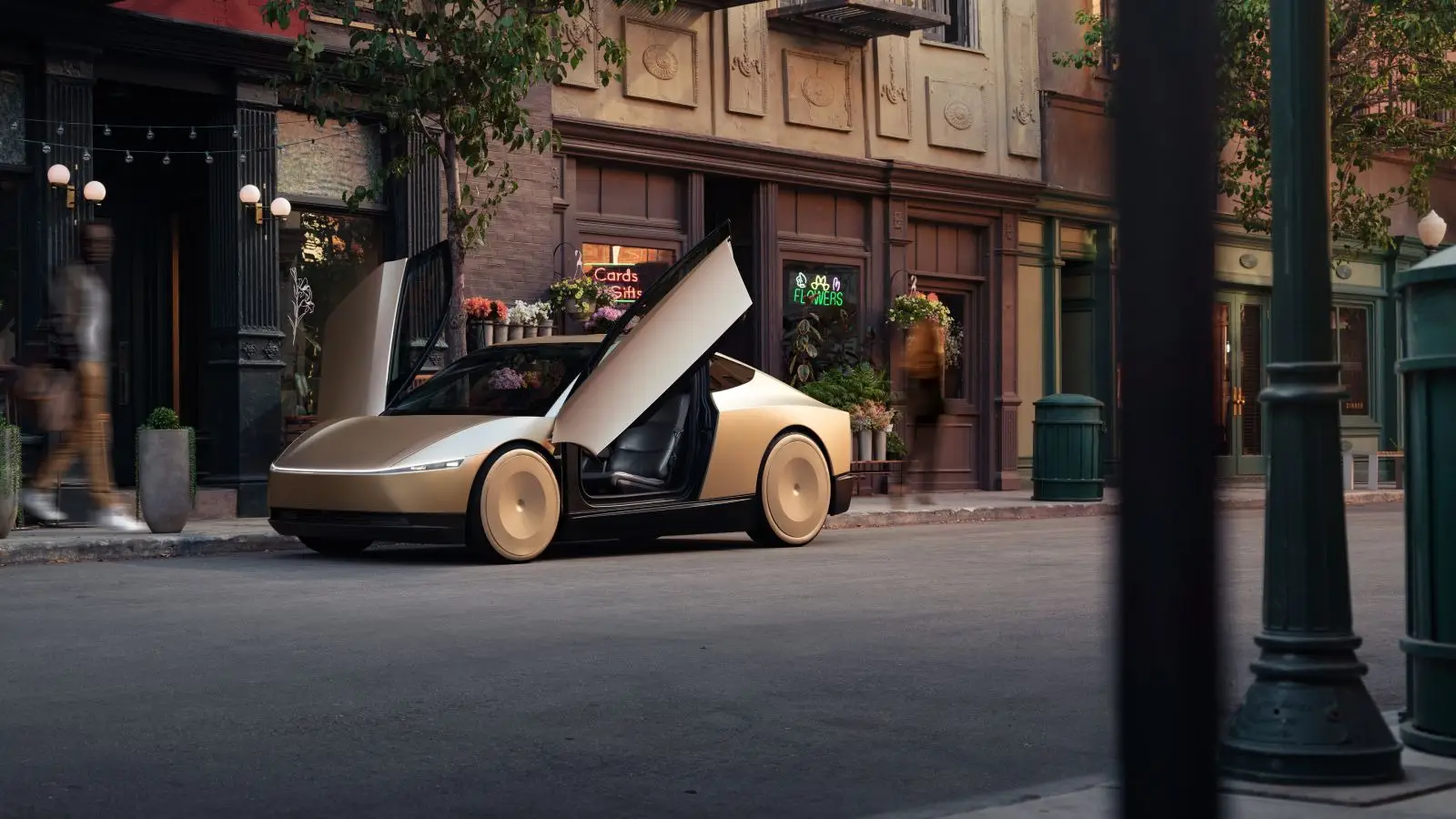
Tesla announced it will stop developing new human-driven cars, keeping the Roadster as the final model while shifting its future toward autonomous vehicles.
Tesla is making a decisive shift in its long-term strategy, effectively closing the chapter on cars designed primarily for human drivers. The company is halting the development of new conventionally driven models and redirecting its focus toward fully autonomous platforms and robotaxi services. The only exception will be the new Roadster, scheduled to enter production in spring 2026, which will stand as Tesla’s final vehicle equipped with a steering wheel and pedals.
This move aligns closely with Elon Musk’s vision of the future of transportation. According to his estimates, only about one percent of Tesla’s total mileage will eventually be driven by humans, while the vast majority will rely on the Full Self-Driving system operating without continuous driver supervision. Against this backdrop, traditional car development is seen as a limited growth path compared with autonomous mobility services and transportation-as-a-service.
The Roadster, first unveiled as a concept in 2017, now takes on a symbolic role. Musk has promised to reveal the production version in April 2026, framing it as the brand’s last model built primarily for driving enthusiasts. At the same time, Tesla plans to phase out the Model S and Model X by mid-2026, while keeping the Model 3 and Model Y in a simplified global lineup increasingly oriented toward autonomous operation.
At the core of Tesla’s new strategy are fully driverless vehicles. Production of the two-seat Cybercab, a robotaxi with no steering wheel or pedals, is expected to begin in April 2026. Larger autonomous platforms are set to follow, including the Robovan, designed to carry around 20 passengers. Tesla has emphasized that the autonomous transport market could be five to ten times larger than its current customer base.
This strategic pivot mirrors a broader industry shift from consumer car manufacturing to scalable mobility services. Tesla is already running limited robotaxi trials, gradually moving from safety-monitor-supported operations toward more autonomous use cases, although widespread deployment without restrictions remains closely tied to regulatory approval.
In this context, the Roadster becomes more than just a new model—it marks the end of an era in which Tesla still built cars for drivers. Everything that follows is positioned not as a traditional automobile, but as part of an autonomous transportation ecosystem where software, rather than the person behind the wheel, takes center stage.
Allen Garwin
2026, Feb 03 16:40