
Bugatti at The I.C.E. St. Moritz: Veyron and Bolide Highlights
Bugatti reports on its I.C.E. St. Moritz appearance, featuring Veyron legends, Bolide ice demonstrations, and rare classics. Explore the key moments.
Bugatti turned winter in St. Moritz into its own stage at The I.C.E. St. Moritz 2026, delivering more than a display of rare cars. On the frozen lake that becomes one of Europe’s most distinctive concours d’elegance, the French marque brought together machines that tell the story of Bugatti’s past and present in a single, dramatic setting.
The centerpiece was a trio of Veyron Grand Sport Vitesse models from the Les Légendes de Bugatti collection: Soleil de Nuit, Rembrandt Bugatti, and Meo Costantini. These editions reflect the era in which the Veyron did more than reinforce Bugatti’s hypercar status—it helped redefine what a car could be when luxury and extreme performance merge. Bugatti’s own German materials underline that the Veyron Grand Sport Vitesse was powered by an 8.0-liter W16 producing 1,200 PS, and that it achieved a 408.84 km/h record for production open-top sports cars, a milestone that remains part of its mythology.
Yet the brand did not settle for a static presentation. The Veyrons were surrounded by a choreographed performance, with professional ice skaters moving between the cars and turning the showcase into a visual spectacle. It was a deliberate reminder that Bugatti wants to be associated not only with engineering figures, but also with automotive artistry.
Another nod to heritage came through Hedley Studios, which unveiled the Bugatti Baby II “Meo Costantini” for the first time. Created as a unique one-of-one tribute to the legendary Type 35, the scaled model formed a symbolic bridge between Bugatti’s early racing legacy and today’s collector culture, where value is shaped by rarity, historical resonance, and customization.
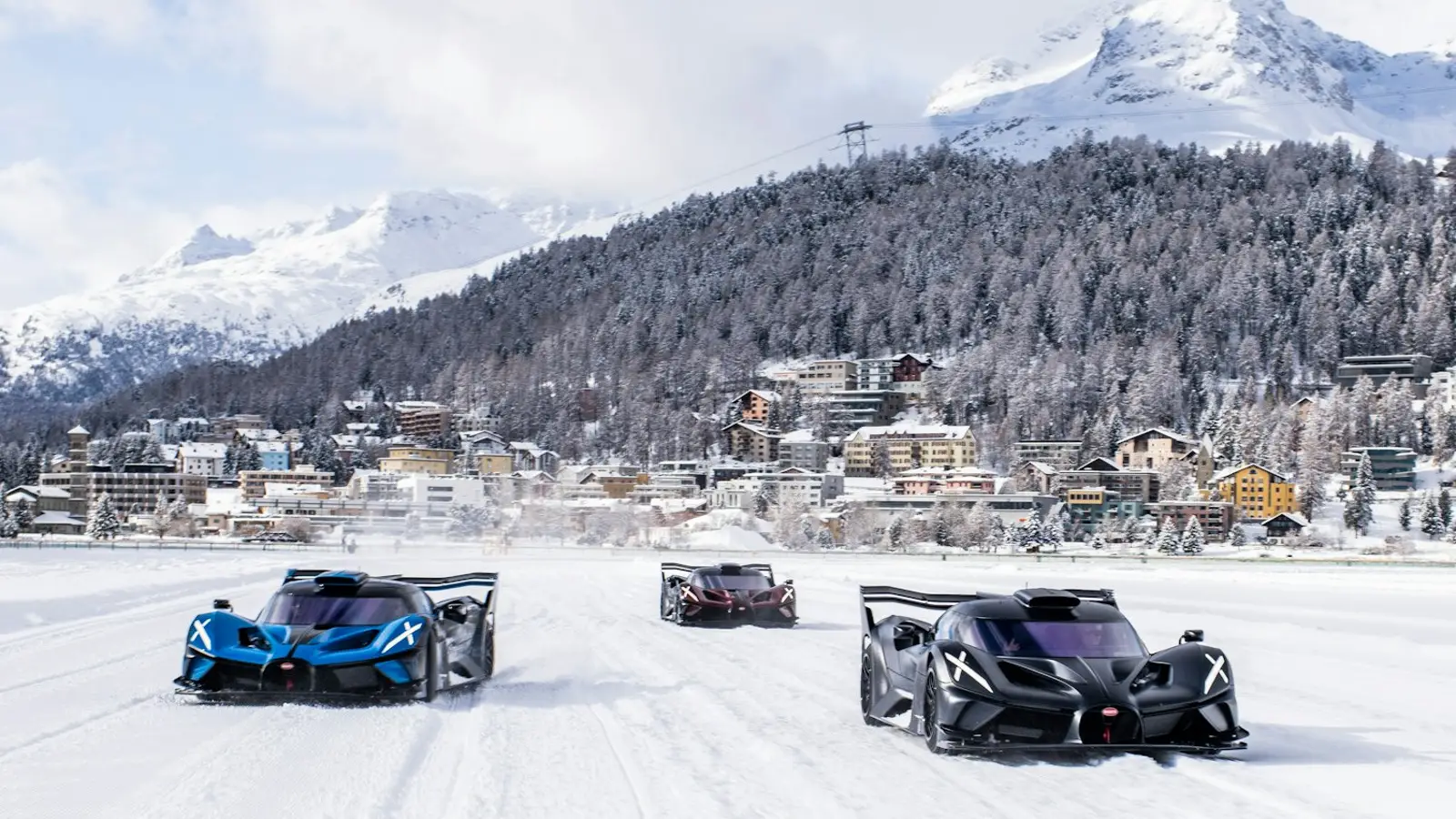
The strongest contrast arrived on the ice track itself. As spectators gathered, Bugatti staged an exclusive dynamic demonstration of the Bugatti Bolide. Three examples of the track-only hypercar and their owners pushed the car across the frozen surface, highlighting how the brand continues to build its reputation around uncompromising performance—even in snow and ice. Designed as a W16-powered track machine, the Bolide looked especially symbolic in this environment: not simply a circuit car, but a statement of how far Bugatti is willing to go in pursuit of the extreme.
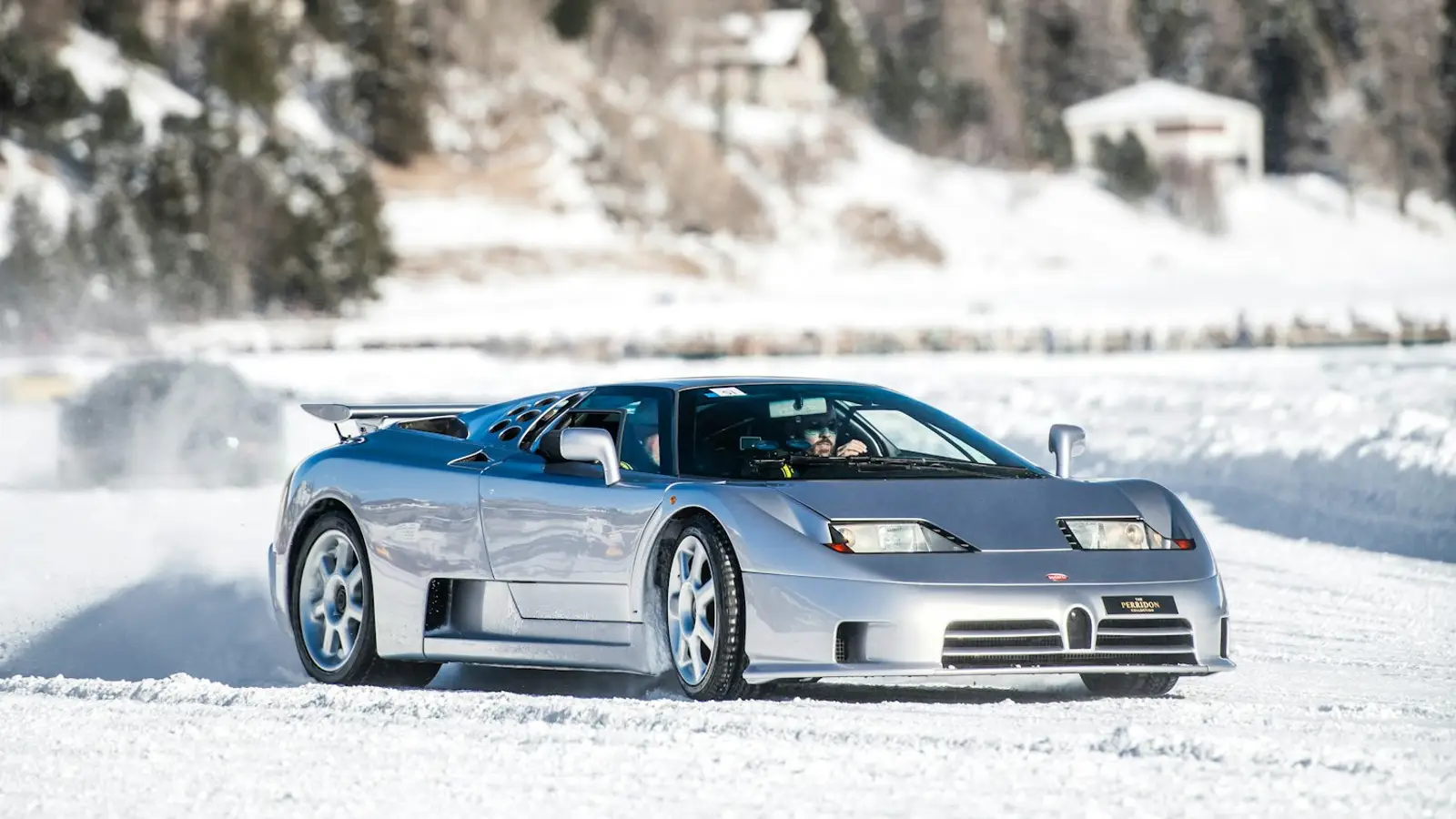
Bugatti’s historical presence also extended into the official concours categories. Classic models such as the Type 13, Type 35, and Type 37A appeared in the Open Wheels class, while the iconic EB110 took its place in the Birth of the Hypercar category, reinforcing the brand’s rare continuity across decades.
The event itself confirmed its growing prestige. According to the organizers, 50 cars were selected for The I.C.E. St. Moritz 2026, and the overall Best in Show award went to a Talbot-Lago T150C SS “Teardrop” from 1937. Category winners included the Ferrari 750 Monza (1955), Jaguar XJ220 (1993), and Maserati 4CLT (1949), a lineup that underlined the international scope of the concours and its focus on exceptional cars across multiple eras.
Beyond the ice, Bugatti emphasized the atmosphere that matters most to its clientele. In the refined I.C.E. Village, the marque welcomed guests into a chalet-chic environment, turning the frozen concours into a space where engineering, history, and style blend into a single cultural gesture.
Judging by the scale of its participation and the bold decision to run the Bolide on ice, Bugatti appears increasingly determined to use events like this to shape its future image—not merely as a hypercar manufacturer, but as a brand that can dominate the spotlight in any environment, even on a frozen Alpine lake.
Mark Havelin
2026, Feb 05 23:40