
Porsche patents reveal on-the-move wheel camber adjustment
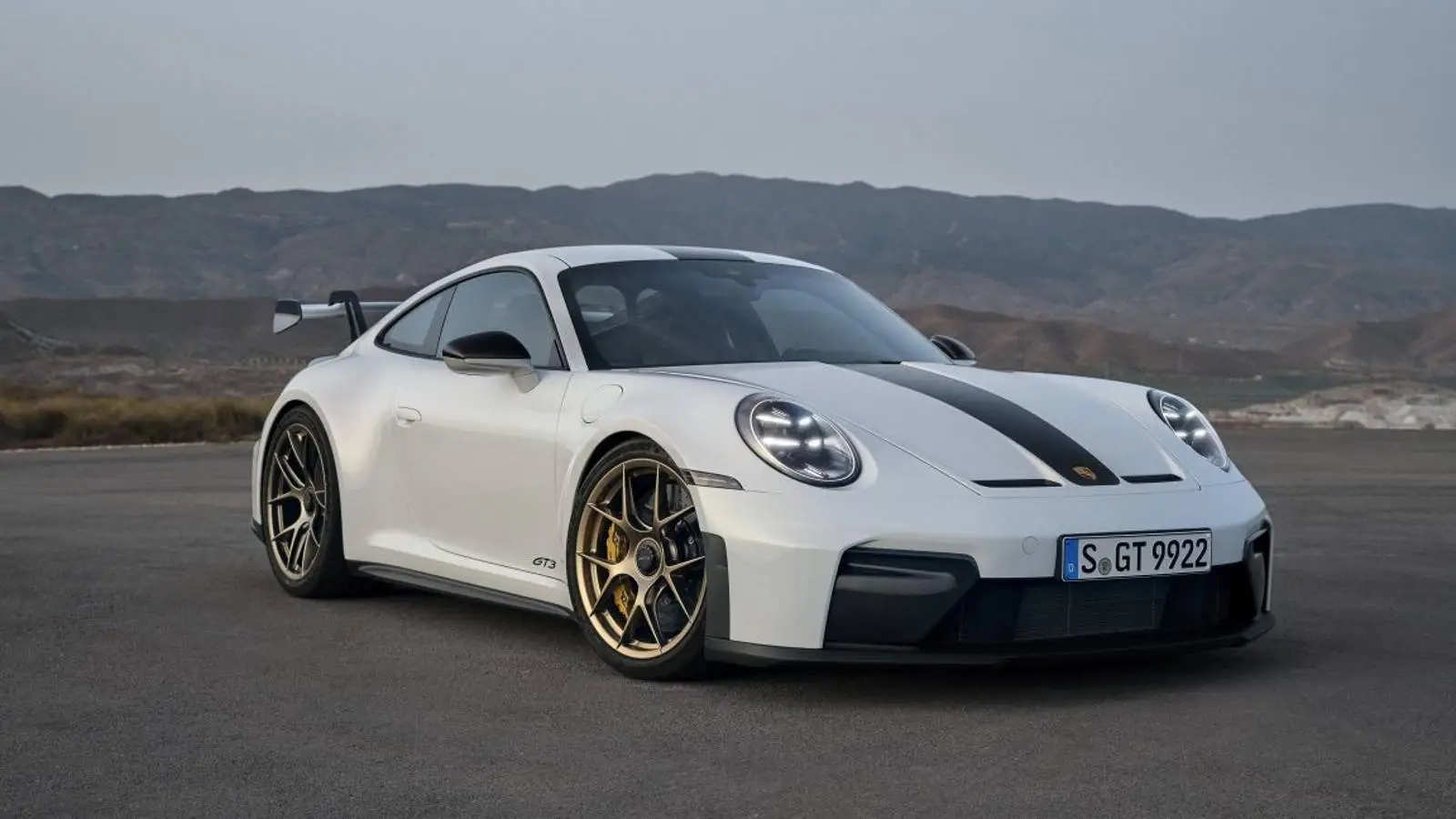
Porsche has filed new patents for dynamic wheel camber adjustment while driving. Learn how actuators could improve grip and handling in future models.
Porsche has patented new technical solutions that could allow a car to adjust wheel camber while driving, letting the suspension change the wheel angle inward or outward without the vehicle needing to stop.
The concept relies on electromechanical actuators integrated directly into suspension components. One of the proposed designs is intended for a double-wishbone setup, the type of front suspension used on models such as the Porsche 911 GT3 and GT3 RS. In this configuration, the actuator is placed in the upper control arm and acts on the upper point of the steering knuckle, altering camber depending on driving conditions.
This idea is not entirely new for Porsche. A previous patent filing, identified as 10 2022 102 115.7, already described a similar approach, focusing on changing camber “on the move” through modifications to the geometry of the upper wishbone.
A second variant described in the latest patents targets multi-link suspension, which is used on more comfort-oriented models such as the Panamera and the Taycan. In this case, Porsche suggests the system could potentially manage not only camber but also toe alignment, opening the door to even more precise chassis tuning.
The patents indicate that the adjustment logic could be based on real-time inputs, including acceleration sensors, steering angle, road conditions, selected driving mode, tyre type and even GPS data. In practice, this could mean reducing camber on wet roads to increase the contact patch, while increasing it in corners to improve grip.
Although the concept clearly draws from motorsport thinking, Porsche positions the technology as relevant for road cars as well. At the same time, the company acknowledges that such a system adds complexity to the suspension layout and demands high reliability. If it reaches production, active camber control could become an important tool in the next wave of track-focused sports cars, where every small gain in grip and precision matters.
Allen Garwin
2026, Feb 08 11:15