
Why Japanese Cars Used Fender-Mounted Mirrors for Decades

.jpg)
Learn why Japan required fender-mounted mirrors on cars for decades, how the rule shaped taxi design, and why door mirrors replaced them in the 1980s.
Fender-mounted mirrors on older Japanese cars may look like a quirky design choice, but they weren’t born from style—they were the product of regulation and real-world driving needs. In postwar Japan, technical standards required mirrors to be positioned so the driver could see them through the windshield. Door mirrors couldn’t be certified at the time, with exceptions only for diplomatic and special-purpose vehicles, so from the 1950s onward Japanese makers routinely placed mirrors forward on the fenders.
The setup had practical strengths. With the mirrors visible through the windshield, drivers could check rear traffic with fewer head turns—useful in dense city flow. The angle also helped cover areas that door-mirror layouts could leave hidden behind body pillars. And in Japan’s famously tight streets and parking spaces, fender mirrors tended to protrude less than door mirrors, effectively keeping the car “narrower” and reducing the risk of clipping posts, pedestrians, bicycles, or mopeds.


Taxi drivers, in particular, stuck with fender mirrors longer than most. The layout made maneuvering in traffic easier without constant head movement, and it even changed the cabin dynamic: passengers could feel more comfortable and private when the driver’s gaze stayed forward rather than repeatedly turning toward the side window.
Still, the disadvantages were hard to ignore. Fender mirrors sit farther from the driver’s eyes, so the reflected image appears smaller and judging distance can be harder at first. Dirt was an even bigger headache: road spray from the wheels quickly coated the glass, especially in winter slush, often forcing drivers to step outside to clean it. Older cars also relied on manual adjustment—no electric motors and no cable controls.
The turning point came in spring 1983, when Japan’s Ministry of Transport revised the rules and officially allowed door-mounted mirrors on passenger cars. Manufacturers moved quickly: production models with door mirrors appeared in 1983, including the Nissan Pulsar Exa, followed soon by the Toyota Corolla. Buyers found door mirrors easier to live with—cleaner, simpler to adjust, and far better suited to new features like electric adjustment.
The shift accelerated for several reasons at once: globalized design and changing tastes, pressure to align with international standards, cost savings from standardizing cars for domestic and export markets, rapid mirror technology development (electric adjustment, heating, folding), plus aerodynamics and wind noise concerns. New safety expectations for protruding exterior parts added momentum. By the mid-1980s, door mirrors were the norm and fender mirrors had largely become a nostalgic signature of an earlier era.
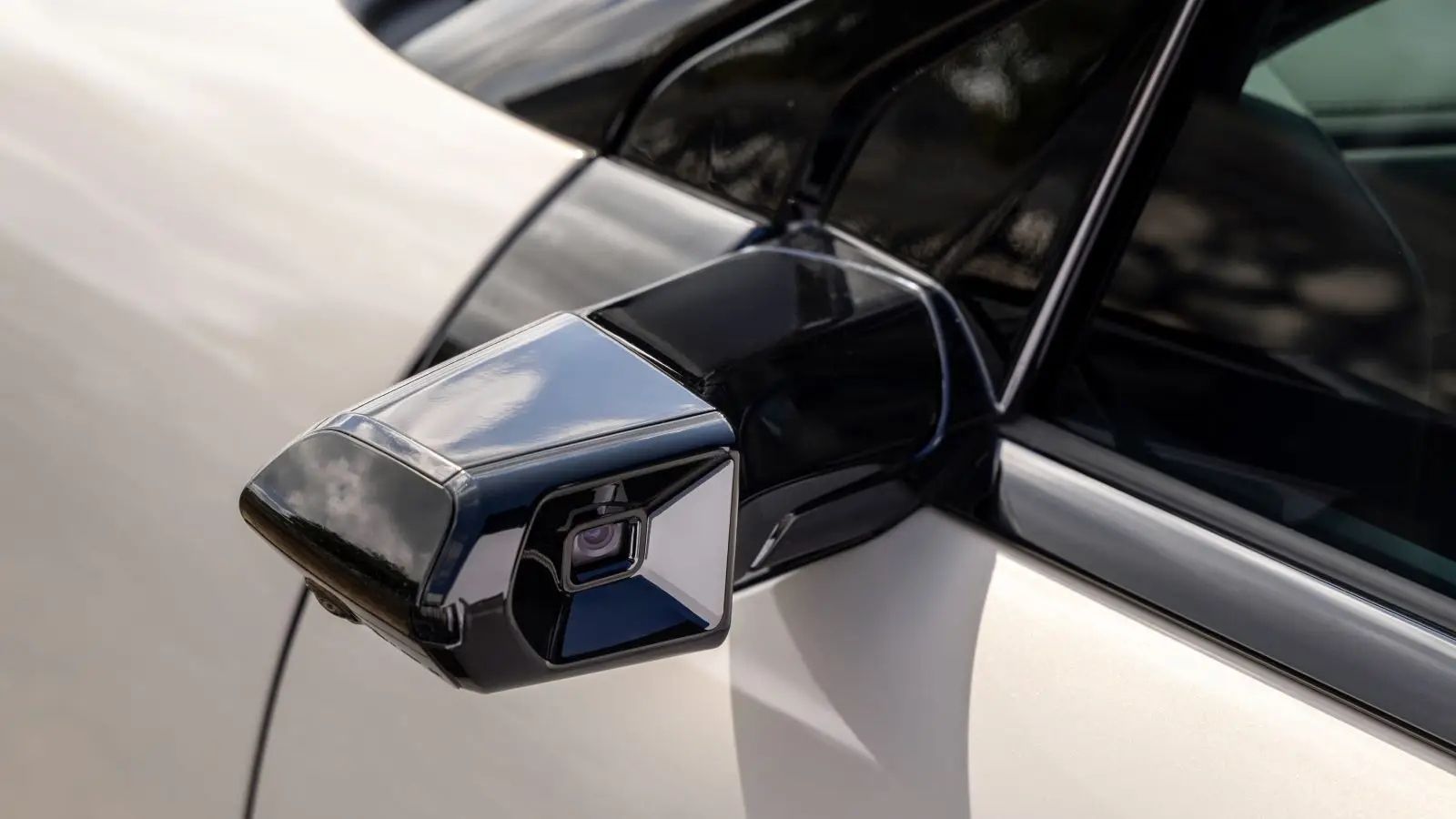
Yet the idea never vanished completely. Japanese taxi fleets still value the layout, and in 2017 Toyota released the Japan Taxi model with distinctive fender mirrors—now with electric adjustment—arguing it provides optimal visibility in Japan’s specific urban conditions. At the same time, the bigger trend points beyond “fender vs. door”: in 2016, UN rules permitted replacing mirrors with cameras, and Japan was among the early adopters. The next chapter may be a world where mirrors themselves quietly disappear.
Allen Garwin
2026, Feb 08 21:21