
Toyota Unveils the All-New 2027 Highlander EV for the U.S.
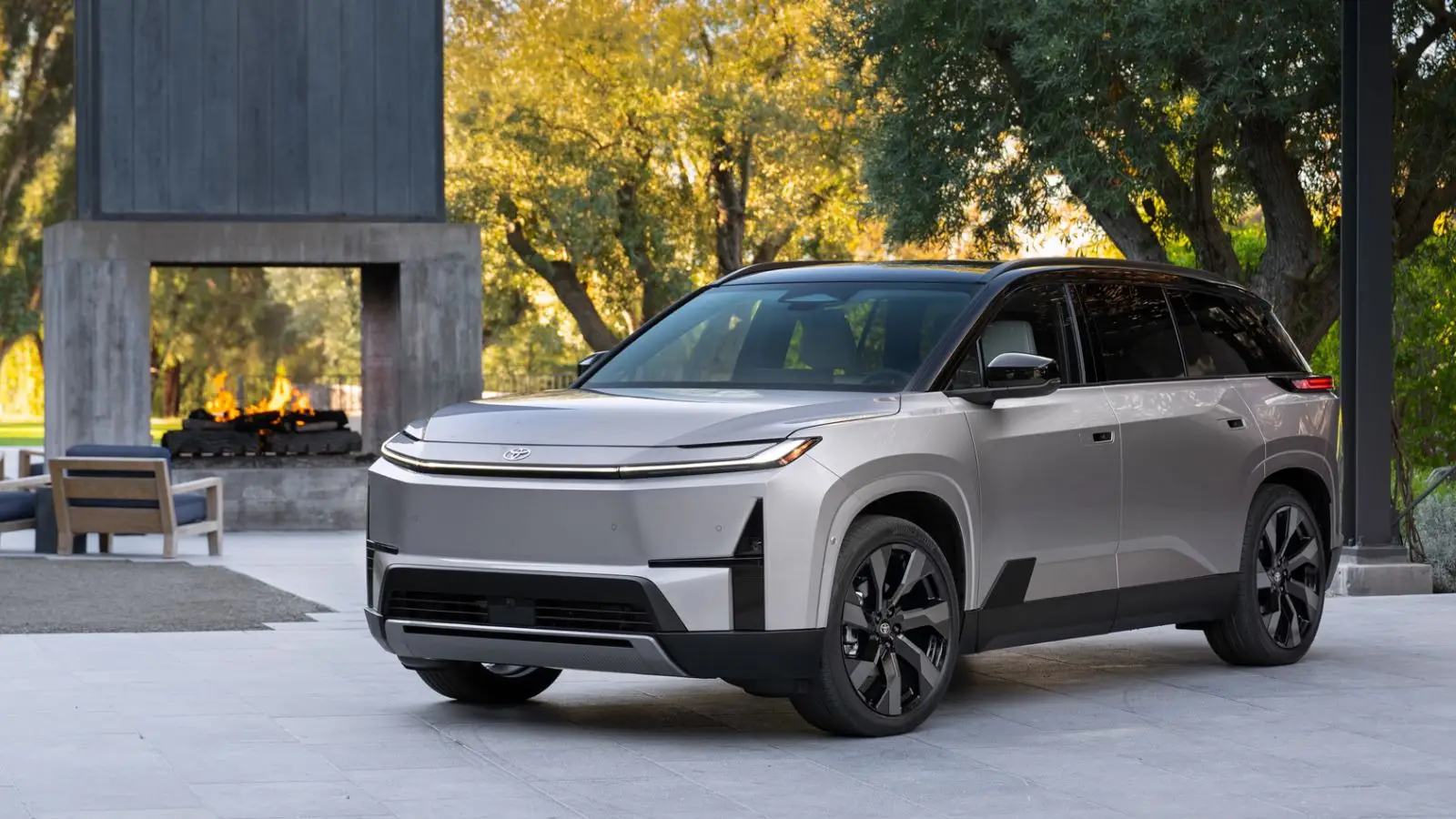
Toyota introduced the all-electric 2027 Highlander, its first three-row U.S.-built BEV, with up to 320 miles of range, NACS charging, and V2L capability.
Toyota has unveiled a radically transformed Highlander for the 2027 model year, turning its long-standing family SUV into a fully electric three-row vehicle. It becomes Toyota’s first three-row battery-electric model for the U.S. market and the first Toyota BEV to be assembled in the United States.
The familiar formula of space and versatility remains, but the technical foundation is entirely new. The 2027 Highlander is offered exclusively with a battery-electric powertrain and will be available in two grades, XLE and Limited. XLE buyers can choose between front-wheel drive and all-wheel drive, while the Limited comes standard with AWD.
Two battery options are available: 77.0 kWh and 95.8 kWh. Depending on configuration, the manufacturer-estimated driving range reaches 287 miles for the XLE FWD, 270 miles for the XLE AWD with the smaller battery, and up to 320 miles for versions equipped with the 95.8-kWh pack. Output varies accordingly: the FWD model delivers 221 horsepower and 198 lb-ft of torque, while AWD versions produce up to 338 horsepower and 323 lb-ft.
The new Highlander features a North American Charging System (NACS) port, providing access to thousands of DC fast-charging stations across the U.S. Under ideal conditions, Toyota estimates a 10 to 80 percent recharge in approximately 30 minutes using DC fast charging. Level 1 and Level 2 AC charging are also supported, and a dual-voltage 120V/240V cable is included. A battery preconditioning function is designed to optimize fast-charging performance, and Plug & Charge capability is available on selected networks.
For the first time on a Toyota model sold in the United States, the Highlander introduces Vehicle-to-Load (V2L) technology. The SUV can power external devices or potentially serve as a backup energy source, though bi-directional accessories are required.
Production will take place at Toyota’s manufacturing facility in Georgetown, Kentucky, while battery modules will be assembled at the newly opened Toyota Battery Manufacturing North Carolina plant in Liberty. The battery facility represents an investment of nearly $14 billion and is expected to create more than 5,000 jobs.
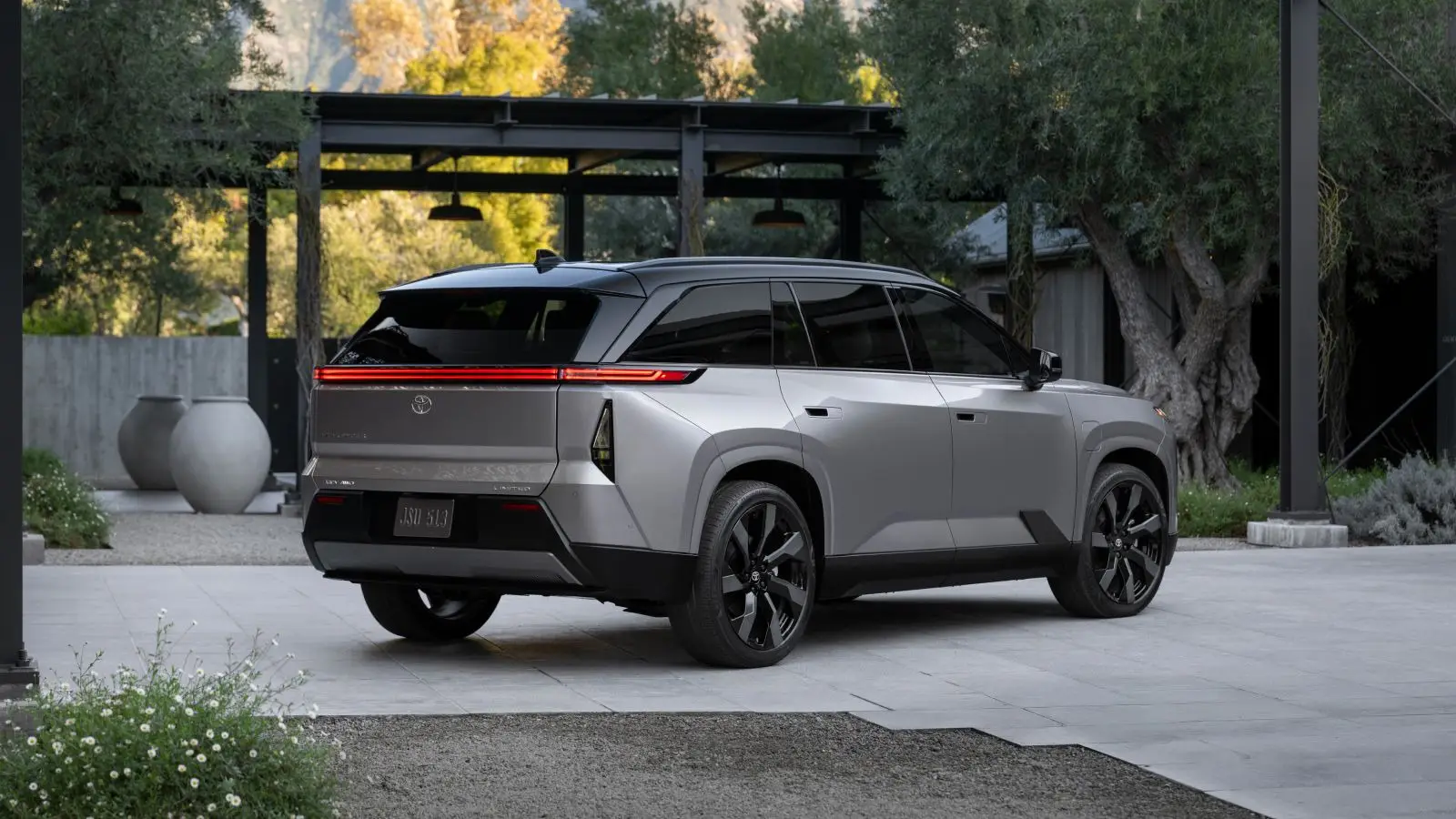
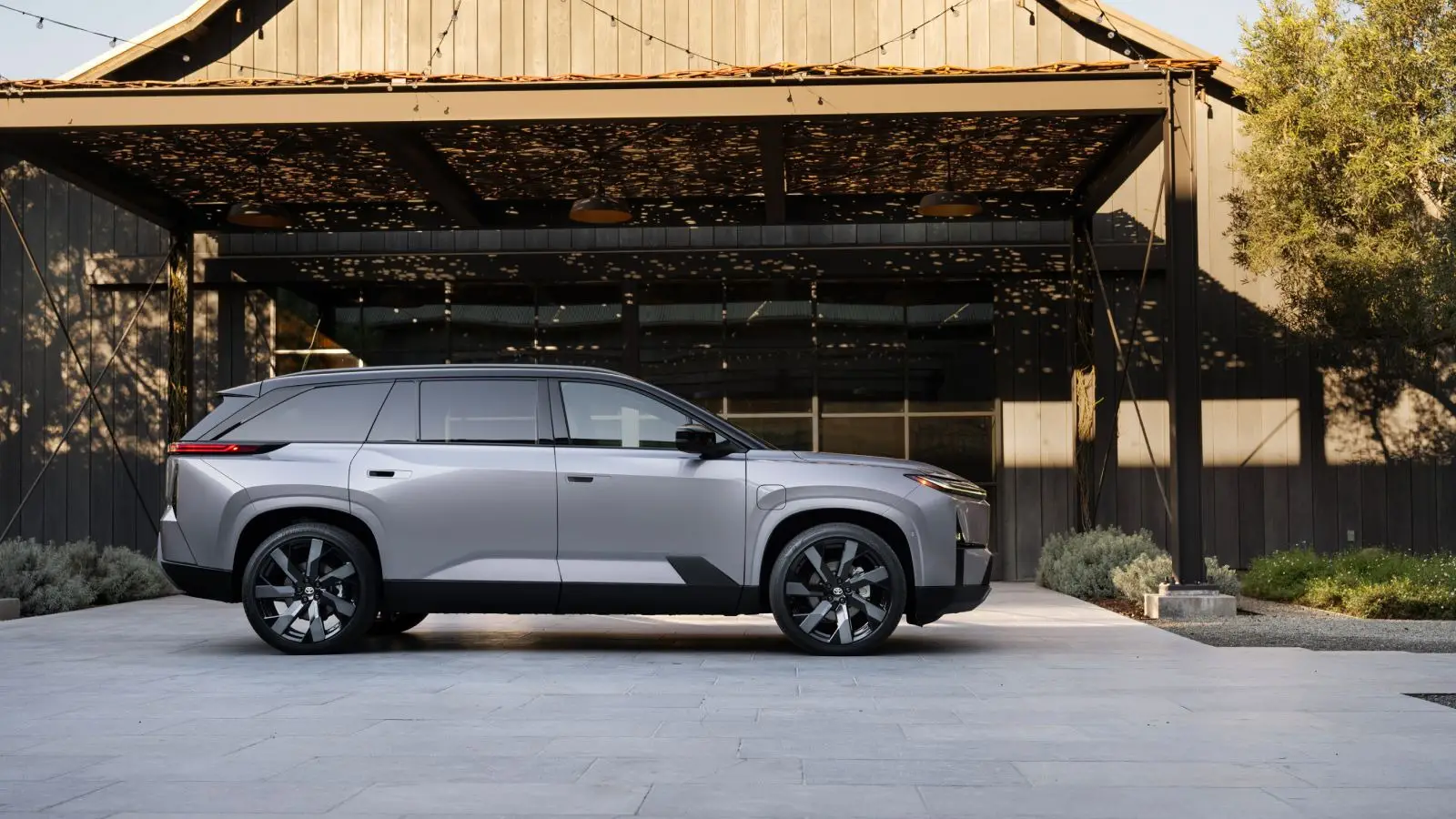
Built on a modified TNGA-K platform, the 2027 Highlander adopts revised proportions. Overall width increases to 78.3 inches, wheelbase grows to 120.1 inches, and height is lowered to 67.3 inches. With the third row folded flat, cargo volume reaches 45.6 cubic feet.
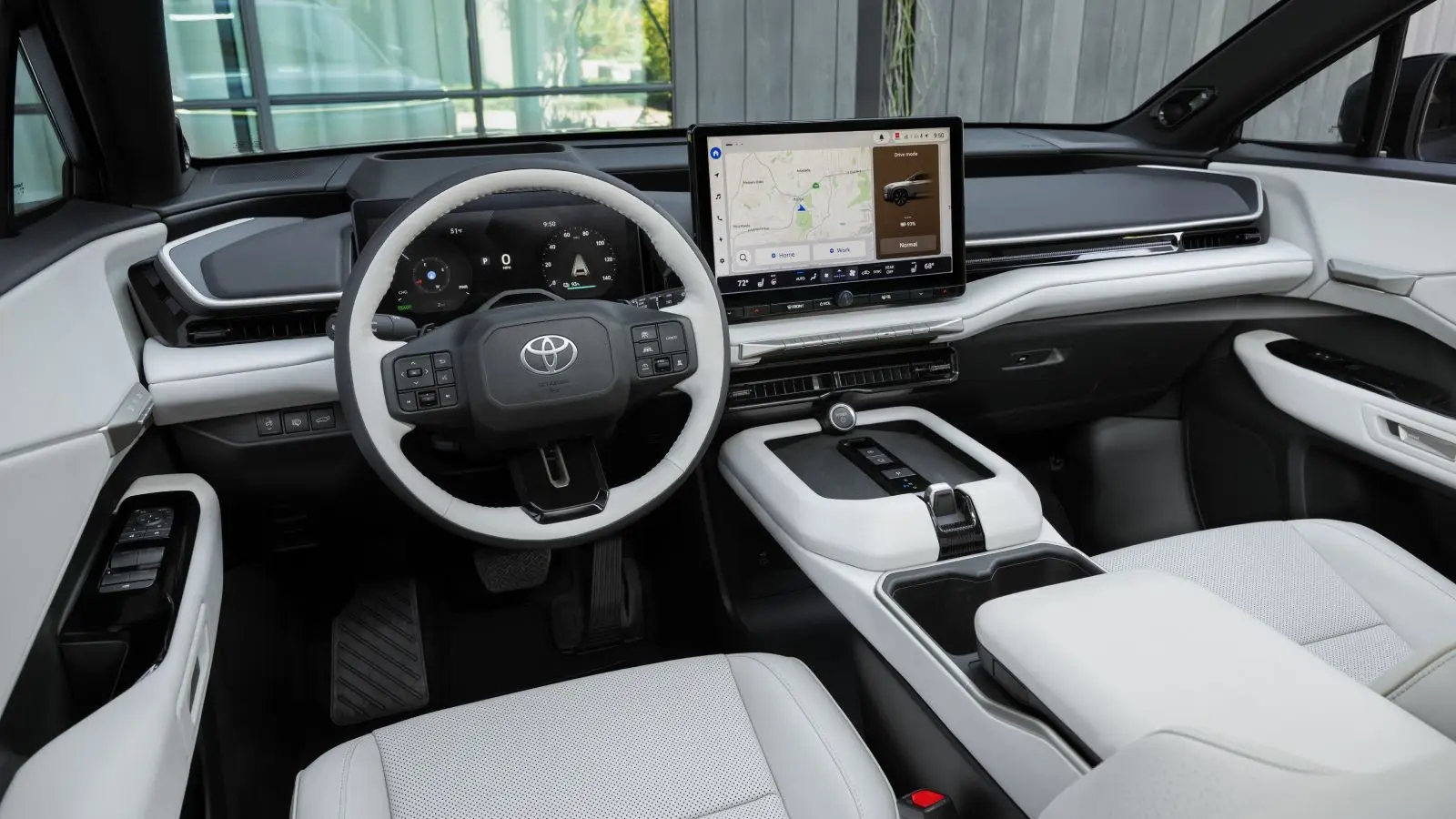
Inside, the SUV emphasizes a tech-forward environment with a 14-inch central touchscreen, a 12.3-inch digital instrument cluster, 64-color ambient lighting, wireless Apple CarPlay and Android Auto, an integrated drive recorder, and the latest Toyota Audio Multimedia system with 5G connectivity. The model also comes equipped with Toyota Safety Sense 4.0, featuring updated detection capabilities and advanced driver-assistance functions.
The all-electric Highlander enters an increasingly competitive segment of three-row electric SUVs, where models such as the Kia EV9 and Hyundai Ioniq 9 are already present. Pricing has not yet been announced; Toyota says it will release MSRP details closer to the start of sales, expected in late 2026 and continuing into early 2027.
With this fifth-generation model, Highlander moves from its early-2000s role as a unibody family SUV pioneer into a new phase as a fully electric three-row offering in Toyota’s expanding BEV lineup.
Mark Havelin
2026, Feb 11 22:02