
Manfred Harrer on IONIQ 6 N and Hyundai’s EV Strategy
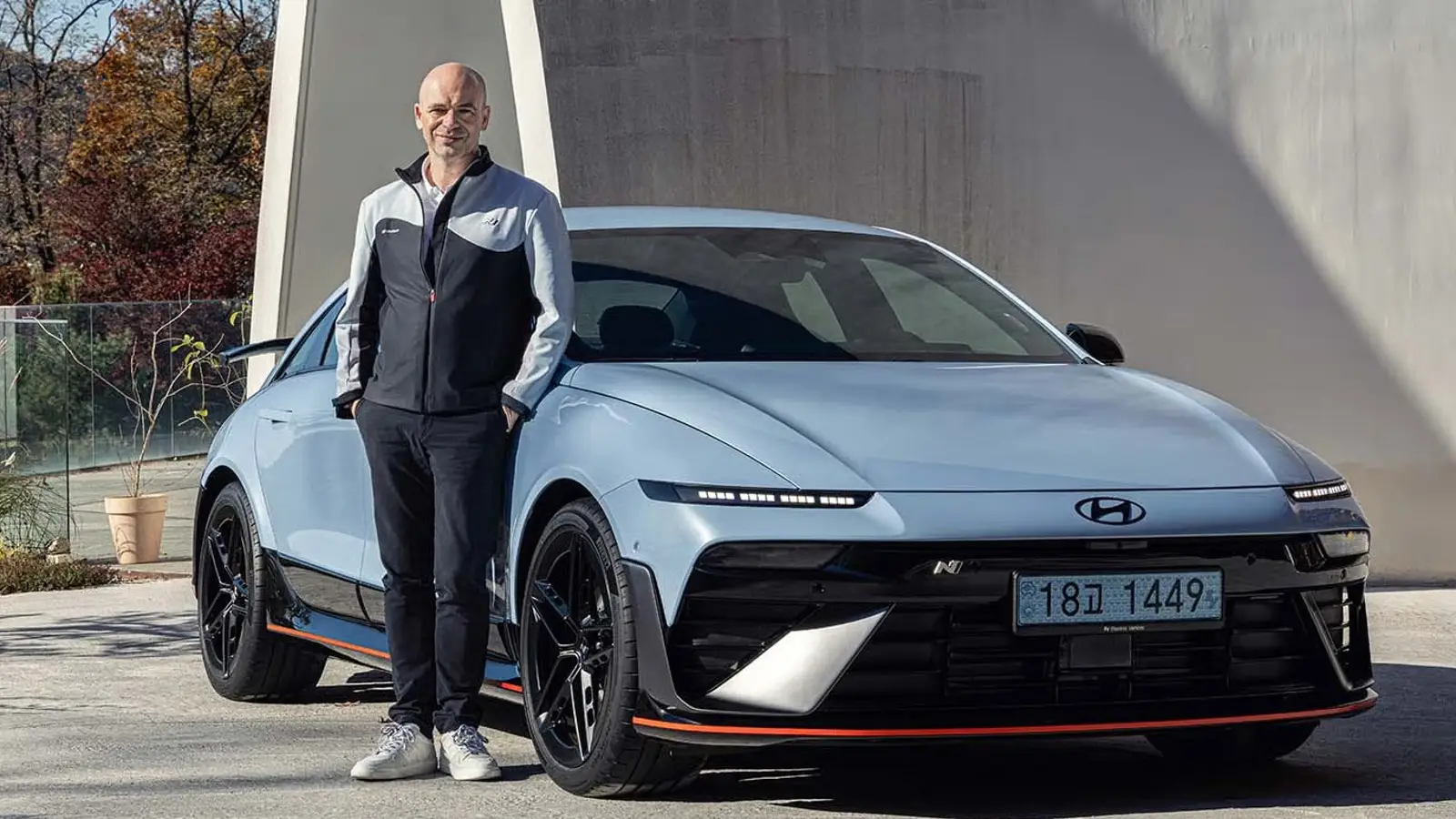
Hyundai Motor Group’s R&D chief Manfred Harrer outlines the IONIQ 6 N concept, performance focus and the shift toward electrification and software-defined vehicles.
Hyundai Motor Group continues to shape its vision of the future not only through high-profile launches, but through the people who define the engineering direction behind them. In its latest “Inside Hyundai” feature, the spotlight falls on Manfred Harrer, President and Head of the Group’s R&D division — an engineer steering vehicle development for Hyundai Motor, Kia and Genesis at a time when the global industry is undergoing one of its most dramatic transitions.
The story begins far from meeting rooms and design studios. In the early morning air above Seoul, Harrer climbs into the Hyundai IONIQ 6 N and heads out for a short drive into the hills, where the winding roads of the Bugaksan-ro Skyway rise and fall above the city. For him, it is more than routine. It is a way of thinking — and a way of testing.
Harrer admits it would be easy, in a role like his, to let driving slip down the priority list. Yet he deliberately makes time to get behind the wheel, whether it is before the workday begins, during lunch, or on the weekend. Even a brief drive, he says, can reveal the kind of detail that cannot be captured in a report: seating position, ride comfort, steering feel, and whether the car truly meets the Group’s own demanding standards.
This attention to fundamentals mirrors Harrer’s background. With a PhD in vehicle dynamics and more than 25 years of experience across chassis development, electronic systems, software integration and ADAS, he brings a broad technical perspective to a role that now places him at the center of Hyundai Motor Group’s global engineering strategy. He leads more than 12,000 engineers at the Namyang R&D Center near Seoul, overseeing development efforts at a moment when, as he puts it, the industry is facing “the biggest transformation ever.”
Electrification is only part of that shift. Harrer points to the move from combustion to electric propulsion, but also to the evolution from hardware-defined vehicles toward software-defined platforms. On top of that, he highlights the growing impact of AI, which he believes is accelerating development cycles and sharpening engineering precision.
Few parts of Hyundai’s portfolio illustrate this transformation more clearly than its performance-focused N division. Harrer recalls that only a few years ago, the concept of an all-electric performance car seemed almost contradictory — until the arrival of the IONIQ 5 N. Innovations such as N e-Shift, the N Active Sound+ system, and a more playful handling balance enabled by N Torque Distribution helped prove that electric propulsion could increase driver involvement rather than dilute it.
Now, attention turns to the IONIQ 6 N. Harrer points back to its debut at the 2025 Goodwood Festival of Speed, where he described it as a performance EV combining power, battery technology, aerodynamics and advanced suspension engineering to set new benchmarks. But on Seoul’s quiet morning roads, the discussion becomes more practical and more revealing.
The brief for the IONIQ 6 N, Harrer explains, was not simply to push track performance higher, but to do so without sacrificing everyday usability. The result came through what he calls “thoughtful but impactful changes.” Between sips of coffee, he describes revisions to suspension tuning, structural stiffness, steering, and the all-wheel-drive system. One of the most significant upgrades is a new set of stroke-sensing electronically controlled suspension (ECS) dampers, designed to improve ride quality while delivering more predictable and responsive handling.
According to official Hyundai figures, the IONIQ 6 N delivers 650 PS (478 kW) and 770 Nm, accelerates from 0 to 100 km/h in 3.2 seconds using N Launch Control, and reaches a top speed of 257 km/h. The numbers underline Hyundai N’s ambition to remain competitive in the rapidly expanding performance EV segment.
Yet Harrer emphasizes that this philosophy is not reserved for halo models. As head of the R&D division, he not only defines the technical direction for the Group’s brands, but also ensures that dedicated teams are given the freedom to pursue fine detail improvements — the kind that may not dominate headlines, but can fundamentally change how a car feels on the road.
That is the deeper message behind Hyundai’s portrait of Harrer. The company is positioning itself as a future-facing manufacturer, embracing electrification, software-defined development and AI-driven engineering. At the same time, it is making a point that the human element still matters — and that driving pleasure remains a benchmark no technology can replace.
As Harrer notes, performance EVs open new scope for innovation, from strategically placing the battery to lower the center of gravity, to refining agility through advanced torque distribution. But his final conclusion is simple. Even in an era of rapid transformation, the most reliable way to understand progress is still to start early, take the keys, and drive.
Mark Havelin
2026, Feb 12 12:23