
EPA Moves to End Start-Stop Credits and Revisit GHG Vehicle Standards
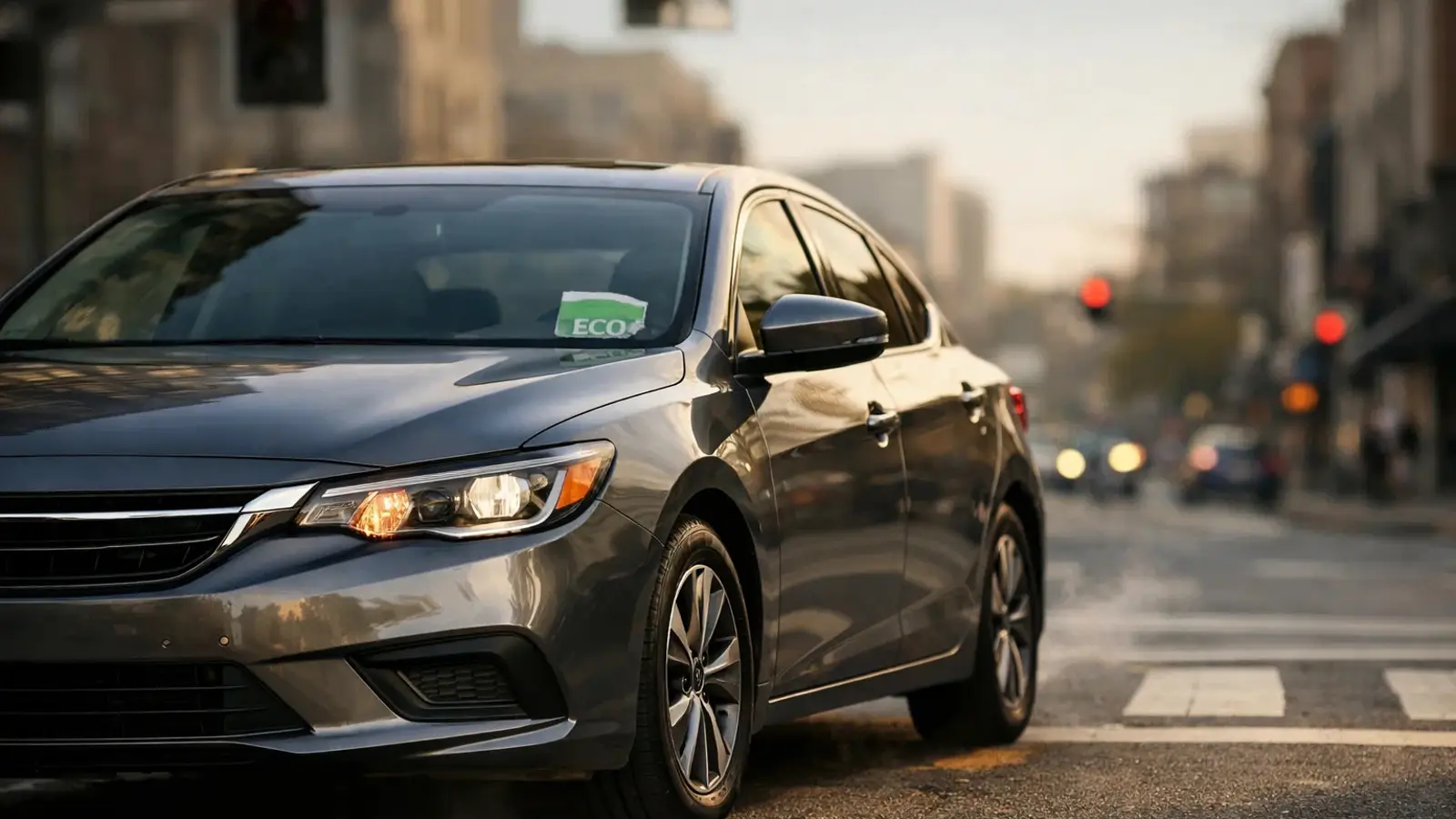
The EPA ends start-stop emissions credits and reviews greenhouse gas vehicle standards adopted in 2009. Learn what the policy shift means for automakers.
The U.S. Environmental Protection Agency has announced a major shift in its climate approach by moving to roll back a foundational decision adopted in 2009 during Barack Obama’s presidency. The move targets the so-called Endangerment Finding, a determination that greenhouse gas emissions pose a threat to public health and welfare. For more than a decade, that finding has served as the legal backbone for regulating carbon dioxide and other greenhouse gases, including emissions produced by vehicles.
EPA officials are now pushing to reverse that framework, a step that would effectively dismantle the greenhouse gas emissions standards applied to light-, medium-, and heavy-duty on-highway vehicles. Unlike routine adjustments to regulatory limits, this is a challenge to the very foundation that has allowed federal authorities to set climate-related rules for the automotive industry.
Alongside this announcement, the agency also said it plans to end the system of “green” regulatory credits granted to automakers for equipping cars with automatic start-stop technology. This feature shuts the engine down during short stops — such as traffic lights — and restarts it when the driver pulls away. In previous years, automakers could claim emissions-reduction credits for start-stop systems even when their real-world benefits were not fully captured in standard laboratory testing cycles.
In regulatory terms, start-stop systems were treated as an off-cycle technology — a solution that can reduce emissions under everyday driving conditions, but is not always fully reflected in certification testing. Under U.S. rules, idle start-stop systems were assigned specific CO₂ credit values measured in grams per mile. Passenger vehicles, for example, could qualify for credits of 1.5 g/mi or 2.5 g/mi depending on the system’s configuration, while light trucks could reach as high as 4.4 g/mi.
The technology itself has long been unpopular with a portion of drivers. In real-world use, start-stop is often manually disabled after the engine is started, and in many vehicles it automatically reactivates each time the car is turned on, forcing drivers to repeat the process. Despite the frustration, start-stop remains widely used across the industry. EPA’s Automotive Trends Report notes that gasoline vehicles equipped with start-stop reached a record share in model year 2023, while some estimates suggest that more than half of new vehicles in the U.S. were claiming such credits.
At the same time, research has consistently shown that the system can produce measurable fuel savings in urban driving. Consumer Reports, citing SAE data, notes that testing has shown improvements ranging from roughly 7% to more than 26%, depending on the driving cycle and operating conditions. Germany’s ADAC has also reported that fuel savings in city traffic can reach around 15%.
Still, ending the credit mechanism does not mean start-stop systems will disappear overnight. The technology relies on reinforced hardware such as upgraded starters, alternators, and batteries, as well as vehicle electronics designed to keep key systems running even when the engine is off. In the near term, automakers may be more likely to adjust operating algorithms or offer drivers greater control over disabling the feature, rather than removing it entirely.
Allen Garwin
2026, Feb 14 12:45