
Stage 1, Stage 2 and Stage 3 Tuning: What They Mean
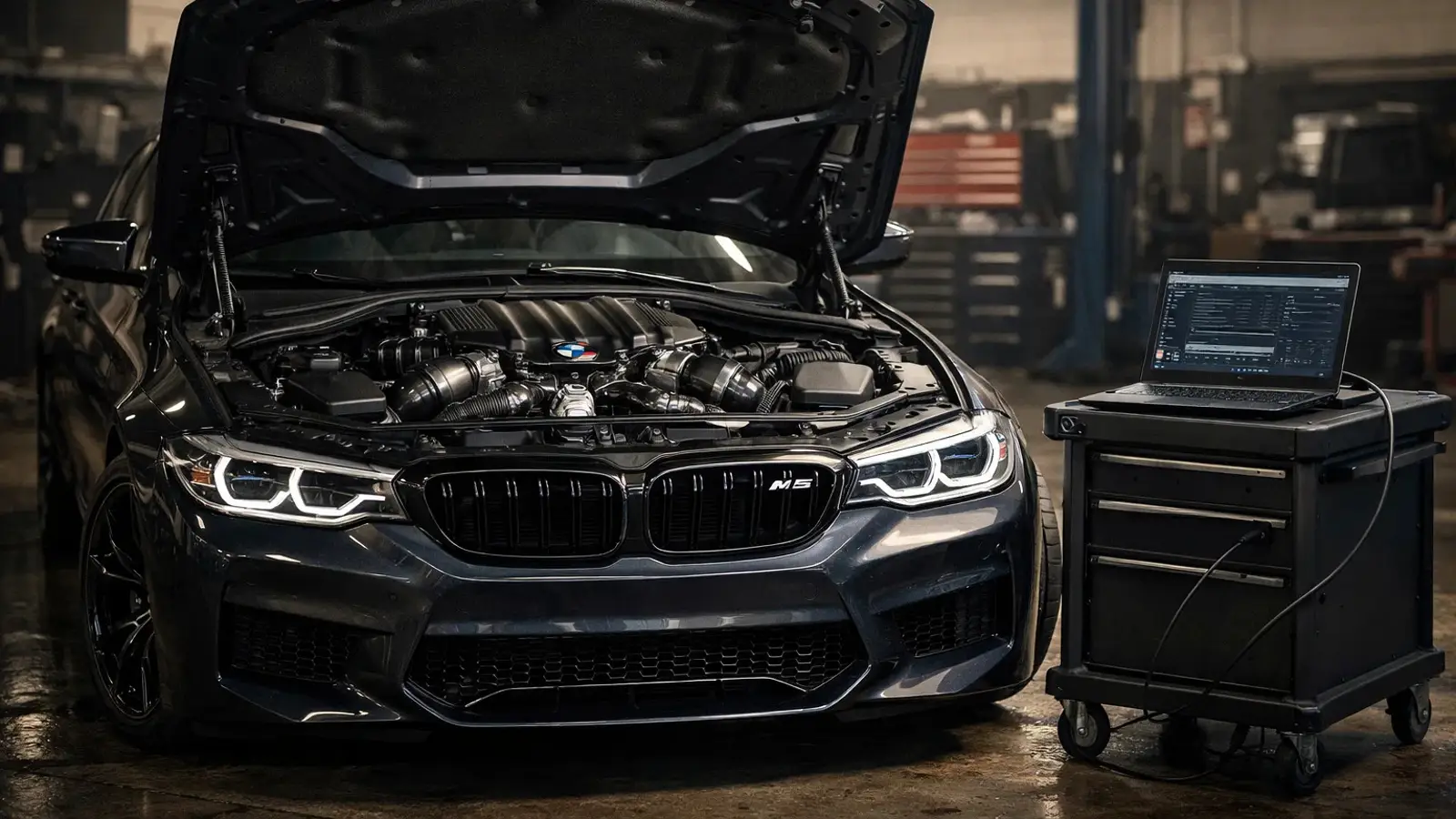
Learn what Stage 1, Stage 2 and Stage 3 tuning mean, which upgrades are involved, and why definitions vary by tuner. Clear guide to ECU remapping stages.
Stage 1, Stage 2, and Stage 3 have become familiar labels in the world of performance tuning, yet they are often misunderstood. There is no official, industry-wide standard behind these terms. Instead, they function as practical reference levels used by tuning companies to describe how deeply a car has been modified — from basic software optimisation to substantial hardware upgrades.
At the core of the concept lies the ECU, the engine control unit that manages key parameters such as fuel delivery, ignition timing, and turbo boost pressure. Tuning begins with recalibrating these maps, which are originally configured by manufacturers with built-in safety margins for varying markets and operating conditions.
Stage 1 is typically seen as the entry point. It focuses on ECU remapping for a mechanically standard vehicle, without mandatory hardware changes. Adjustments are made within the limits of factory components, provided the car is in good mechanical condition. Some manufacturers note that additional parts such as an upgraded intercooler or intake system may further enhance results, but these are not generally required at this stage.
Stage 2 goes a step further by combining software tuning with hardware modifications. Descriptions of Stage 2 packages frequently mention upgraded intercoolers, modified intake systems, sports catalytic converters, or downpipes. The reasoning is straightforward: improving airflow allows the recalibrated ECU to operate more effectively and unlock greater performance potential. In certain product lines, specific hardware such as a defined exhaust system or a high-pressure fuel pump upgrade is explicitly required.
Stage 3 moves beyond bolt-on upgrades and into the realm of more comprehensive performance projects. This level often involves installing a larger or higher-output turbocharger, upgrading the charge-air cooling system, and modifying elements of the fuel system such as injectors or fuel pumps. In official tuning line-ups, Stage 3 may be directly linked to specific turbocharger models and accompanied by recommendations regarding spark plugs or valve springs. Some companies even extend their hierarchy to Stage 3+ or Stage 4, but these designations reflect internal product structures rather than universal industry definitions.
It is important to view stage terminology in context. The label itself means little without a clear explanation of the components and calibrations included. The same “stage” can represent different modification levels depending on the tuning provider.
Technical feasibility also depends on the vehicle. According to service descriptions, many cars from approximately 1996 to 2000 may require direct work on the ECU, including chip replacement or soldering. From around 2001 onward, remapping is often possible via the OBD diagnostic port, although certain models may still require ECU removal and direct data access. The available information does not define a strict age limit beyond which tuning becomes impossible.
Legal considerations can be equally significant. In Germany, documentation and technical approvals play a crucial role. Missing certifications may result in the need for individual inspections and can affect the vehicle’s road approval status. Moreover, regulatory changes introduced from June 2025 have altered the approval framework for vehicle components, influencing the tuning landscape as well.
Ultimately, Stage 1, Stage 2, and Stage 3 serve as structured reference points rather than rigid technical categories. Stage 1 centres on software optimisation for stock hardware. Stage 2 combines recalibration with airflow-related upgrades. Stage 3 involves more extensive mechanical changes, often including turbocharger and fuel system modifications. Beyond that, the true meaning of each stage depends on the specific platform and the tuning company’s own definitions.
Allen Garwin
2026, Feb 16 15:01