
2026 Toyota C-HR EV Returns to the US as a New BEV
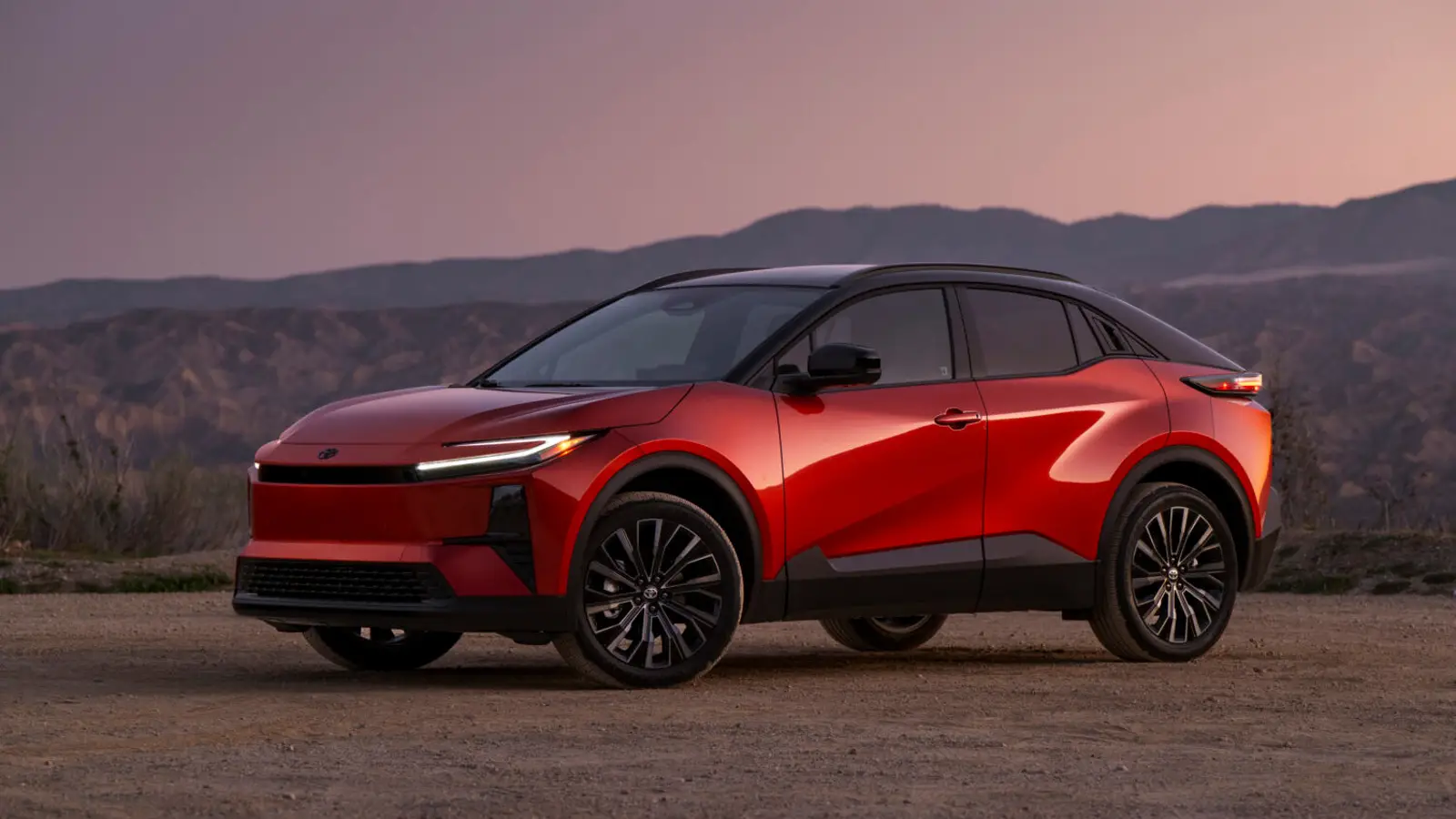
Toyota has unveiled the 2026 Toyota C-HR EV for the US, offering AWD, 338 hp, up to 287 miles of range and NACS charging. Learn key specs and details.
Toyota is bringing the C-HR nameplate back to the U.S., but this time in a completely new form. Instead of a compact crossover with a gasoline or hybrid powertrain, the brand is launching an all-electric model: the 2026 Toyota C-HR BEV, expected to reach U.S. dealerships in March 2026.
The company is positioning the new C-HR as a blend of bold design and real performance. Its coupe-like silhouette, wide stance, and Toyota’s signature hammerhead front end give it a more athletic look than many compact electric SUVs. Built on Toyota’s dedicated e-TNGA electric platform, the vehicle places its battery pack under the floor, contributing to a lower center of gravity and increased structural rigidity.
Under the skin, the C-HR stands out with power figures that are unusually high for the segment. Toyota is offering the model exclusively with a dual-motor setup and standard all-wheel drive. Total system output is rated at 338 horsepower, with Toyota estimating a 0–60 mph time of 4.9 seconds, placing the compact SUV closer to sporty territory than typical commuter EVs.
Energy comes from a 74.7-kWh lithium-ion battery. Toyota lists an EPA-estimated range of 287 miles for the SE grade with 18-inch wheels, while the XSE grade with 20-inch wheels is estimated at 273 miles. Fast-charging capability is another key talking point: Toyota says the C-HR can recharge from 10% to 80% in around 30 minutes under ideal conditions. A battery preconditioning feature is also included to help optimize charging speed.
One of the most notable details for the U.S. market is the charging hardware itself. Every 2026 C-HR comes with a North American Charging Standard (NACS) port, expanding access to high-speed charging infrastructure nationwide. Toyota also includes Plug & Charge capability, though the company notes it depends on compatible charging networks.
Inside, Toyota is leaning heavily into modern tech and everyday usability. Even the SE trim includes a 14-inch touchscreen, a fully digital gauge cluster, and dual wireless phone chargers, along with multiple USB-C ports. Cargo space is also competitive, with up to 25.3 cubic feet behind the rear seats and up to 59.5 cubic feet with the second row folded flat.
The C-HR will be offered in two grades: SE and XSE. The higher-spec XSE adds larger wheels, upgraded seat materials, driver memory functions, and expanded driver-assistance features, including Traffic Jam Assist and a panoramic view monitor.
Pricing figures reported across early coverage place the starting point at roughly $37,000, with other published starting numbers including $38,135 and $38,450, depending on how trims and fees are calculated. Either way, Toyota appears to be positioning the C-HR as a more premium entry in the compact EV space, emphasizing performance and charging convenience rather than chasing the lowest possible price tag.
The arrival of the C-HR BEV further strengthens Toyota’s growing electric lineup in the U.S., joining the revised bZ and the new bZ Woodland. If its official specifications translate well into real-world driving, the C-HR could emerge as one of the more dynamic compact electric crossovers in its class, targeting drivers who want more than just efficiency from an everyday EV.
Mark Havelin
2026, Feb 20 10:12