
Audi RS 5 Debut as Audi Sport’s First High-Performance Plug-in Hybrid
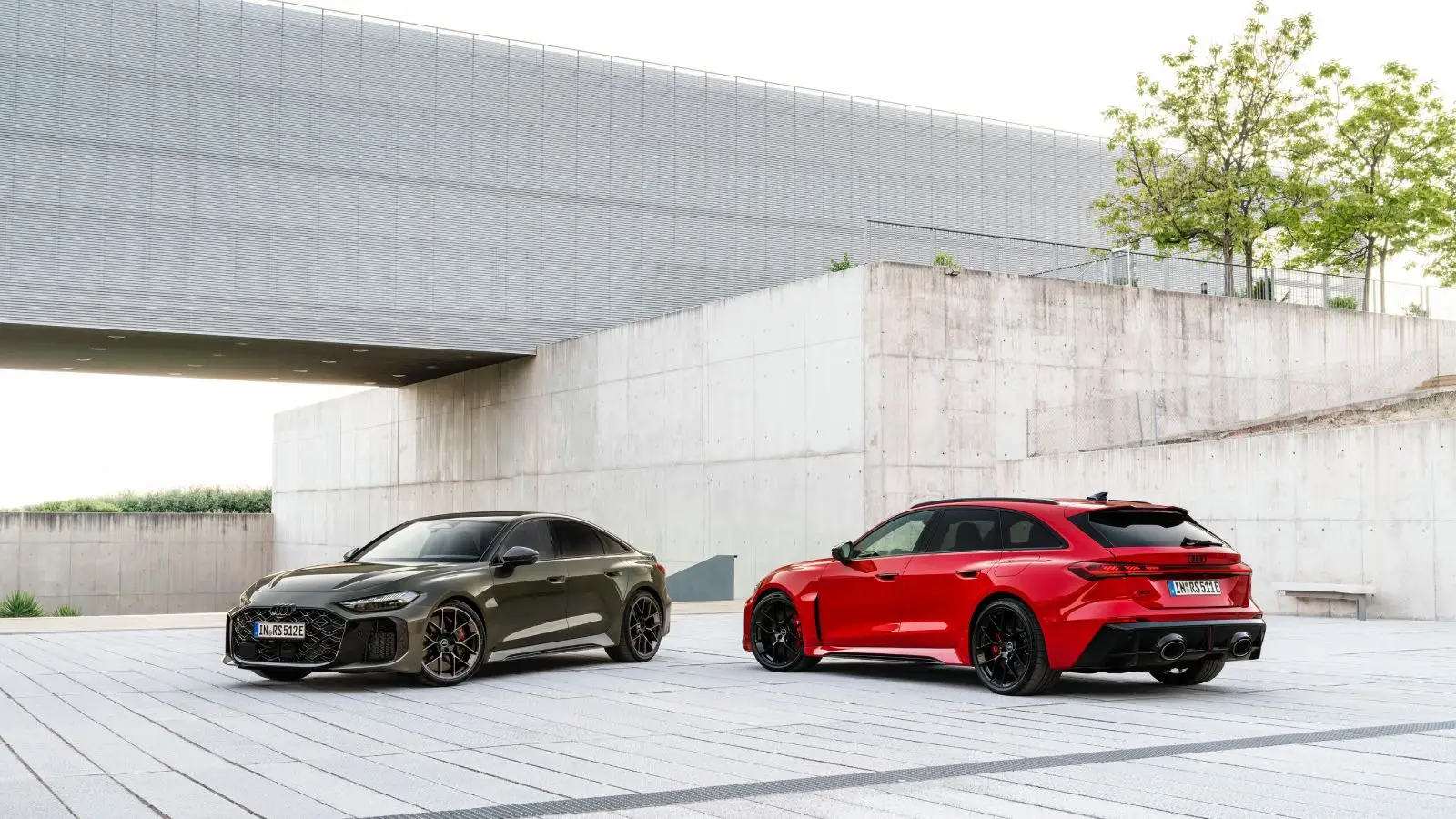
Audi Sport presents the new RS 5, its first high-performance plug-in hybrid with 470 kW output and advanced quattro Dynamic Torque Control. Explore full details.
Audi Sport is turning a decisive page in the history of its RS models. The new Audi RS 5 is the brand’s first high-performance plug-in hybrid, clearly signaling that the era of purely combustion-powered RS cars is evolving into an electrified chapter — without abandoning the character that defines the badge.
At its core sits the familiar 2.9-liter twin-turbo V6, now delivering 375 kW (510 PS). It is paired with a 130 kW electric motor, bringing total system output to 470 kW (639 PS) and 825 Nm of torque. Acceleration from 0 to 100 km/h takes 3.6 seconds, while the optional Audi Sport package increases top speed to 285 km/h. For context, the previous-generation RS 5 offered 331 kW (450 PS) and 600 Nm, underlining the significant step forward in performance.
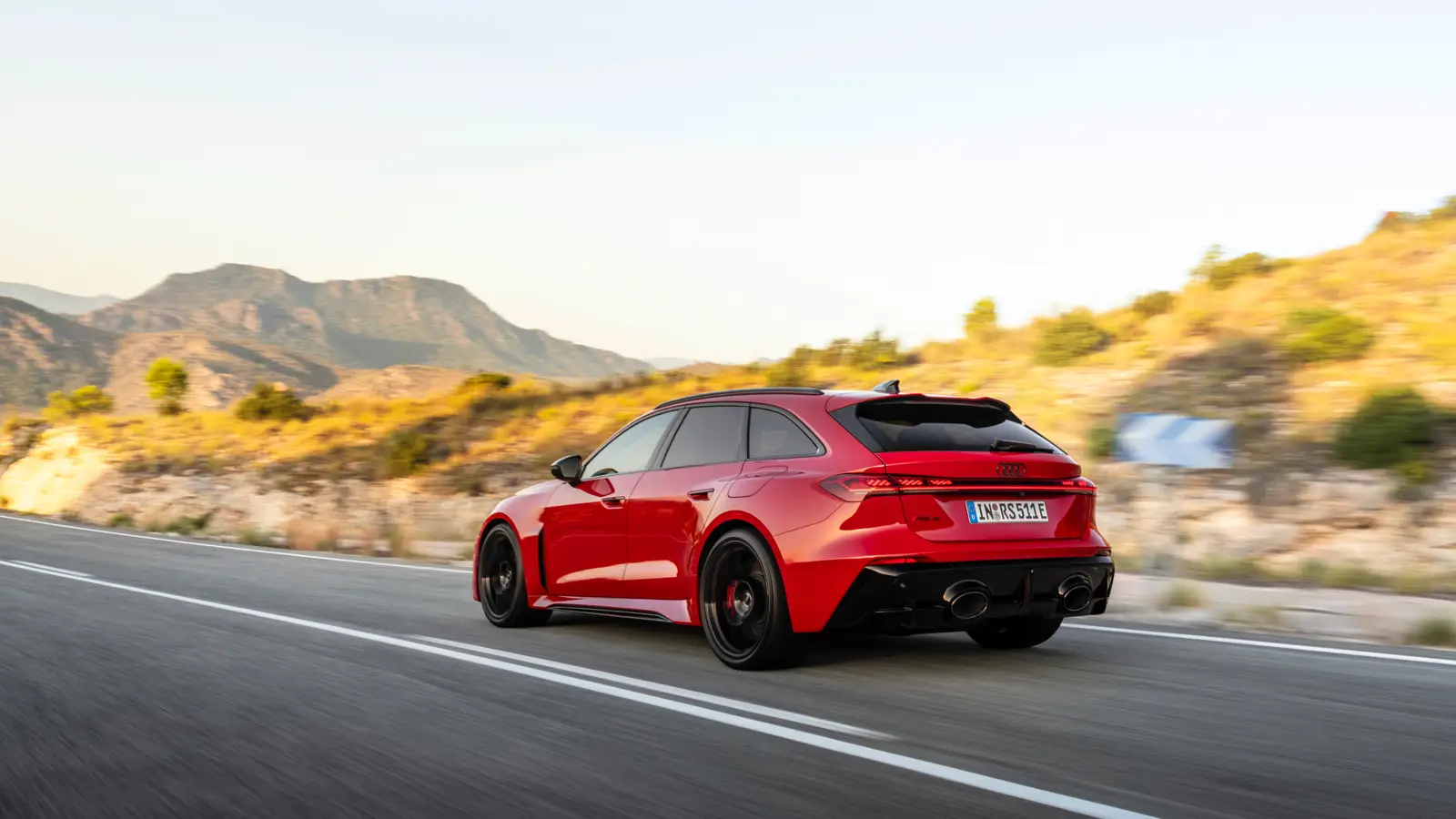
The transformation, however, goes beyond power figures. The RS 5 is now a plug-in hybrid equipped with a 25.9 kWh battery (22 kWh net). Its all-electric range reaches up to 84 kilometers under WLTP and up to 87 kilometers in urban driving. This positions the model as capable of meaningful everyday EV use. AC charging at up to 11 kW enables a full recharge in approximately 2.5 hours. In performance-oriented modes, the system maintains a high state of charge to guarantee full hybrid output and ensure the availability of the ten-second boost function.
The technological centerpiece is the new quattro system with Dynamic Torque Control. Integrated into the rear transaxle, this electro-mechanical torque vectoring system is described by Audi as a world-first configuration for a production vehicle. The control unit recalculates torque distribution every five milliseconds (200 Hz), while the system can generate torque differences of up to 2,000 Nm within just 15 milliseconds. Combined with a new center differential featuring preload, it sharpens turn-in precision, enhances traction at corner exit, and improves overall stability.
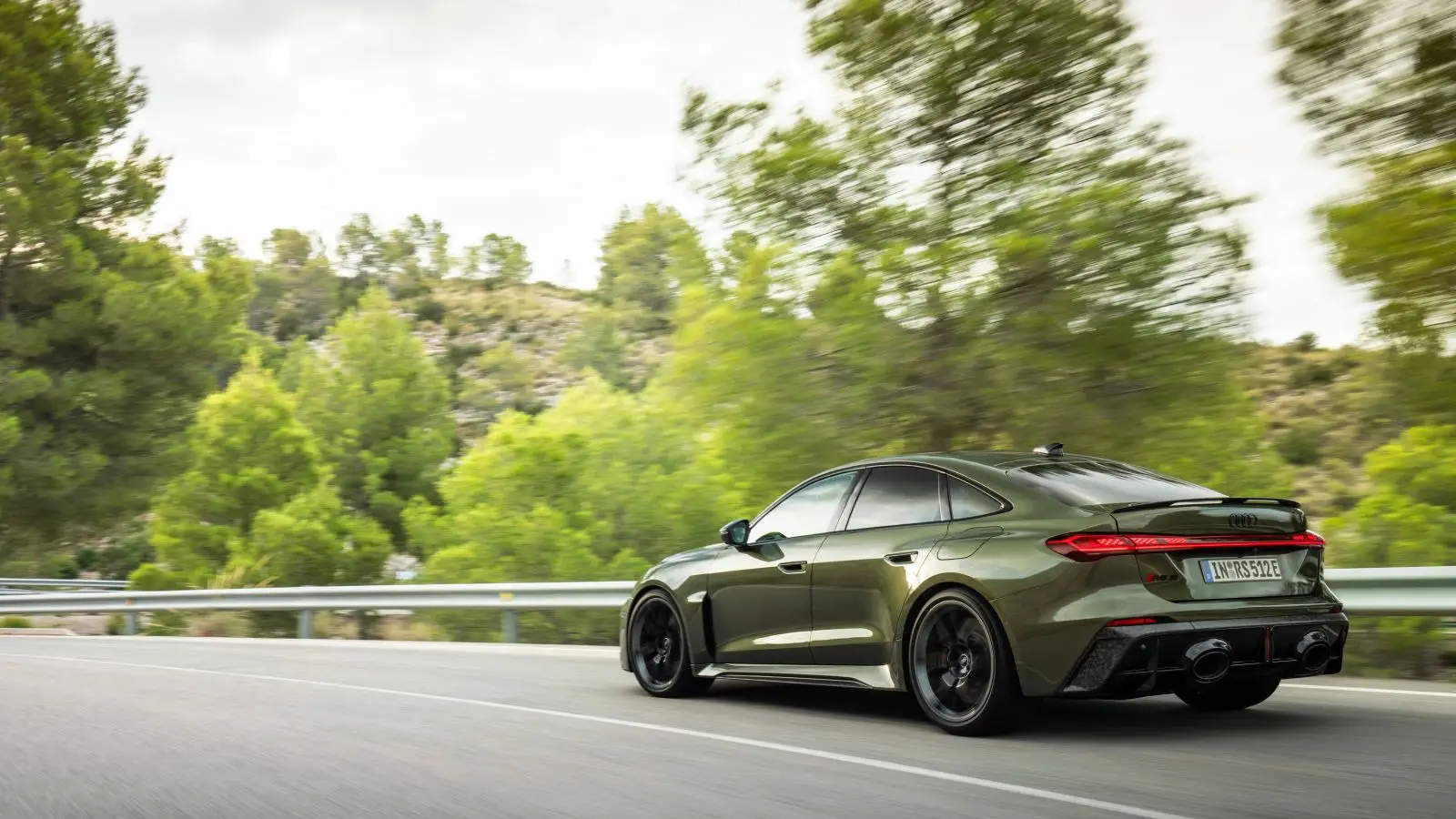
The chassis has been comprehensively adapted to the hybrid layout. RS-specific front and rear axles, twin-valve dampers, RS-tuned steering with a 13:1 ratio, and a brake-by-wire system create a balance between comfort and track-focused composure. Optional ceramic brakes measuring 440 mm at the front and 410 mm at the rear reduce stopping distance from 100 km/h to 30.6 meters.
Visually, the RS 5 distances itself clearly from the standard A5. The body is widened by around nine centimeters, the Singleframe grille adopts a three-dimensional design, and darkened Matrix LED headlights along with digital OLED rear lights featuring a checkered-flag signature reinforce its identity. Inside, an 11.9-inch virtual cockpit and a 14.5-inch MMI display are complemented by the Audi driving experience function, enabling detailed analysis of lap times, G-forces, and drift angles.
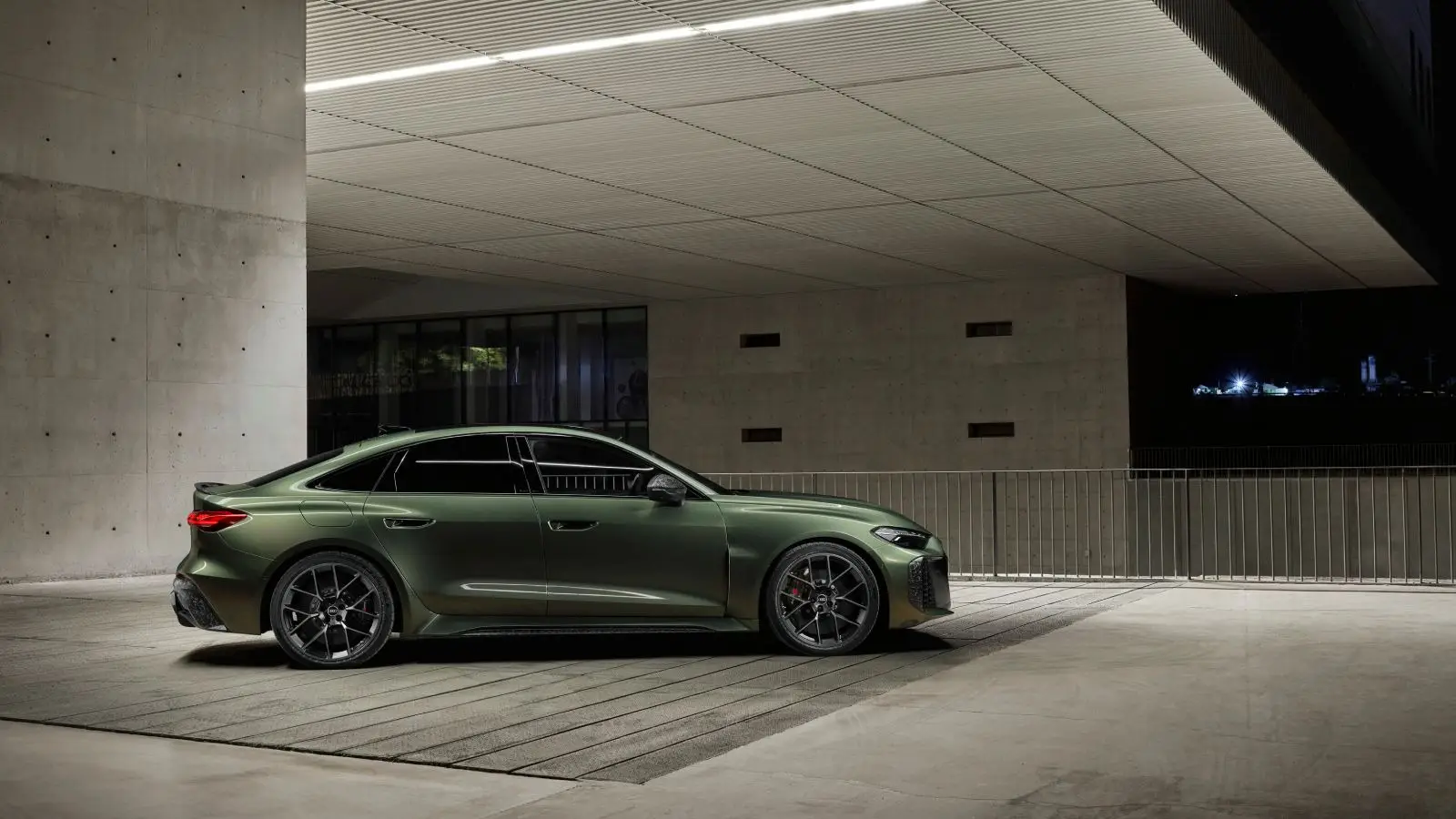
Production takes place in Neckarsulm, where the A5 family is built on the Premium Platform Combustion architecture. European order books open in the first quarter of 2026, with deliveries scheduled for summer. In Germany, pricing starts at €106,200 for the Sedan and €107,850 for the Avant.
The shift to a hybrid architecture reflects a broader transition within the high-performance segment. European research indicates that real-world efficiency of plug-in hybrids depends heavily on charging habits and usage patterns. Within this context, the RS 5 presents a distinctive interpretation: a powerful combustion foundation combined with an electric component designed not only to enhance performance, but also to expand everyday usability.
Mark Havelin
2026, Feb 21 19:33