
Inside Toyota Motor North America R&D Engineering Culture
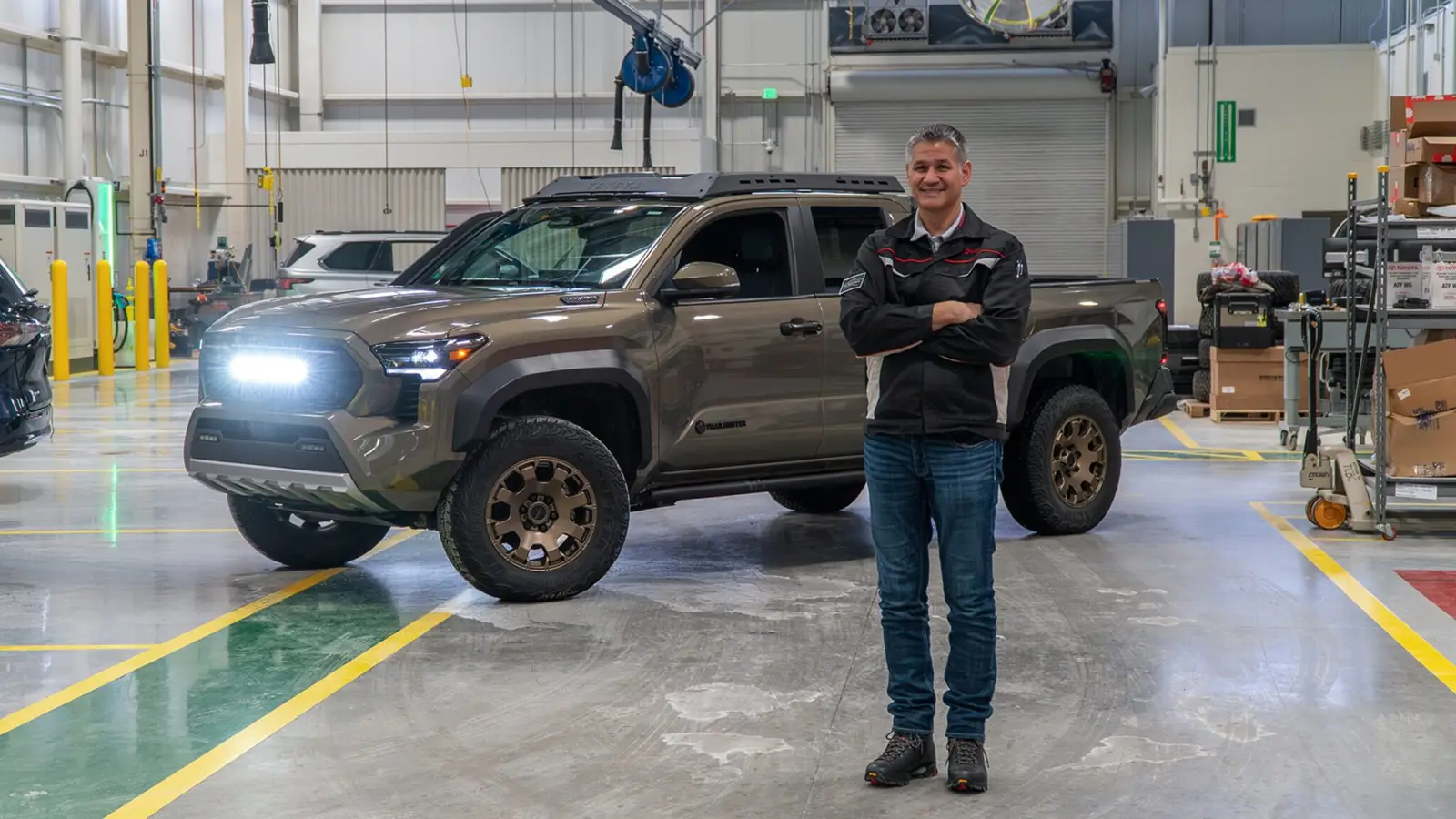
Explore how Toyota Motor North America R&D applies kaizen, powertrain innovation and advanced mobility research to develop Camry, Tacoma and Tundra.
Toyota Motor North America Research & Development presents its engineering culture not as a slogan, but as a daily discipline shaped by collaboration, technical rigor and continuous improvement. In a story originally published on February 27, 2026, the company highlights the people behind the products and the mindset that drives some of its most important vehicles.
The North American R&D organization leads the design and development of core models such as Camry, Tacoma, Tundra, Sequoia and Sienna, while also playing a key role in Corolla, Corolla Cross, RAV4, Highlander, Grand Highlander and Lexus ES, NX and RX. Beyond production vehicles, engineers are involved in advanced mobility projects, powertrain development, quality control and materials engineering.
At the center of this culture stands kaizen — continuous improvement — a foundational principle of the Toyota Production System. It emphasizes incremental progress, employee involvement and attention to detail. This long-standing philosophy has contributed to Toyota and Lexus consistently ranking among the top performers in recent J.D. Power Vehicle Dependability Studies, reinforcing the brand’s reputation for quality and reliability.
Randy Badia, who oversees the Tacoma program, describes his role as aligning teams around a shared product vision. He contributed to the latest generation Tacoma, including the off-road-focused Trailhunter grade. That version features Old Man Emu forged monotube shocks with external remote reservoirs, underscoring Toyota’s growing emphasis on serious overlanding capability.
Scott Trahan, a principal engineer in powertrain planning and development, worked on the i-FORCE MAX system for Tundra — a twin-turbo V6 hybrid delivering 437 horsepower and 583 lb-ft of torque. The move from a naturally aspirated V8 to a twin-turbo V6 hybrid reflects a broader shift toward efficiency without sacrificing performance.
Seat engineer Emily Deming, who works on Tundra and Sequoia programs, highlights the collaborative nature of solving warranty-related technical challenges. Through analysis, evaluation and field-based validation, her team developed countermeasures — a practical example of kaizen applied in real time.
Toyota’s engineering footprint in North America connects development centers in Michigan with manufacturing plants across the region. Tundra and Sequoia are assembled in Texas; Grand Highlander and Highlander in Indiana; Camry Hybrid and Lexus ES in Kentucky. This integration of R&D and production enables faster implementation of engineering solutions.
In parallel, Toyota continues expanding into advanced mobility through the Toyota Research Institute, established in 2015 with a announced five-year investment of $1 billion. TRI focuses on artificial intelligence, robotics and automated driving technologies, extending Toyota’s engineering culture beyond traditional vehicle development.
Seen in this broader context, the company’s focus on engineering culture becomes more than an internal narrative. It reflects a system where historical principles of continuous improvement intersect with hybrid powertrains, off-road innovation and next-generation mobility research — suggesting that engineering remains the defining force behind Toyota’s future trajectory.
Mark Havelin
2026, Feb 28 21:21