
Spirit of Ecstasy: Origins and Evolution of the Rolls-Royce Icon
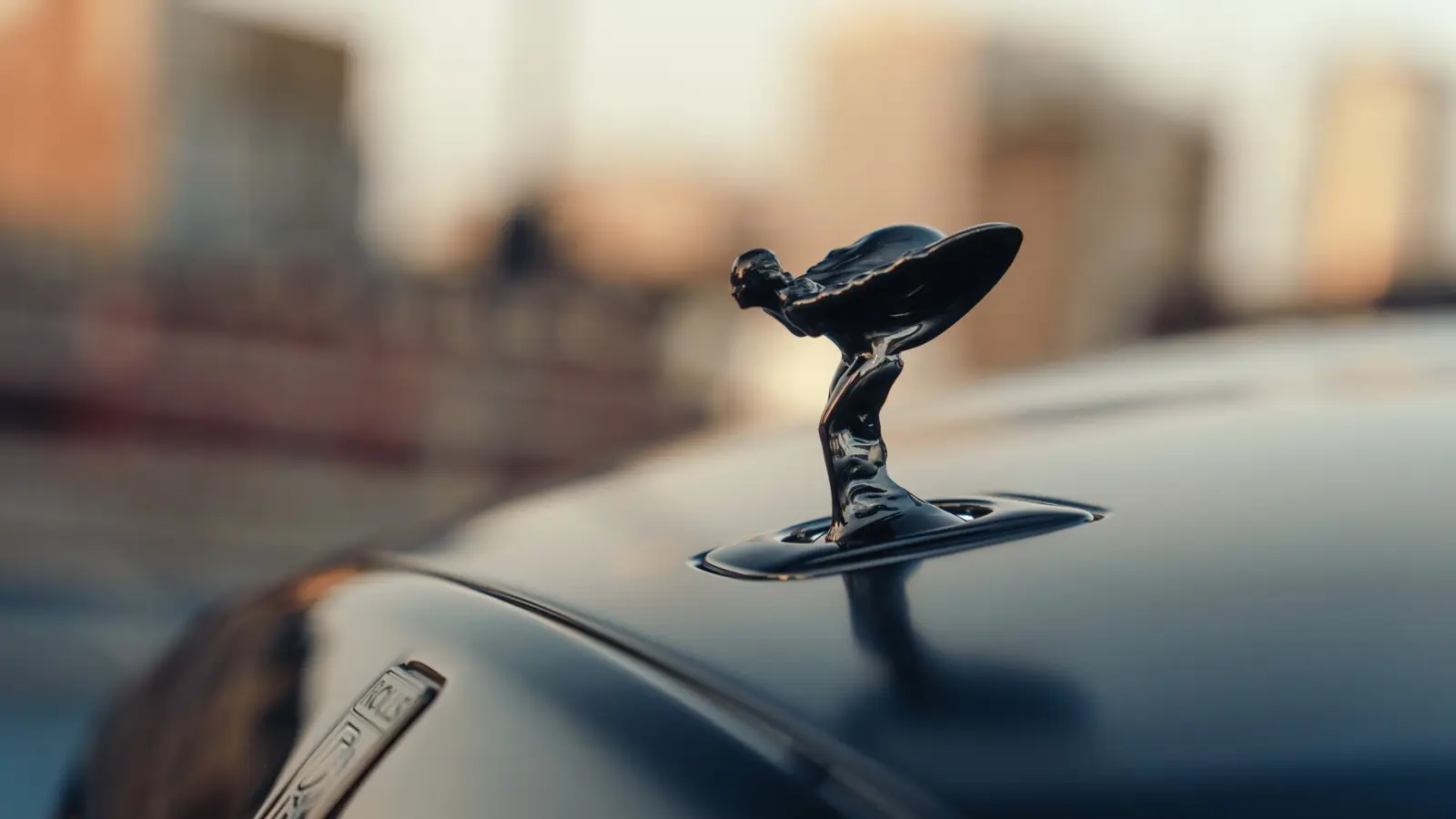
Rolls-Royce explains the history, origins and evolution of the Spirit of Ecstasy mascot since 1911, including its design, inspiration and modern updates for Spectre.
The Spirit of Ecstasy, mounted above the radiator grille of every Rolls-Royce, has remained one of the most recognisable symbols in the automotive world for more than a century. First registered as the marque’s official mascot in 1911, the figurine gradually evolved into far more than a decorative element. It came to represent the broader philosophy of Rolls-Royce — a union of luxury, engineering excellence and artistic expression.
The story of the sculpture reaches back to the earliest years of the company. By the beginning of the 1910s, many car owners had begun decorating their radiator grilles with personal mascots ranging from animals to humorous figures. Rolls-Royce managing director Claude Johnson viewed these additions as unsuitable for the dignity of the marque and decided that the company should introduce a single official emblem worthy of its cars.
To create it, Johnson turned to illustrator and sculptor Charles Robinson Sykes. Sykes was already well known in motoring circles through his work with the magazine The Car Illustrated and his connection to its editor, motoring pioneer Lord Montagu of Beaulieu. For Montagu’s own Rolls-Royce, Sykes had previously created a small statuette called The Whisper, depicting a woman in flowing robes with her finger pressed to her lips.
The figure was widely believed to have been modelled on Eleanor Thornton, Montagu’s secretary and close companion, who also posed for Sykes as an artist’s model. Her image later inspired the development of the Spirit of Ecstasy itself. Reworking the idea behind The Whisper, Sykes created a more dynamic sculpture of a woman leaning forward with robes flowing behind her, suggesting movement and anticipation.
Another interpretation of the design’s origin links it to the ancient Greek statue Winged Victory of Samothrace, displayed in the Louvre. Some historians have suggested that the sculpture’s dramatic sense of motion and flowing garments influenced the final form of the Rolls-Royce emblem. Yet the exact source of inspiration has never been definitively established, and the story of its creation remains partly wrapped in legend.
Since its introduction in 1911, the figurine has undergone a number of subtle changes. Its stance, height and drapery have been adjusted across different eras, reflecting both stylistic shifts and evolving vehicle design. In 1934 a special kneeling version appeared, created to suit lower-bodied cars and reduce obstruction of the driver’s view. Despite these variations, the essential concept — a graceful female figure leaning into the wind — has remained unchanged.
Engineering solutions have also shaped the emblem’s evolution. In the 1970s several countries introduced safety concerns about bonnet-mounted mascots. Rolls-Royce responded by fitting the figurine with a spring-loaded mechanism that allowed it to retract into the radiator grille when touched. In modern models this movement has become a smooth automated action often referred to as “the rise”.
The way the sculpture is produced has evolved as well. Originally it was made using the ancient lost-wax casting method, a technique that dates back thousands of years. Charles Sykes himself cast and finished the figurines, assisted by his daughter Josephine, until 1939. In 2003, ahead of the launch of Phantom VII, Rolls-Royce introduced a modern investment-casting process based on detailed digital mapping of the original sculpture.
A new chapter in the story came in 2022 with the debut of the all-electric Rolls-Royce Spectre. The Spirit of Ecstasy was redesigned to stand 8.27 cm tall instead of the previous 9.5 cm and adopted a more dynamic stance, with one leg forward and the body lowered as if bracing against the wind. The revised form helped improve aerodynamics, contributing to Spectre’s drag coefficient of 0.25, the most aerodynamic Rolls-Royce ever created.
More than a century after its debut, the Spirit of Ecstasy continues to define the identity of Rolls-Royce. While the emblem is periodically reinterpreted in special collections and bespoke creations, it still serves the same symbolic role it did in 1911 — linking each new car to the heritage, artistry and human stories that shaped the marque’s beginnings.
Mark Havelin
2026, Mar 07 10:50