
Volkswagen Announces ID.3 Neo as Successor to the ID.3
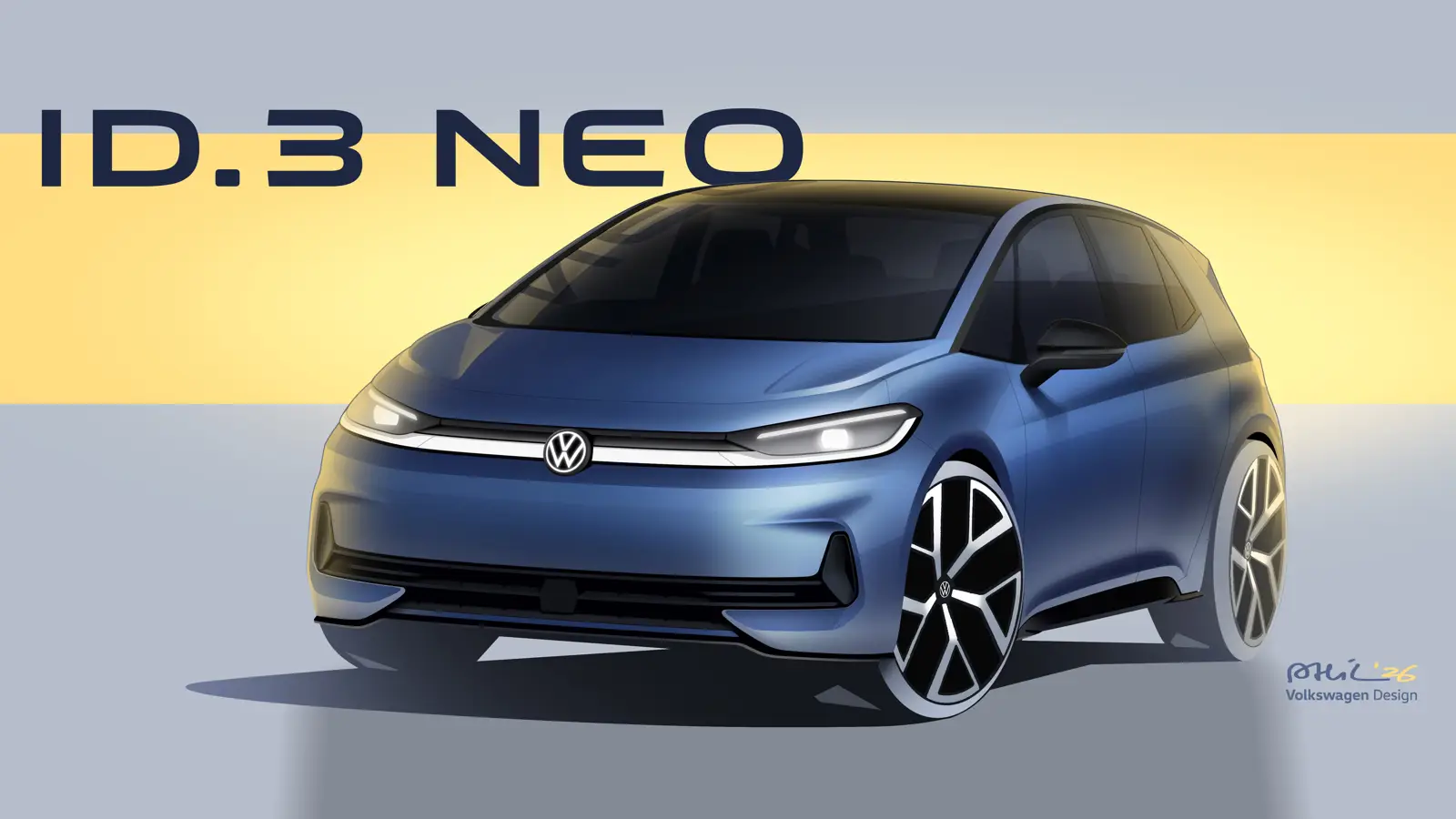
Volkswagen reports that the new ID.3 Neo will debut in April with updated software, Travel Assist, digital key and Vehicle-to-Load features. Learn what changes in the ID lineup.
Volkswagen is preparing the next generation of its compact electric hatchback: the successor to the ID.3 will arrive under the name ID.3 Neo. The model is scheduled to make its world premiere in mid-April, and the company has already outlined several key changes that are expected to shape the future development of the ID family.
The most significant step is the transition to a new generation of software that Volkswagen is gradually introducing across its electric lineup. This digital architecture brings a range of new capabilities to the ID.3 Neo, from updated driver assistance systems to expanded infotainment functions.
Among the new features is an enhanced version of Travel Assist that now includes traffic-light recognition. The car will also introduce One Pedal Driving, allowing the vehicle to slow down through energy recuperation and come to a complete stop without pressing the brake pedal. This driving concept is already used in many electric vehicles and is intended to make urban driving smoother and more efficient.
The new software platform has already appeared in other models of the ID lineup. ID.4, ID.5 and ID.7 are the first vehicles available to order with this generation of systems and its expanded feature set.
Volkswagen is also updating the digital environment inside the car. New ID models will feature the Innovision infotainment system with an integrated app store. Through this interface, drivers will be able to activate additional services or download applications directly in the vehicle, similar to the way apps are installed on smartphones. The store will include software for audio and video streaming, parking services, charging tools and gaming.
A further addition is the digital vehicle key. With this option, drivers can unlock and start the car using a smartphone or smartwatch. Communication works wirelessly in a way similar to contactless mobile payments, and no special application is required. The conventional physical key will remain available as well.
Volkswagen is also revising the operating concept. Future ID models will again feature buttons on the steering wheel, a change intended to make the control of vehicle functions more intuitive.
Another feature designed to expand everyday usability is Vehicle-to-Load. This function allows the high-voltage battery of the car to power external devices with up to 3.6 kW of output. Household appliances such as an electric grill, coffee maker or e-bike charger can therefore be powered directly from the vehicle. Energy can be supplied through a 230-volt socket inside the car or through the charging connection using a dedicated adapter.
At the same time, Volkswagen continues to refine the technical components of the ID range. Entry-level versions of the ID.4 and ID.5 Pure now receive the new APP350 electric drive producing 140 kW (190 hp). The system delivers higher torque and improved efficiency compared with the earlier APP310 motor. As a result, the range of the ID.4 can increase by around 40 kilometers in the WLTP cycle.
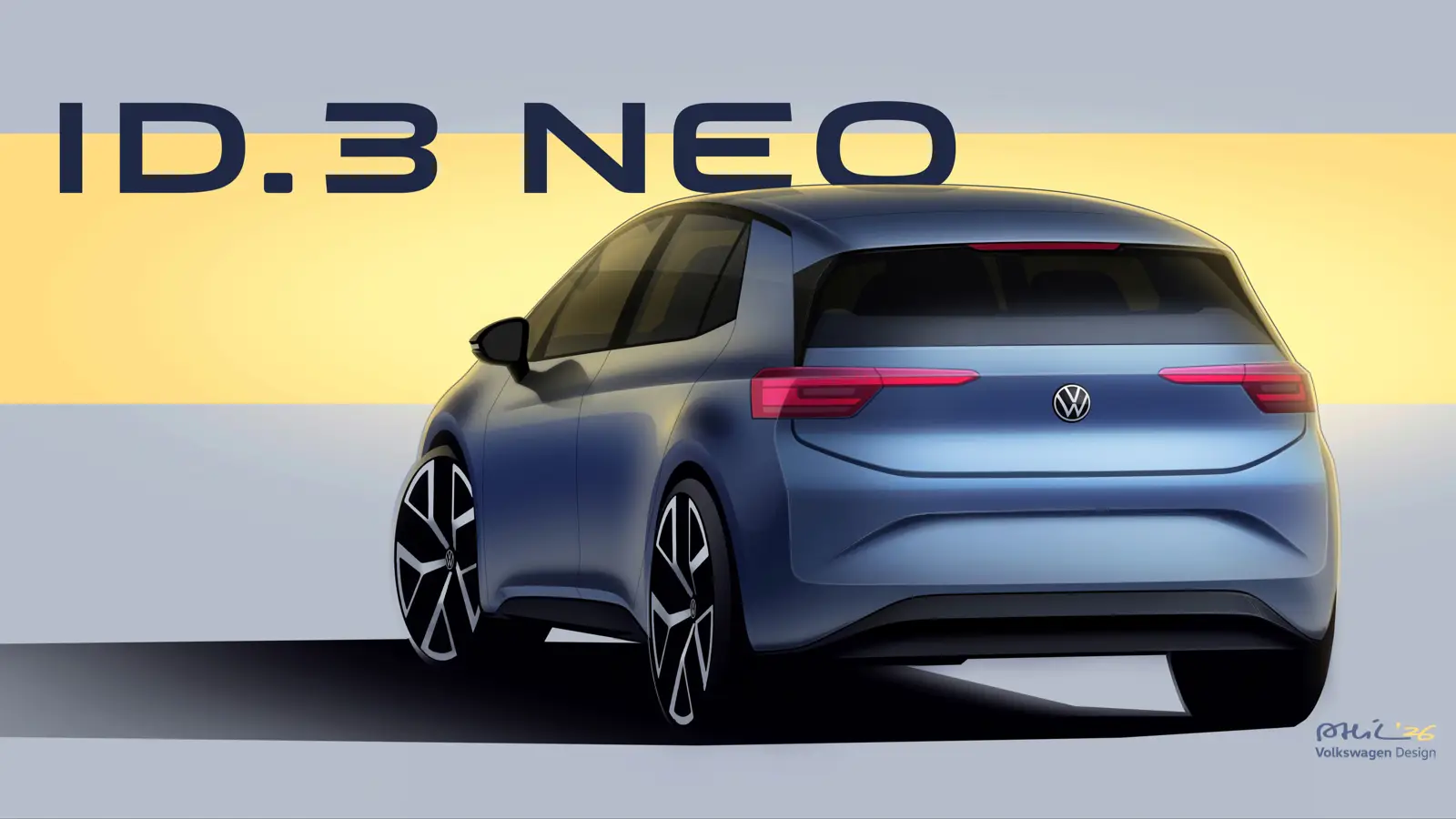
This drivetrain can be paired with a new 58-kWh lithium-iron-phosphate (LFP) battery, a combination designed to provide durability, efficiency and cost advantages.
Volkswagen also states that both the hardware and the software of the new generation of ID vehicles are developed with future regulations in mind. These include the European Euro 7 emissions framework, the Californian ZEV3 requirements for zero-emission vehicles and the European GSR2 safety regulation aimed at further improving road-traffic safety.
In this sense, the ID.3 Neo represents more than a simple model update. Volkswagen is positioning it as a step forward in digital functionality, energy versatility and software architecture for the entire ID lineup. If these technologies deliver as intended, they could shape the next stage of the brand’s electric-vehicle strategy.
Mark Havelin
2026, Mar 13 02:44