Wayve, Uber and Nissan plan robotaxi pilot with LEAF in Tokyo
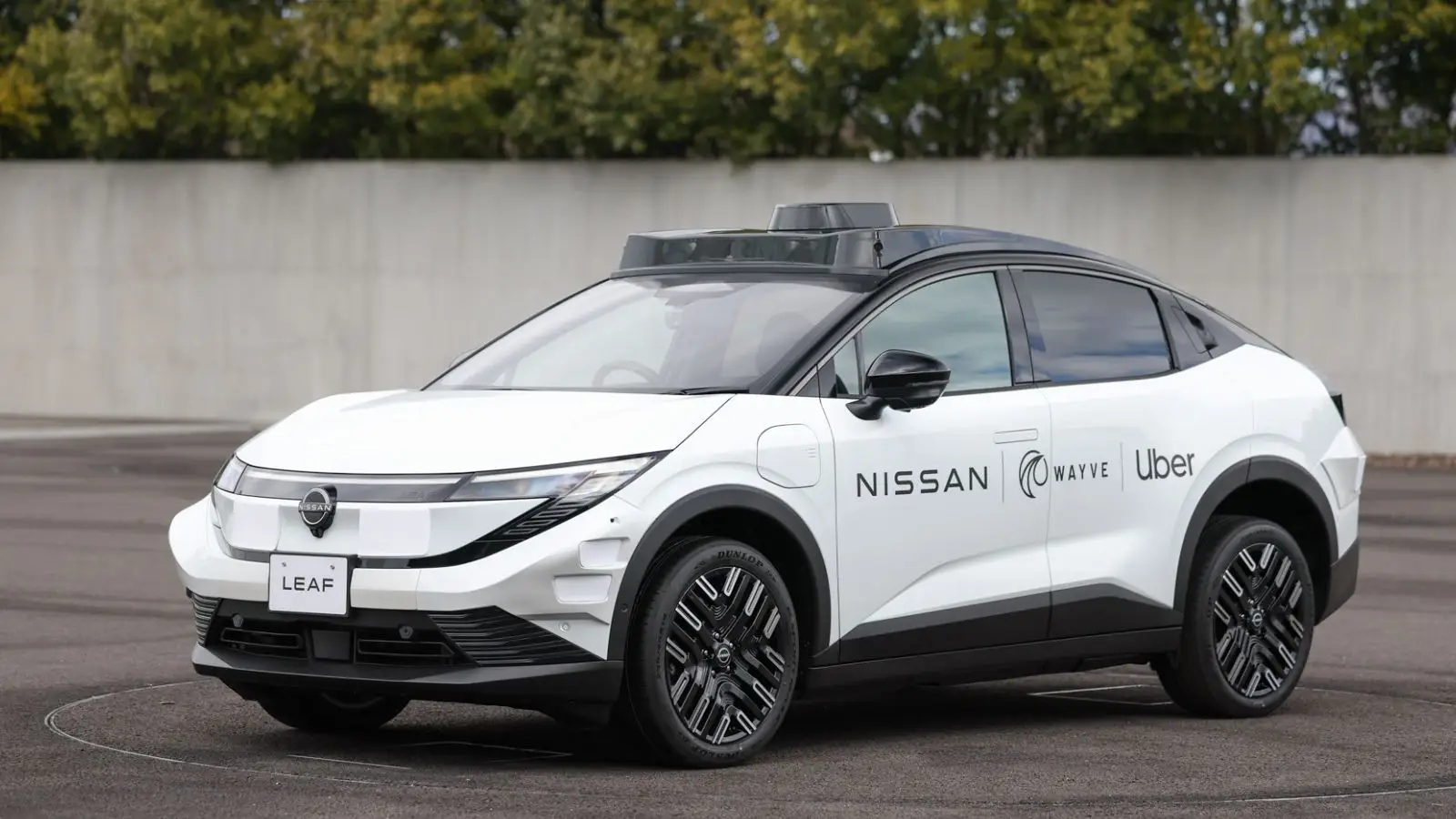
Wayve, Uber and Nissan announced plans to test robotaxi services in Tokyo using Nissan LEAF vehicles and Wayve AI Driver on the Uber platform. Read how the pilot may launch in 2026.
Wayve, Uber and Nissan have announced a collaboration that could bring robotaxi services to Japan. The companies have signed a memorandum of understanding and begun preparations for a pilot deployment in Tokyo. If regulatory discussions proceed as planned, the first autonomous rides could begin by late 2026.
The initiative will use Nissan LEAF electric vehicles equipped with the Wayve AI Driver autonomous driving system. British technology company Wayve provides the artificial intelligence software, Nissan acts as the automaker partner, and Uber supplies the ride-hailing platform through which passengers will be able to request trips.
During the initial phase, the vehicles are expected to operate on the Uber network with a trained safety operator in the car. This pilot format allows the partners to test the technology in real-world conditions while maintaining an additional layer of oversight during early deployment.
Tokyo has been chosen deliberately as the test environment. The partners describe it as one of the most challenging urban markets for autonomous driving due to dense traffic patterns, complex road layouts and high safety standards. Demonstrating reliable operation in such conditions could become a significant milestone for the technology.
The Wayve AI Driver is designed to learn from real-world driving data and adapt to new roads and cities without relying on high-definition maps. According to the company, this approach is intended to make it easier to scale autonomous driving systems to new markets and dynamic urban environments. Wayve also says it has been testing its technology on Japanese roads since early 2025.
For Uber, the Tokyo project represents its first autonomous vehicle partnership in Japan. The company intends to launch the service through a licensed local taxi partner and in close coordination with relevant authorities.
The announcement is also part of a broader global strategy. Wayve and Uber have previously outlined plans to expand robotaxi services to more than ten cities worldwide, with London among the locations being prepared for future deployments.
For Nissan, the initiative connects with its wider push toward intelligent mobility. The automaker has already been working with Wayve on integrating advanced AI technology into future driver-assistance systems and next-generation ProPILOT platforms. The robotaxi pilot therefore represents a practical extension of that collaboration.
As autonomous driving technology continues to evolve, partnerships like this increasingly combine software developers, vehicle manufacturers and mobility platforms. In this case, Wayve provides the autonomous intelligence, Nissan supplies the vehicle platform, and Uber connects the system to riders through its global mobility network.
If the Tokyo pilot proves successful, it could pave the way for broader deployments in other cities and help accelerate the global rollout of autonomous mobility services.
Mark Havelin
2026, Mar 13 15:12