
1955 EMW 327 Sport Cabriolet Appears in Bring a Trailer Auction
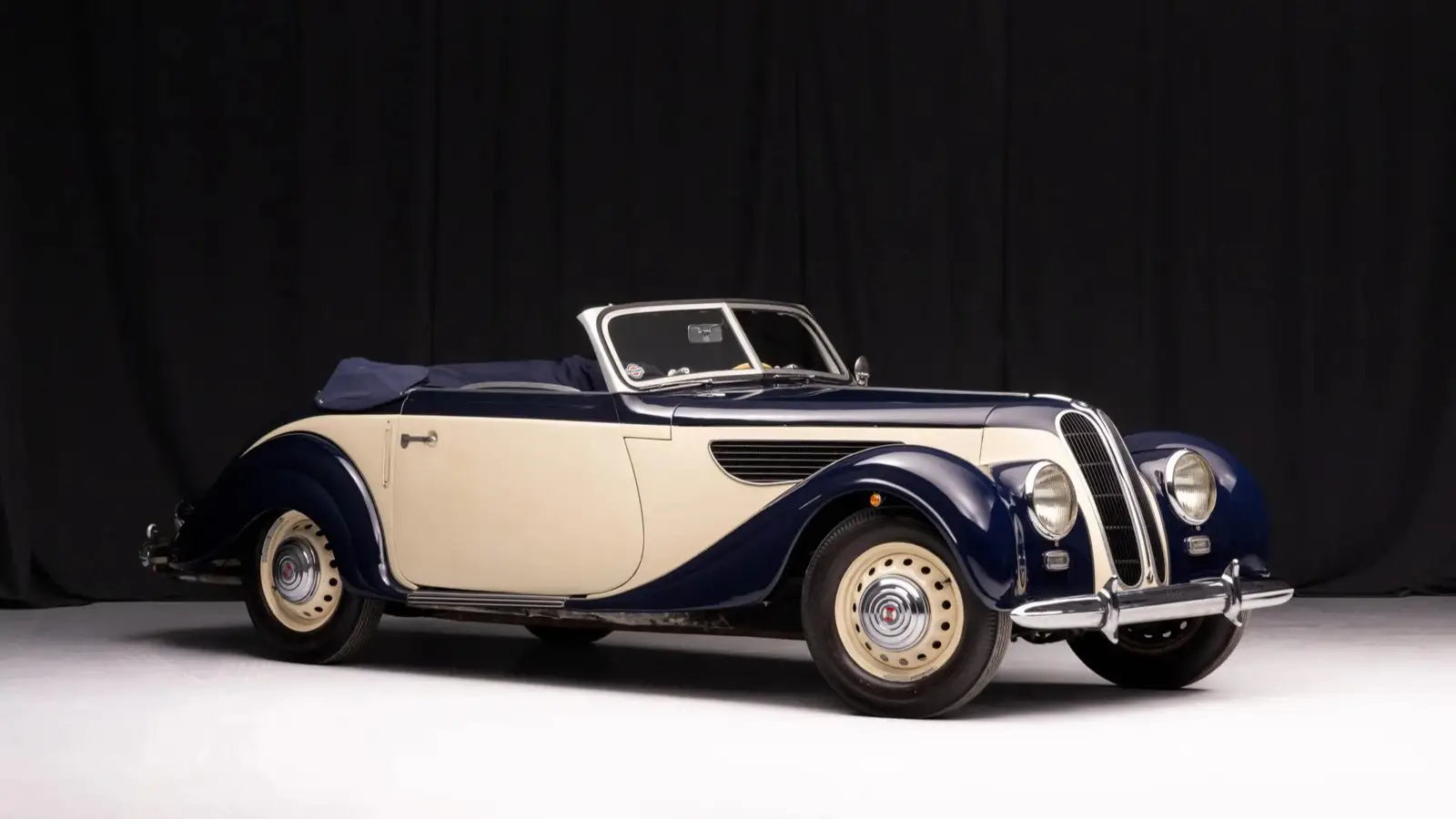
Bring a Trailer lists a 1955 EMW 327 Sport Cabriolet built at the former BMW plant in Eisenach, a rare postwar continuation of the pre-war BMW 327 design.
A rare 1955 EMW 327 Sport Cabriolet has appeared on Bring a Trailer, representing a fascinating chapter of automotive history. At first glance the car resembles a pre-war BMW, yet its origins tell a far more complex story rooted in the post-war division of Germany.
The car was built at the former BMW factory in Eisenach, which ended up in the Soviet occupation zone after World War II. Production there resumed using BMW’s pre-war engineering, but as political and industrial realities changed, the vehicles were eventually sold under a new name: EMW – Eisenacher Motorenwerk.
In many ways, the car represents a bridge between two eras. The original BMW 327 debuted in 1937 as an elegant 2+2 sports cabriolet and quickly became one of the most stylish models in the company’s pre-war lineup. After the war, however, the Eisenach plant became separated from BMW’s headquarters in Munich, and production of BMW-based designs continued in East Germany.
The example offered on Bring a Trailer belongs to that unusual post-war period. According to the listing, it is one of roughly 505 examples of the BMW/EMW 327 family produced after the war. Cabriolet versions of the EMW 327/2 were built between 1952 and 1955, while the coupe 327/3 followed from 1953 to 1955. A 1955 car therefore represents one of the final iterations of the model before production ended.
Mechanically, the car retains the traditional BMW layout developed before the war. Power comes from a 1,971cc inline-six engine with overhead valves and twin Solex carburetors. The engine is paired with a four-speed manual transmission driving the rear wheels. The chassis also follows the late-1930s BMW architecture, featuring independent front suspension with a transverse leaf spring and a live rear axle supported by semi-elliptical springs.
This particular car reportedly underwent refurbishment in the early 2000s. It was imported to the United States in 2015 and later acquired by the current selling dealer in 2025. Recent servicing is said to have included replacement of the water pump along with a coolant flush and oil change.
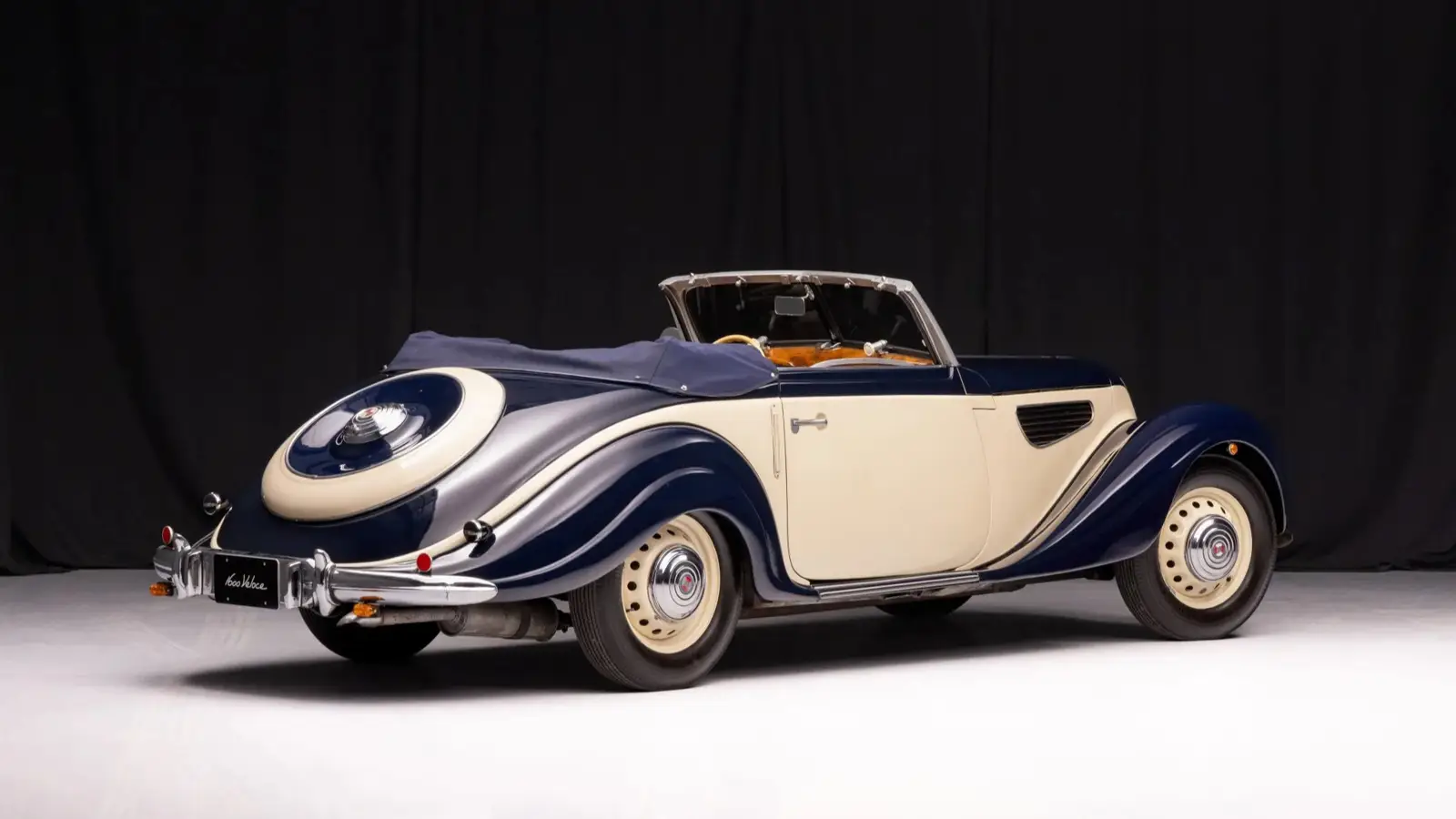
Visually, the car retains the graceful proportions that made the original BMW 327 famous—its long hood, flowing fenders, and rear-mounted spare wheel integrated into the tail. At the same time, the post-war EMW versions introduced subtle distinctions, including a higher hood line and pronounced creases above the wheel arches, details that help distinguish them from their pre-war BMW counterparts.
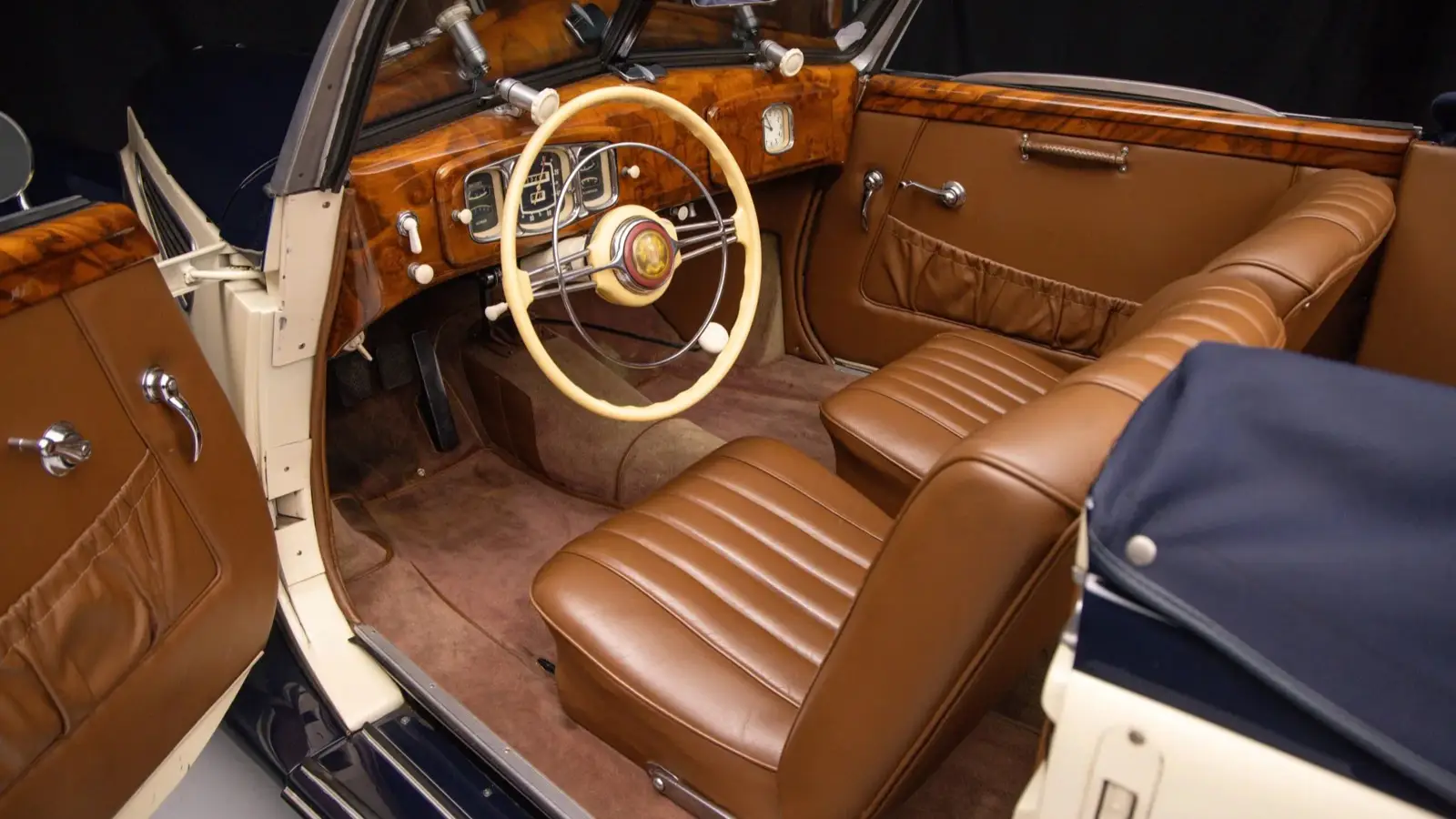
The car offered here is finished in a two-tone combination of dark blue and ivory, complemented by a dark blue convertible top. Inside, the cabin features tan leather upholstery in a 2+2 seating layout along with a wooden dashboard and an ivory two-spoke steering wheel. Equipment includes hydraulic drum brakes at all four corners and 16-inch steel wheels wearing EMW-branded hubcaps.
The historical context surrounding the model adds another layer of interest. Many EMW 327 cars were exported after the war, while those that remained in East Germany were often reserved for prominent figures in culture and academia. As a result, the car developed a reputation as a prestige automobile—an unusual status symbol within the industrial landscape of the socialist bloc.
Collectors rarely encounter these cars at major auctions today, and surviving examples appear only occasionally on the international market. That scarcity, combined with the car’s unusual origins, makes the EMW 327 one of the more intriguing survivors of the immediate post-war automotive era.
More than just a mid-1950s cabriolet, the car represents a unique intersection of pre-war BMW engineering, East German industry, and the complicated history of the Eisenach factory. Few automobiles illustrate that transition between eras quite as clearly.
Allen Garwin
2026, Mar 13 23:52