
BYD studies Canada plant and signals openness to acquiring a rival automaker
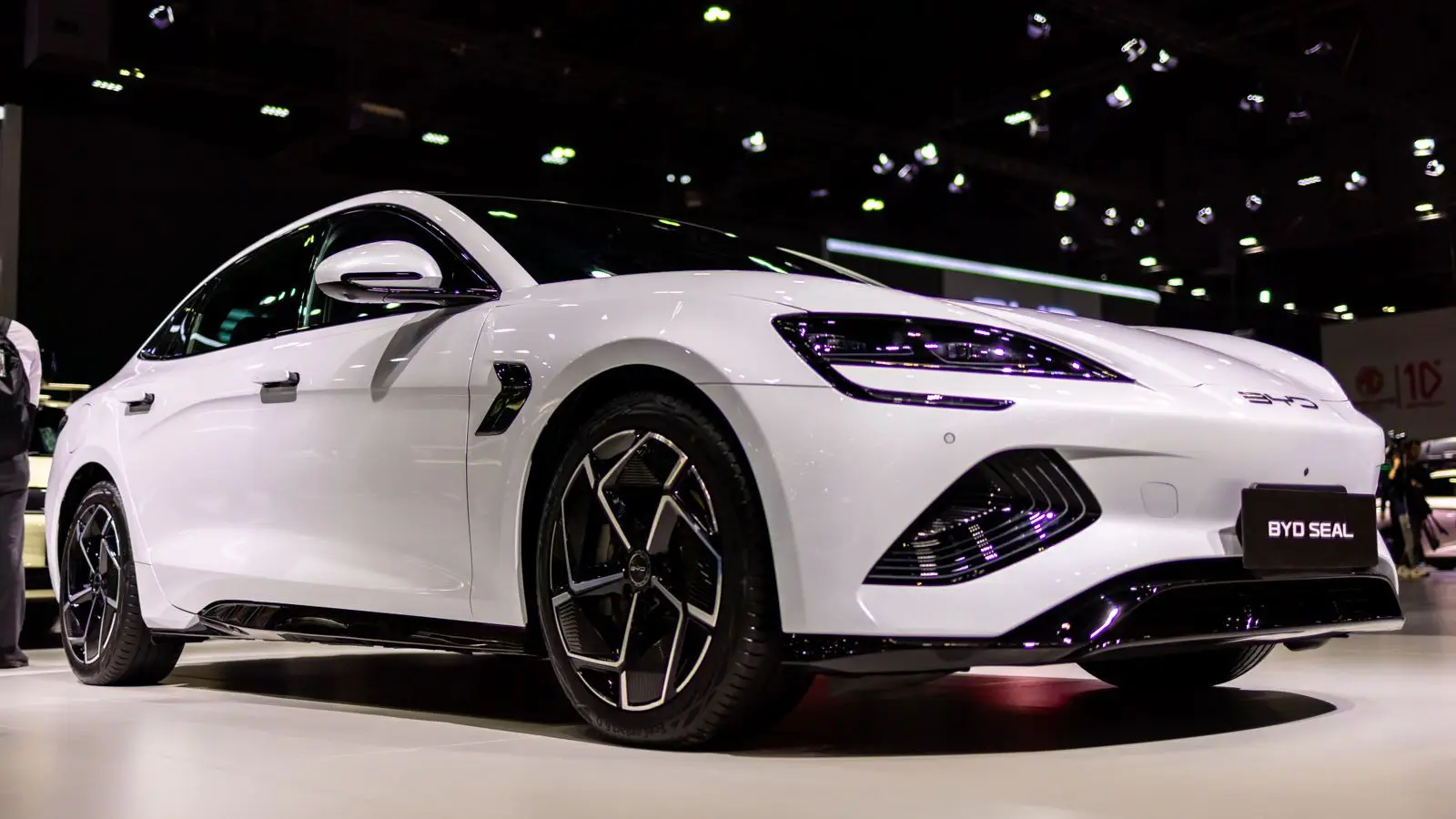
BYD is studying a potential car factory in Canada and evaluating acquisitions of struggling automakers, according to executive vice president Stella Li. Read the full analysis.
BYD has delivered its clearest signal yet on North America: the world’s largest electric vehicle maker is studying the possibility of building its own car plant in Canada while also leaving the door open to acquiring a struggling automaker if that helps speed up its global expansion.
The most revealing part of the story is not just where BYD wants to grow, but how. Executive Vice President Stella Li made clear that a joint venture is not the company’s preferred route. That fits BYD’s broader industrial model. The group produces its own batteries, electric motors, power electronics and semiconductors, so full ownership of a factory is not simply a financial preference, but a natural extension of how it already operates.
Canada’s policy shift helps explain why the market is back in focus. In January 2026, the country moved away from a 100% surtax on Chinese electric vehicles and introduced a quota-based import regime with a 6.1% tariff rate. The initial annual allowance was set at 49,000 vehicles, with the ceiling due to rise over time. For BYD, that changed the commercial logic of entering the market. The company had effectively shelved its Canada plans in late 2024 after the tougher tariff wall went up, but the new framework has reopened the discussion, not only around imports, but around local manufacturing as well.
That makes the contrast with Ottawa’s own approach especially striking. Canadian officials had promoted the idea of joint projects involving local industry and domestic technology, hoping Chinese automakers could be tied more closely to the country’s industrial base. BYD is signalling something different. It does not appear to be looking for a local partner to navigate the market. It wants access, control and the ability to run a facility on its own terms.
The second part of Li’s message may prove even more significant. BYD confirmed that it is open to acquisitions and is evaluating opportunities, although no specific target was named. That distinction matters. There is no announced deal, but there is now a public acknowledgment that BYD is willing to consider buying weakened legacy assets if that offers a faster route to scale. In practice, that strategy already has a visible example in Mexico, where BYD is among the finalists bidding for the Nissan-Mercedes COMPAS plant in Aguascalientes, a factory with annual capacity of 230,000 vehicles. Buying an existing site with trained workers and production infrastructure could be quicker than starting from scratch.
Canada therefore looks less like an isolated move and more like another step in a wider industrial push. BYD is already expanding production in Europe, with its first passenger-car factory in Hungary and a second plant planned in Turkey. At the same time, it continues to strengthen its position in Mexico, where it already has a major presence in the electrified vehicle market. Taken together, those moves show a company shifting from export-led growth to a broader model of global manufacturing presence.
There is also an older Canadian chapter in the background. In 2019, BYD opened an electric bus assembly operation in Newmarket, Ontario, and produced buses for the Toronto Transit Commission. But that project was later overshadowed by problems involving service, spare parts and technical support. For that reason, any new Canadian push in passenger vehicles would be watched not just as an expansion story, but as a test of how far BYD has moved beyond the weaknesses of its earlier local effort.
The wider business backdrop is also important. BYD entered 2026 with a weaker start in overall sales, yet exports remain central to its strategy. The company is targeting 1.3 million overseas vehicle sales this year and is leaning on new technology to support that ambition, including Blade Battery 2.0 and ultra-fast charging of up to 1,500 kW. After overtaking Tesla in global battery-electric vehicle sales in 2025, BYD no longer looks like a company making speculative promises from the edge of the market. It is acting from a position of scale.
The United States remains the one market BYD is still avoiding, describing it as too complicated because of tariffs and regulatory barriers. That leaves Canada looking increasingly like the most realistic path into the North American region for Chinese automakers. If BYD ultimately moves ahead with a wholly owned plant or buys an existing asset, the development would say as much about the changing balance of power in the global auto industry as it would about one company’s next step.
Allen Garwin
2026, Mar 14 05:34