
Genesis GV60 Magma Ride and Handling Explained by Genesis
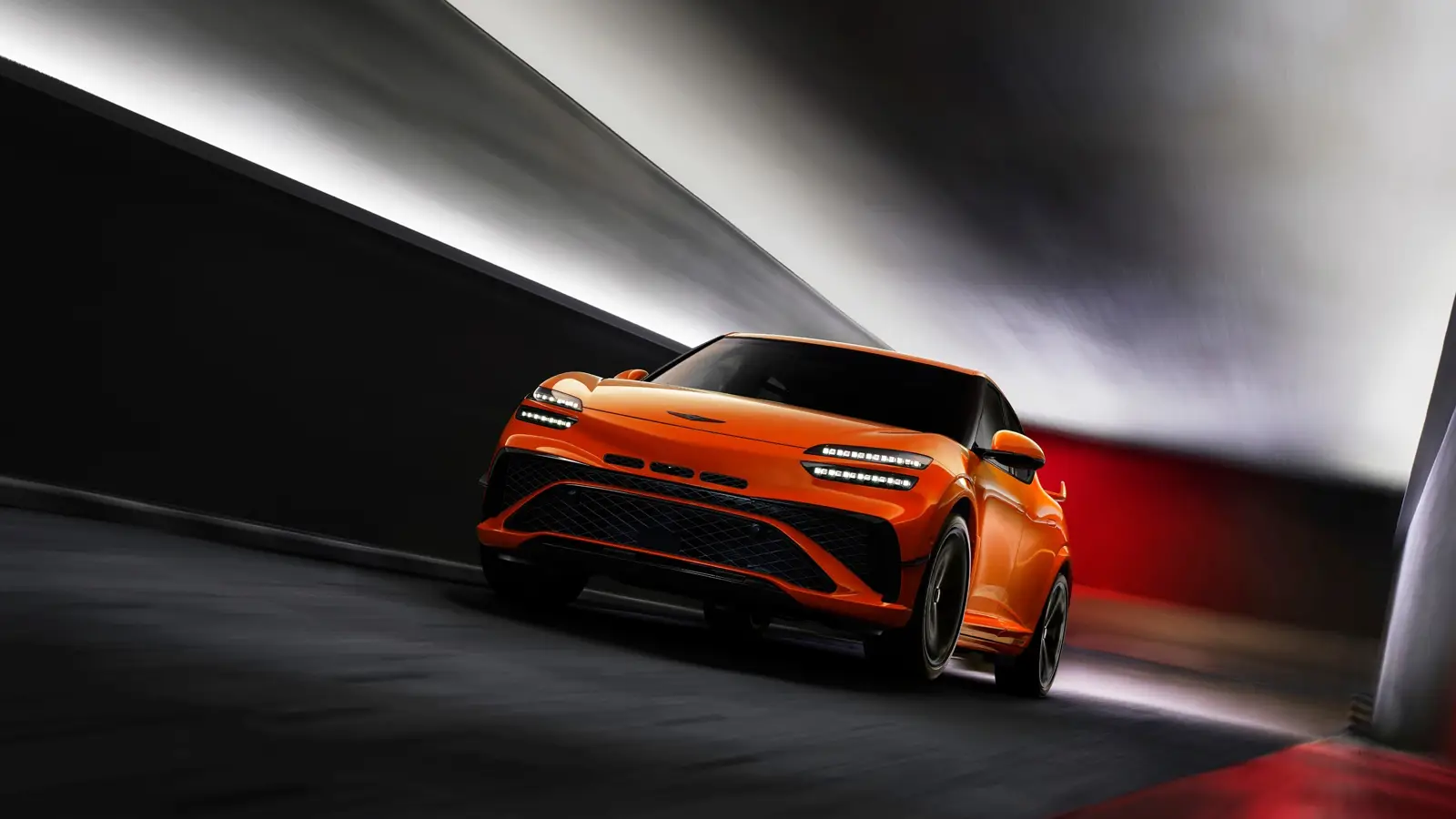
Genesis details GV60 Magma ride and handling, covering suspension changes, roll center tuning, and chassis upgrades. Learn how the EV’s dynamics were engineered.
Genesis has taken a closer look at the engineering behind the GV60 Magma’s ride and handling, shifting the focus away from raw power figures toward how the electric crossover behaves on the road. At the core of the project is a balance between high performance and everyday comfort, a combination the brand considers essential for a luxury EV.
The development is guided by four key principles: ease of control, high-speed stability, precision, and selectable sportiness. According to Genesis engineers, this framework is designed to create a consistent sense of confidence, whether the driver is navigating city streets or pushing the car through corners.
A major part of that effort lies in a completely reworked suspension geometry. Components directly connected to the wheels, including lower arms and hub carriers, were redesigned to improve responsiveness and control. The most significant change is the substantial reduction in roll center height, from 122.3 to 41.6 millimeters at the front and from 169.6 to 80.1 millimeters at the rear, improving stability and maximizing tire grip during cornering.
Further adjustments include a 16-millimeter increase in caster trail and a slight extension of arm length, both contributing to improved stability in corners and along straight sections. As a result, vertical tire load has increased by 10 percent, while cornering force has improved by more than 18 percent, indicating a comprehensive reworking of the chassis rather than incremental tuning.
The suspension system is also supported by advanced technologies. The stroke-sensing Electronic Control Suspension (ECS) adapts damping force in real time based on road conditions, reducing noise and impact even on uneven surfaces. Complementing it is the End of Travel (EOT) system, which detects body roll and adjusts damping instantly to enhance precision and stability during dynamic driving.
Additional refinements include Hydro G bushings on the front axle for sharper steering response and dual-layer bushings at the rear to separately manage vertical and longitudinal vibrations. Together, these elements help achieve a balance between performance-focused stiffness and the quiet, refined ride expected from a premium vehicle.
Wheel and tire setup also plays a crucial role. The GV60 Magma features 21-inch forged wheels paired with 275-millimeter-wide Pirelli P Zero tires. The track has been widened by 10 millimeters overall, further improving stability. According to Pirelli, these tires are optimized for high-performance electric vehicles, offering enhanced grip and consistent handling across varying conditions.
Body rigidity has been increased as well, with an additional 0.65 meters of structural adhesive and 20 extra welding points. L-brackets integrated into the wheel housings boost torsional rigidity by nearly 10 percent, sharpening steering precision and maintaining stability at higher speeds.
Beyond chassis development, the GV60 Magma positions itself as a high-performance electric model. It uses a dual-motor setup producing up to 650 PS in Boost mode, accelerates to 100 km/h in around 3.4 seconds, and reaches a top speed of 264 km/h. These figures place it firmly within the high-performance EV segment, where managing power effectively is just as important as generating it.
More broadly, the model signals the direction of Genesis’ new Magma performance line. The strategy aims to combine elevated driving dynamics with the brand’s established focus on comfort, with plans to extend this approach across other models. The initiative is also linked to Genesis’ growing presence in motorsport, reinforcing its long-term focus on performance and handling.
In this context, the GV60 Magma illustrates a development philosophy where performance is defined not only by output, but by the way a car communicates with the driver. The result is an electric vehicle shaped as much by its chassis engineering as by its powertrain.
Mark Havelin
2026, Mar 19 18:22