
Stellantis BEVs gain access to Tesla Supercharger network
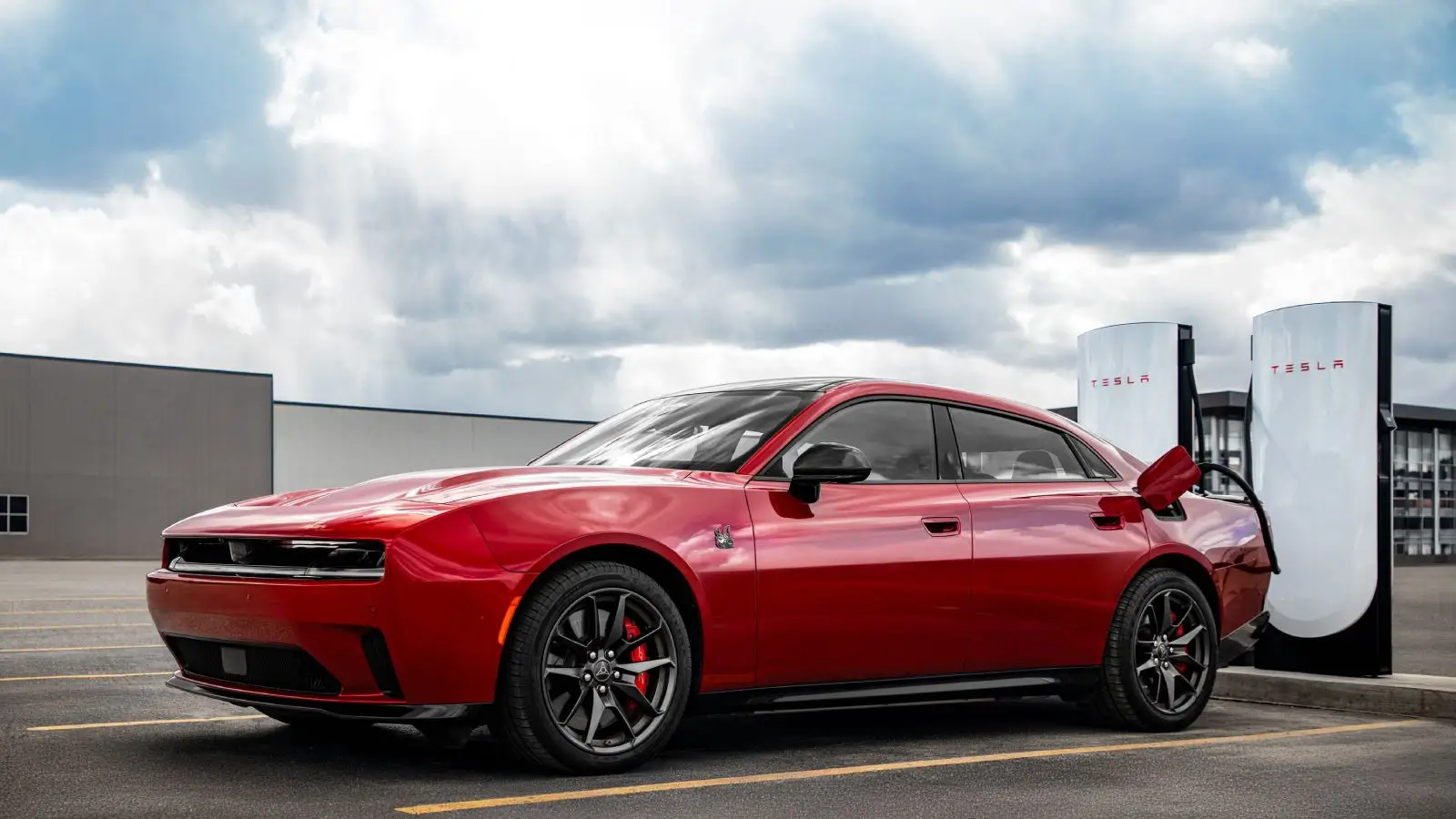
Stellantis confirms access to 27,500 Tesla Superchargers for Dodge, Jeep, Ram, FIAT and Maserati EVs, expanding charging options across North America.
Stellantis has unlocked access to more than 27,500 Tesla Supercharger locations across North America, dramatically expanding charging options for owners of Dodge, Jeep, Ram, FIAT and Maserati electric vehicles.
The move connects Stellantis customers to one of the most extensive fast-charging networks in the region. Tesla itself states that its infrastructure represents a significant share of fast chargers, making it a central part of the EV ecosystem. For drivers, this translates into more predictable long-distance travel and fewer limitations when planning routes.
Access is enabled through a NACS-CCS1 DC adapter, available via certified Stellantis dealerships and Mopar. In parallel, some Tesla stations are equipped with the Magic Dock — a built-in adapter that allows compatible vehicles to charge without additional hardware. Only officially approved adapters are supported.
The list of compatible vehicles includes both current and upcoming models. Among them are the Dodge Charger Daytona (2024–2026), Jeep Wagoneer S, Jeep Recon (expected in 2026), Ram ProMaster EV, FIAT 500e, and Maserati Folgore variants. Looking ahead, Stellantis plans to eliminate the need for adapters: starting in 2027, new models such as the Dodge Charger Daytona will feature a native NACS charging port.
Charging sessions and station discovery are handled through the Free2move Charge app. The platform integrates multiple charging networks, including Tesla and other public stations, allowing users to locate chargers, start sessions and manage payments within a single interface.
This expansion aligns with a broader industry shift toward the NACS standard. Now formalized under SAE J3400, it is increasingly being adopted by major automakers. At the same time, alternative infrastructure is also developing: the IONNA network, backed by several car manufacturers including Stellantis, aims to deploy more than 30,000 fast-charging points across North America by 2030.
The result is a gradual move toward a more unified charging ecosystem. For automakers, it means adapting to a new standard; for EV owners, it brings wider access to infrastructure without requiring a change of vehicle.
Mark Havelin
2026, Mar 20 20:32