
Uber and Rivian Announce Large-Scale Autonomous R2 Robotaxi Deployment
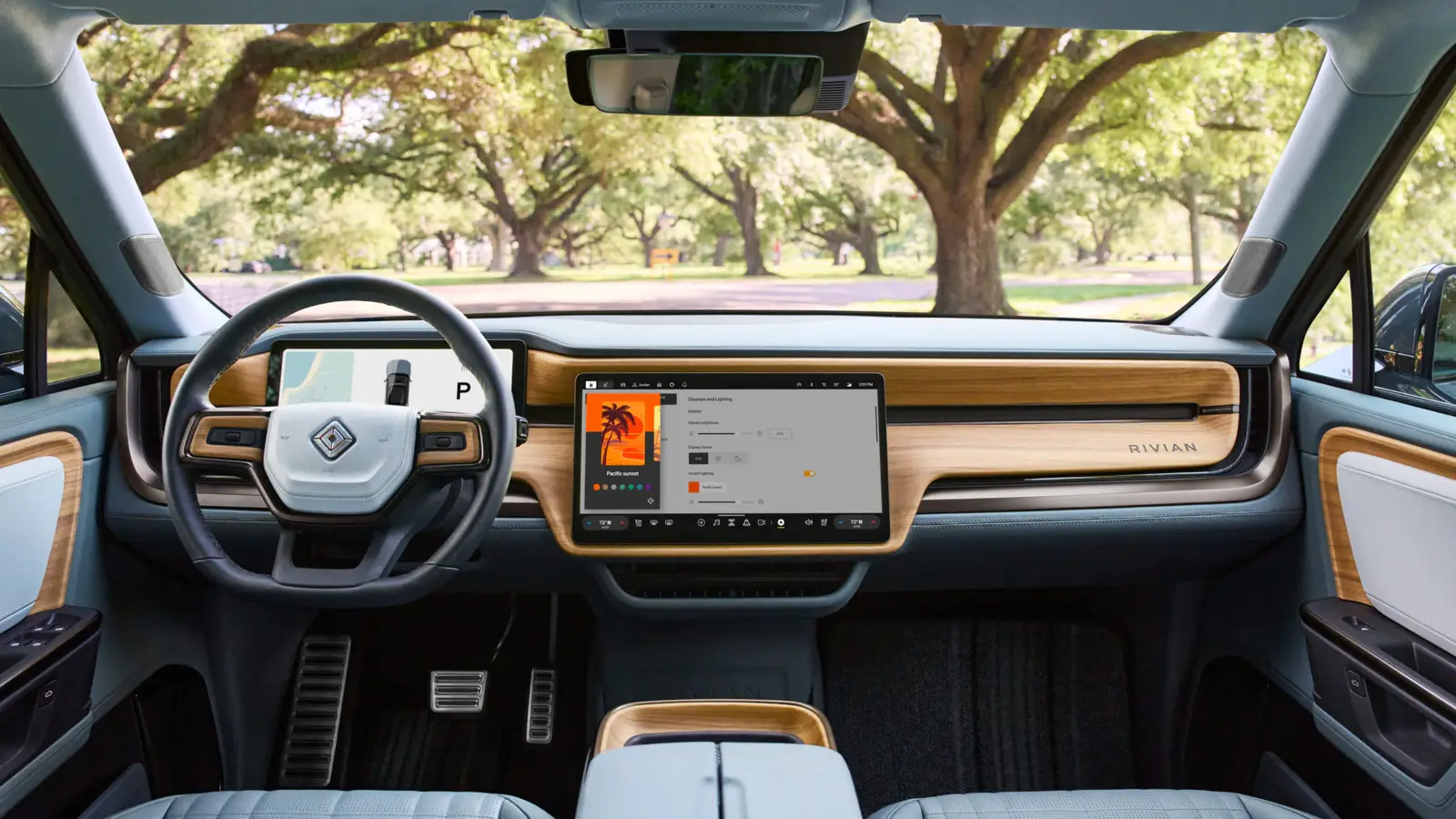
Uber and Rivian plan up to 50,000 autonomous R2 robotaxis, with launches from 2028 and expansion across 25 cities. Learn how the project may reshape urban mobility.
Uber and Rivian have announced a partnership that could become one of the largest projects in the autonomous mobility space. The companies plan to deploy up to 50,000 fully autonomous robotaxis based on the upcoming Rivian R2, gradually building a new urban transportation network.
The initial phase includes the purchase of 10,000 vehicles, with an option to expand by up to 40,000 more starting in 2030. Commercial operations are expected to begin in 2028, with San Francisco and Miami as the first launch cities. By 2031, the companies aim to scale the service to 25 cities across the United States, Canada, and Europe.
The financial scope of the deal is substantial. Uber plans to invest up to $1.25 billion in Rivian through 2031, with funding tied to the achievement of specific technological and regulatory milestones — a critical condition for deploying fully autonomous vehicles at scale.
At the core of the project is Level 4 autonomy. This means the vehicles will be capable of operating without a human driver, but only within defined environments and conditions. Such an approach is already emerging across the industry as a practical step toward broader autonomy.
The technical foundation relies on Rivian’s third-generation autonomy platform. It combines 11 cameras, 5 radars, and 1 LiDAR, along with two in-house RAP1 chips. Together, they deliver up to 1600 TOPS of computing power, enabling real-time processing of sensor data and AI-driven decision-making.
A key element of the strategy is the data flywheel — continuous collection and use of real-world driving data. Rivian emphasizes that sensor inputs, including detailed 3D LiDAR data, will be used to improve perception systems and accelerate the development of end-to-end autonomous driving capabilities.
The partnership also reflects Uber’s evolving strategy. Rather than building its own autonomous systems, the company is positioning itself as a platform that connects vehicle manufacturers and fleet operators. In this model, vehicles may be owned and operated not only by Uber but also by its partners.
Against the backdrop of existing robotaxi services, such as those already deployed by Waymo in several U.S. cities, the Uber–Rivian alliance represents an alternative approach — combining a large-scale mobility platform with a vertically integrated automaker.
However, several uncertainties remain. The pace of deployment will depend heavily on regulatory approval, which varies across regions. At the same time, the economics of robotaxis are still evolving. While removing the driver is expected to significantly reduce costs, specific figures for this project have not been disclosed.
Even so, the timeline — with launches expected in 2028 and expansion through the early 2030s — suggests that the shift from pilot programs to large-scale commercial autonomous services is accelerating. If technological and regulatory challenges are addressed, urban mobility could undergo significant changes within the next decade.
Mark Havelin
2026, Mar 21 15:15