
Why the Porsche 550 Central Fuel Filler Came From Racing
.jpg)
Explore how Porsche explains the central fuel filler on the 550 as a racing-driven solution, and how this functional detail later became part of its design identity.
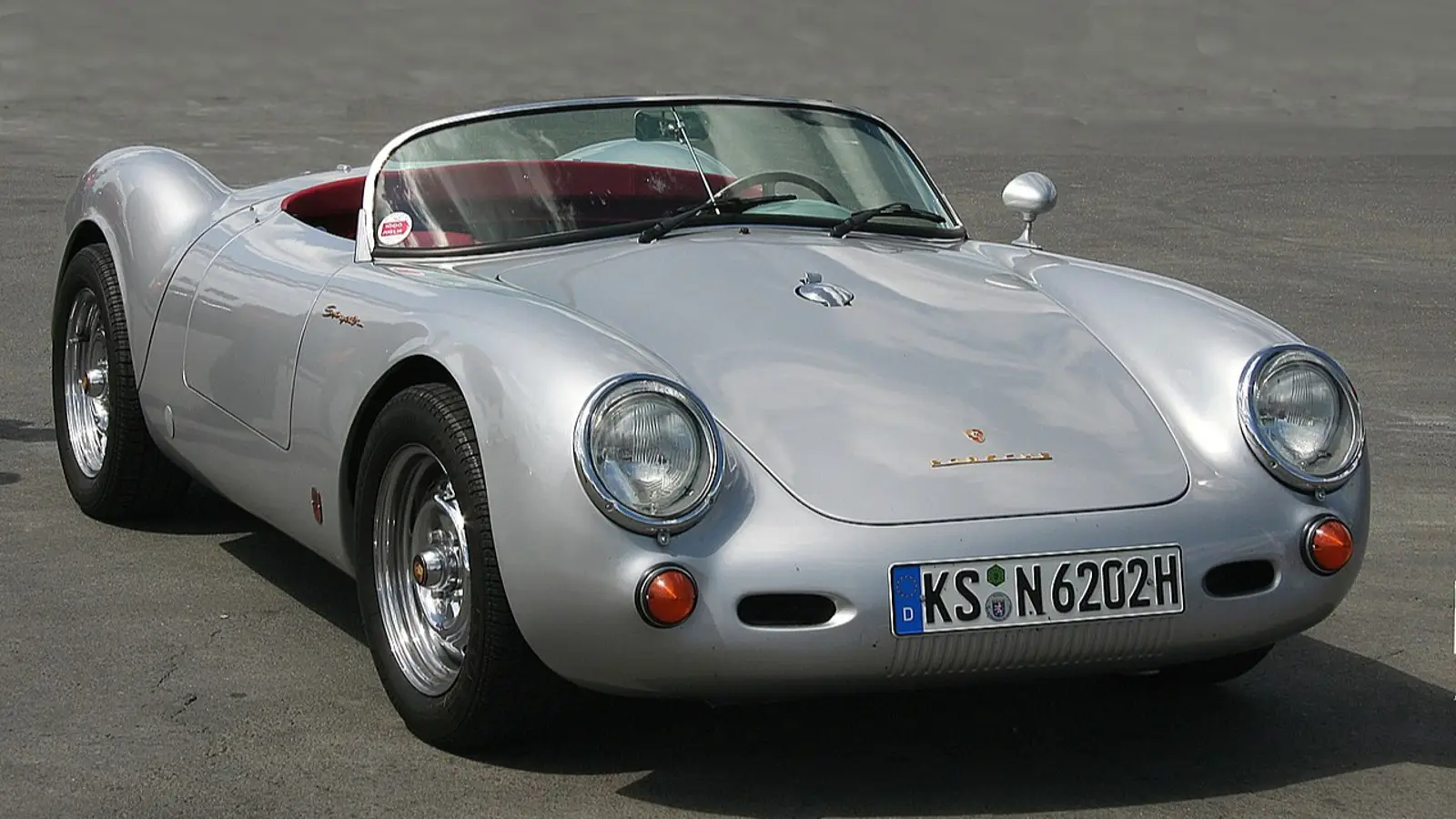
At first glance, the central fuel filler on the Porsche 550 may seem almost decorative. The round cap on the front of the body looks like a bold stylistic touch that emphasizes the car’s character. But behind this simplicity lies a very different story — not about design, but about necessity.
The Porsche 550 was not created as a road car with racing ambitions, but as a pure tool for the track. It was the first Porsche developed specifically for motorsport. And it proved its effectiveness immediately: already in 1954, it secured a class victory and finished third overall at the Carrera Panamericana. This was not just participation — it was precision engineering in action.
Looking closer, it becomes clear that nearly every detail of the 550 is driven by the needs of the driver. For example, the tachometer was placed in the center of the instrument panel not for symmetry, but so the driver could instantly read engine speed during a race. This sets the key principle: problems were solved first, and form followed.
.JPG)
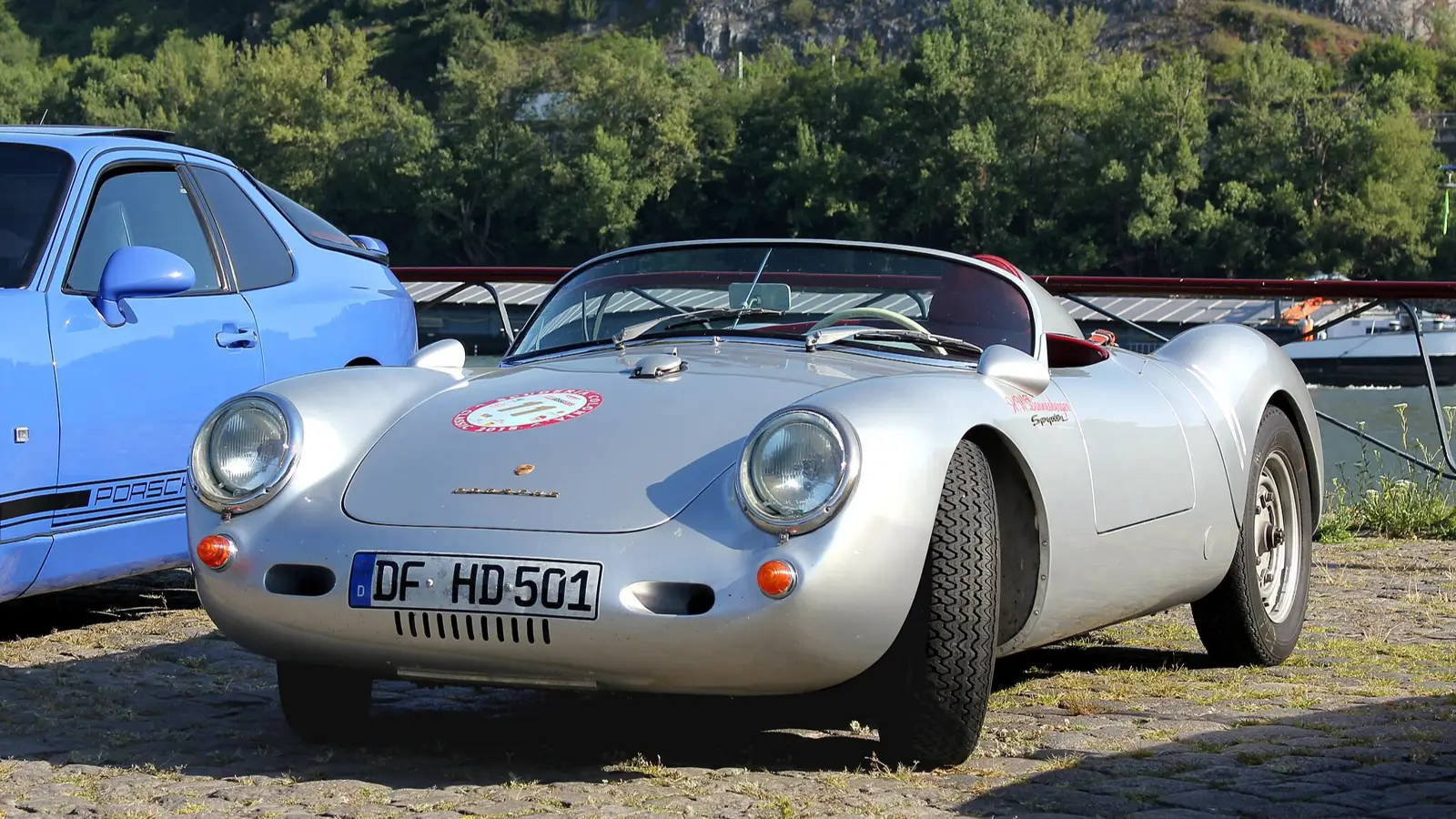
Seen from this perspective, the central fuel filler no longer feels unusual. In early racing versions of the 550, especially in the 550 Coupé, refueling was routed externally through the front section of the body. This was not a hidden technical feature, but a clearly expressed element — direct and immediate access to fuel.
In versions prepared for endurance races like Le Mans, the idea becomes even more evident. These cars featured larger fuel tanks designed for long-distance racing, while the filler was routed externally through the front bonnet. Everything points to a unified logic: the simpler and faster the access to fuel, the more efficient the car becomes in competition.
At the same time, it is important to understand that the 550 was not a single fixed configuration. The cars were constantly evolving: front-end shapes differed, panels changed, and access solutions were reworked. The central fuel filler was part of this ongoing engineering process, not a static design feature.
What makes this detail especially interesting is how its meaning changed over time. What began as a purely functional solution gradually turned into a recognizable visual element. Over the years, it stopped being just a technical necessity and became part of the car’s identity.
So much so that decades later, Porsche deliberately returned to this feature in concept cars, referencing it as part of its own history. A racing solution quietly transformed into a design language.
In the end, the central fuel filler of the Porsche 550 is a clear example of how true style is formed. Not from the desire to look distinctive, but from the need to perform better — faster, more efficiently, more precisely. Everything else comes later.
Ethan Rowden
2026, Mar 23 01:59