
Hyundai deploys XCIENT hydrogen truck fleet in Uruguay
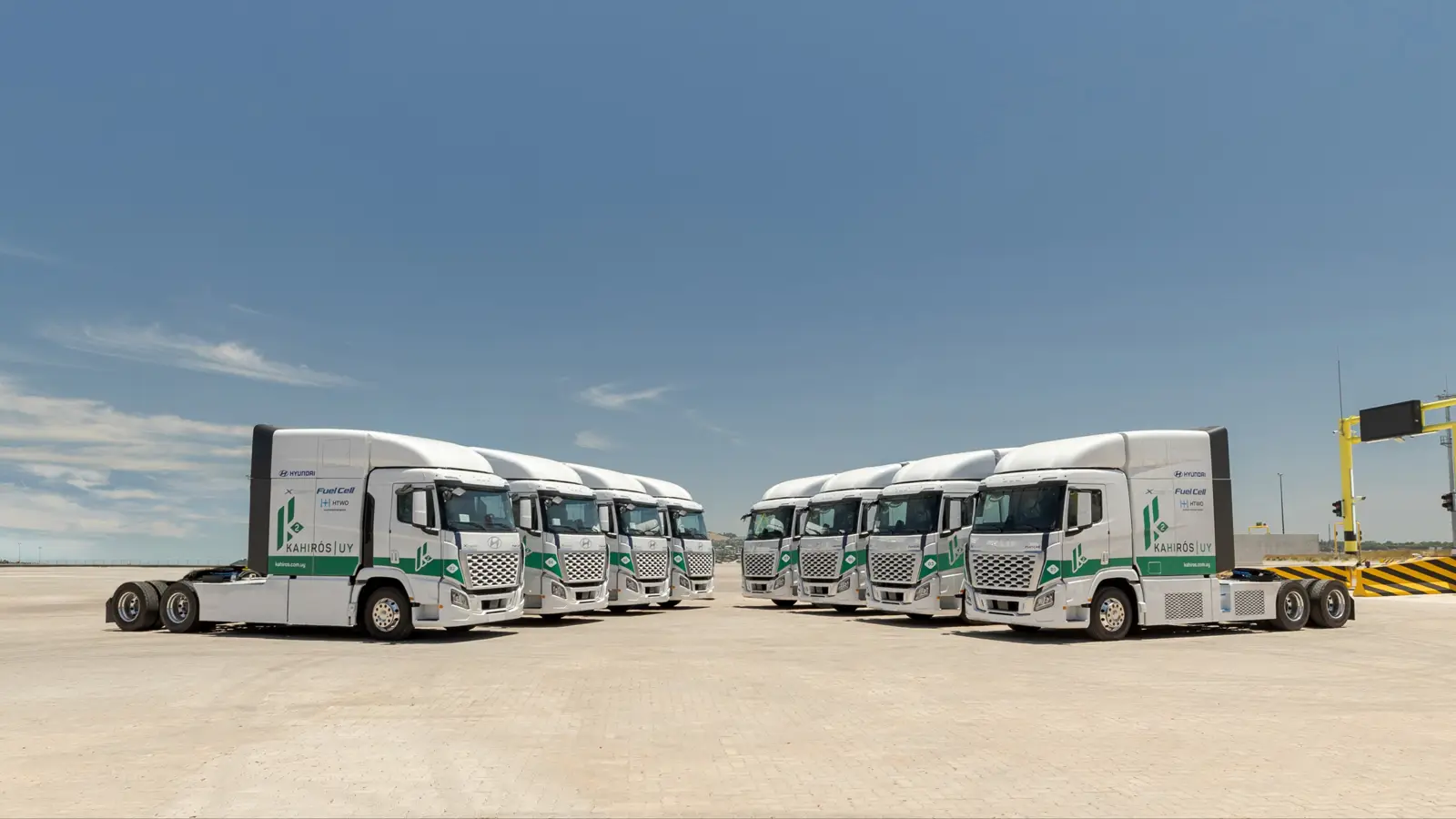
Hyundai Motor introduces XCIENT fuel cell trucks in Uruguay, launching South America's first hydrogen-powered heavy-duty fleet. Learn how the Kahirós project supports zero-emission logistics.
Hyundai has moved hydrogen trucks into real commercial use in South America for the first time, deploying eight XCIENT Fuel Cell heavy-duty vehicles in Uruguay—not as a pilot, but as part of a working logistics chain.
The rollout is tied to the Kahirós project, which targets the decarbonization of timber transport. Here, hydrogen trucks operate alongside dedicated energy infrastructure: a 4.8 MW solar plant powers electrolysis, producing green hydrogen that replaces diesel across the transport cycle.
This step matters beyond a single country. Uruguay already generates about 99% of its electricity from renewable sources, and hydrogen is being positioned as the next phase of emissions reduction—particularly in heavy-duty transport, where alternatives remain limited. The project is expected to cut up to 870 tons of CO₂ annually while demonstrating a model that could be replicated elsewhere.
The system is designed as a closed loop: hydrogen production, compression, refueling and vehicle operation are integrated into one chain. Annual output is planned at around 77 tons of hydrogen, with refueling times under an hour. Six trucks will form the core fleet, traveling close to one million kilometers per year, while two additional units serve as backup and for potential expansion.
Technically, the XCIENT Fuel Cell is built for long-haul operations. It combines two fuel cell stacks with a total output of 180 kW, a 350 kW electric motor, and a range of up to 720 kilometers under optimal conditions. Hydrogen is stored in ten tanks with a total capacity of about 68 kg, and the truck operates in the Class 8 heavy-duty segment.
Hyundai enters this market with proven experience. Its hydrogen truck fleet has already exceeded 20 million kilometers in Europe and more than 1.6 million kilometers in North America, enabling the company to move from pilot programs to broader deployment.
Against this backdrop, the Uruguay launch represents more than geographic expansion. It is an attempt to build a full hydrogen ecosystem—from renewable energy generation to transport use—highlighting how integrated systems may shape the future of low-emission logistics.
Mark Havelin
2026, Mar 24 16:47