
Porsche one-off 911 S/T inspired by 1972 Camel GT car
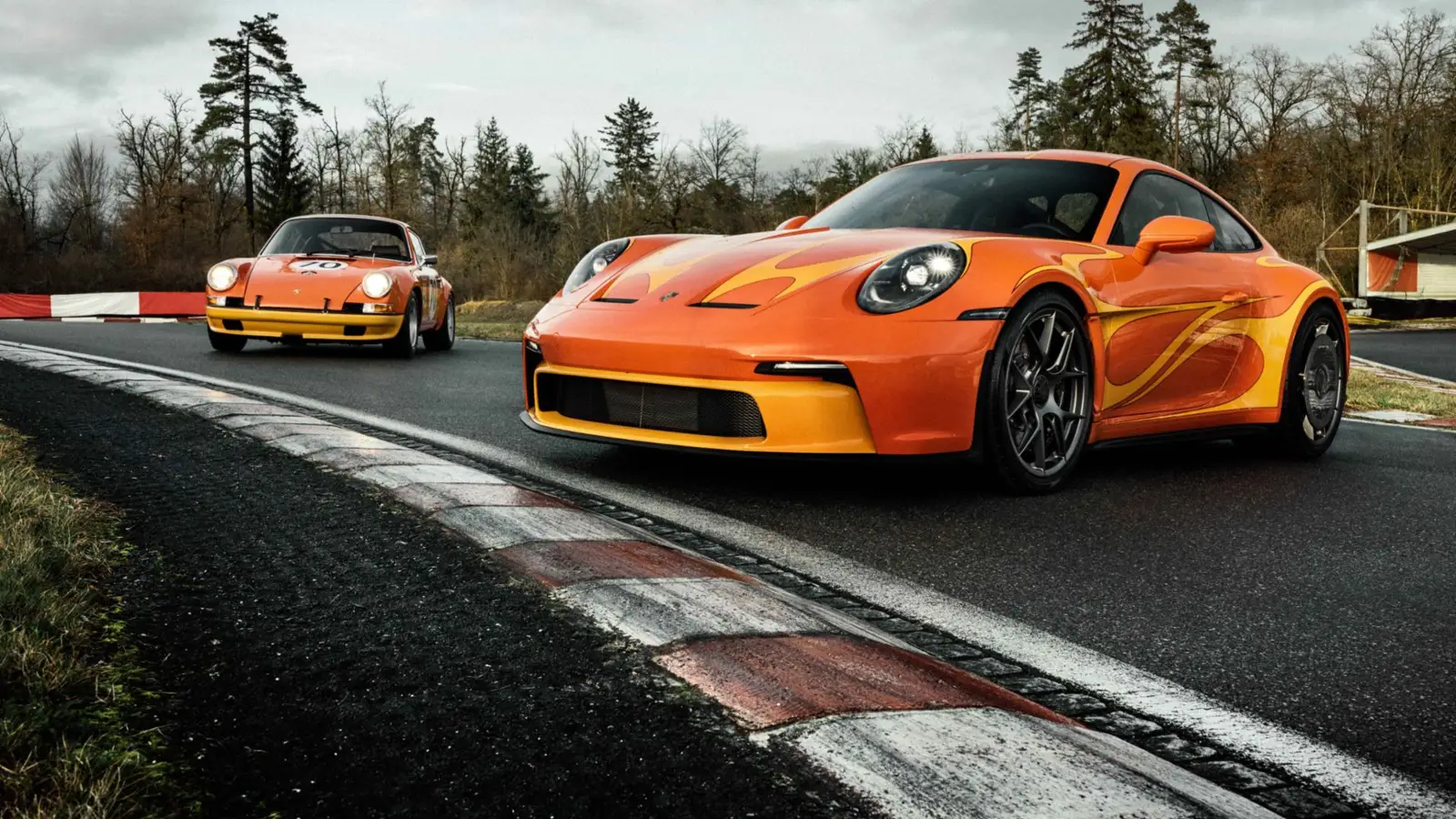
Porsche presents a one-off 911 S/T inspired by a 1972 Camel GT race car, combining historic design elements with modern craftsmanship and Sonderwunsch customisation.
A one-off Porsche 911 S/T created in 2025 through the Sonderwunsch programme directly traces its origins back to a 1972 race car that competed in 27 events of the Camel GT Challenge — and that racing history became the foundation of the new project.
The original car, active across North America in the 1970s, was further developed by Brumos Racing and raced at circuits such as Sebring, Daytona and Indianapolis. It stood out not only for its Phoenix Red paint but also for unusual engineering decisions, including different wheel setups between the front and rear. Its racing career ended in 1978 after a crash at Trois-Rivières in Canada, yet years later the car was restored and became part of a private collection in Switzerland.
That very car served as the starting point for a new one-off creation. Instead of replicating the historic vehicle, Porsche chose to reinterpret it, preserving key visual and conceptual elements. This approach reflects the philosophy of Sonderwunsch, where the process goes beyond individualisation and becomes a collaboration between client and manufacturer to create a truly unique car.
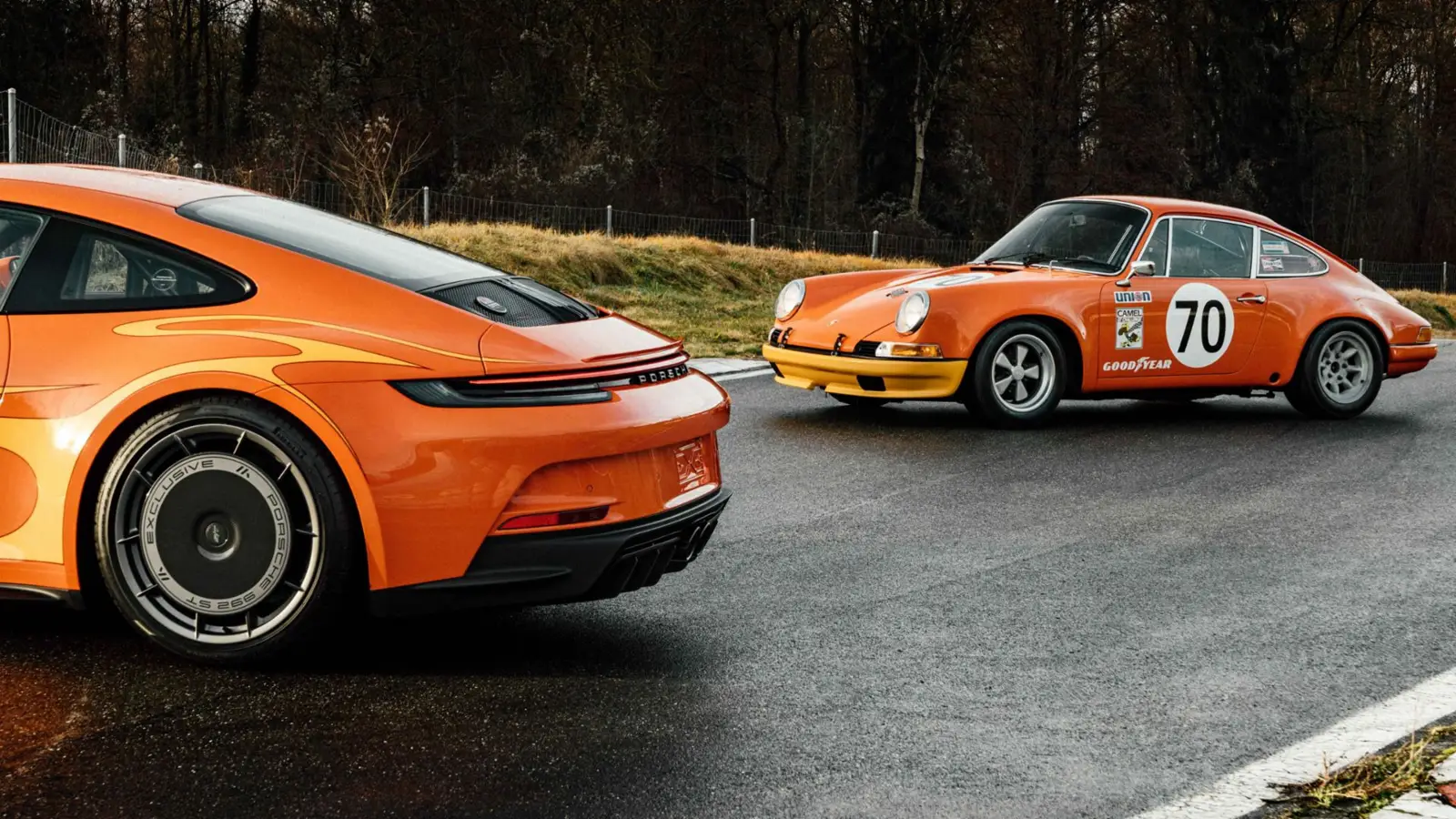
The exterior of the new 911 S/T is built around the contrast of Phoenix Red and Signal Yellow. Period Camel GT sponsor decals were not directly transferred; instead, designer Grant Larson, known for his work on the Carrera GT and the first-generation Boxster, developed a more subtle visual language. The flowing paintwork was applied by hand, while the interior integrates references to the car’s past, including a stylised camel motif and outlines of circuits such as Sebring, Daytona and Lime Rock Park.
Some elements also echo the engineering logic of the original car. The visual asymmetry of the wheels has been retained, with Manthey Racing aerodiscs fitted to the rear. These components, originally developed for the 911 GT3 RS, are used here primarily for display and can be removed for road driving, as they are not homologated for the 911 S/T.
The historical context adds weight to the project. The Camel GT Challenge, launched in the early 1970s under IMSA, became one of the key platforms for Porsche’s motorsport development in North America. Cars based on the 911 established a reputation for reliability and competitiveness, while teams such as Brumos Racing played a significant role in shaping that era.
The modern 911 S/T shows how Porsche continues to work with its heritage. Rather than reproducing the past, the brand reinterprets it through design, materials and details that reward closer inspection. In doing so, the project highlights the capabilities of the Sonderwunsch programme and underlines how historic race cars remain a source of inspiration for new creations.
Mark Havelin
2026, Mar 25 15:20